
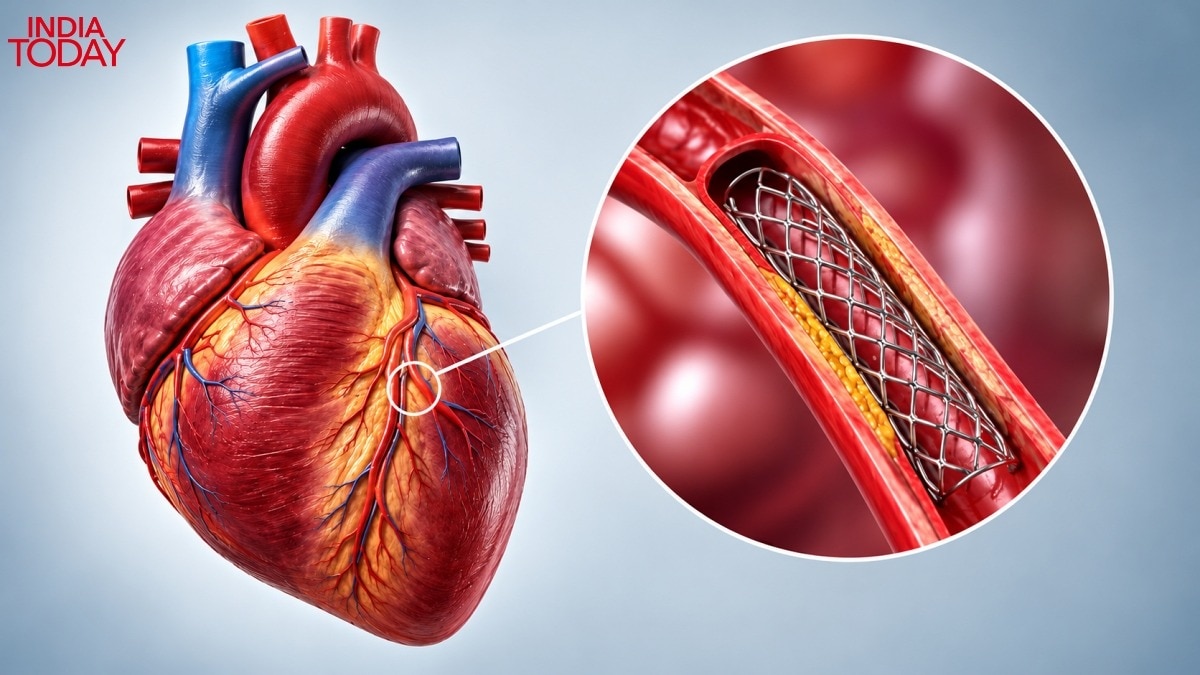
A UEA analysis found drug-coated balloons performed comparably to stents on major outcomes. The approach could avoid permanent implants, though some patients may require repeat procedures.ry. A drug-eluting stent, a tiny metal mesh tube coated with medication, is often implanted. (Photo: India Today)New Delhi,Oct 16, 2026 13:44 ISTThousands of heart patients could one day undergo treatment for blocked arteries without having a permanent metal stent implanted in their blood vessels, according to a major study that suggests drug-coated balloons may offer an effective alternative.Researchers from the University of East Anglia (UEA) in the UK analysed data from 10 randomised clinical trials involving 7,832 patients with coronary artery disease.They found that treatment using drug-coated balloons performed comparably to conventional stents in preventing heart attacks and deaths caused by cardiovascular disease.The findings, published in The Lancet's eClinicalMedicine, could strengthen the case for a “leave nothing behind” approach to treating coronary artery disease. However, researchers cautioned that some patients receiving balloon treatment may face a greater likelihood of needing another procedure to reopen their arteries. HOW DOES THE NEW TREATMENT WORK?Coronary artery disease occurs when blood vessels supplying the heart become narrowed, often because of fatty deposits accumulating along their walls. This restricts blood flow and can increase the risk of heart attacks.The standard treatment for many patients is angioplasty, in which doctors use a balloon to widen the narrowed artery. A drug-eluting stent, a tiny metal mesh tube coated with medication, is often implanted to keep the vessel open and reduce the risk of it narrowing again. The analysis identified a potential drawback when treatment involved larger coronary arteries. (Photo: Getty) Drug-coated balloons offer a different approach. The balloon is inflated inside the narrowed artery, delivering medication directly into the vessel wall to prevent tissue growth that could cause the artery to narrow again.The balloon is then removed, leaving no permanent implant behind.Lead researcher Dr Natasha Corballis of UEA's Norwich Medical School said the analysis found no meaningful difference between the two treatments in major outcomes. Patients treated with drug-coated balloons were no more likely to die from cardiovascular causes, while heart attack rates were virtually identical.WHAT ARE THE LIMITATIONS?The analysis identified a potential drawback when treatment involved larger coronary arteries. Patients receiving drug-coated balloons appeared more likely to require repeat procedures, known as revascularisation.However, researchers noted substantial variation between studies and said the result appeared to be heavily influenced by a single clinical trial.Senior author Professor Vassilios Vassiliou said the approach could reduce certain long-term complications associated with permanent stents while preserving future treatment options.The researchers stressed that larger trials with longer follow-up periods are needed, particularly for patients with larger arteries and more complex coronary lesions.The study, conducted in collaboration with Norfolk and Norwich University Hospital NHS Foundation Trust, suggests that drug-coated balloons could expand treatment choices for heart patients, although they are not yet a universal replacement for stents.- Ends
Heart patients could be treated without a permanent stent: Study
Full Article
Original Source
Read the full article at Indiatoday →KhanList aggregates and links to publicly available news content. We do not host full articles from third-party sources. Always verify important information with original sources.