
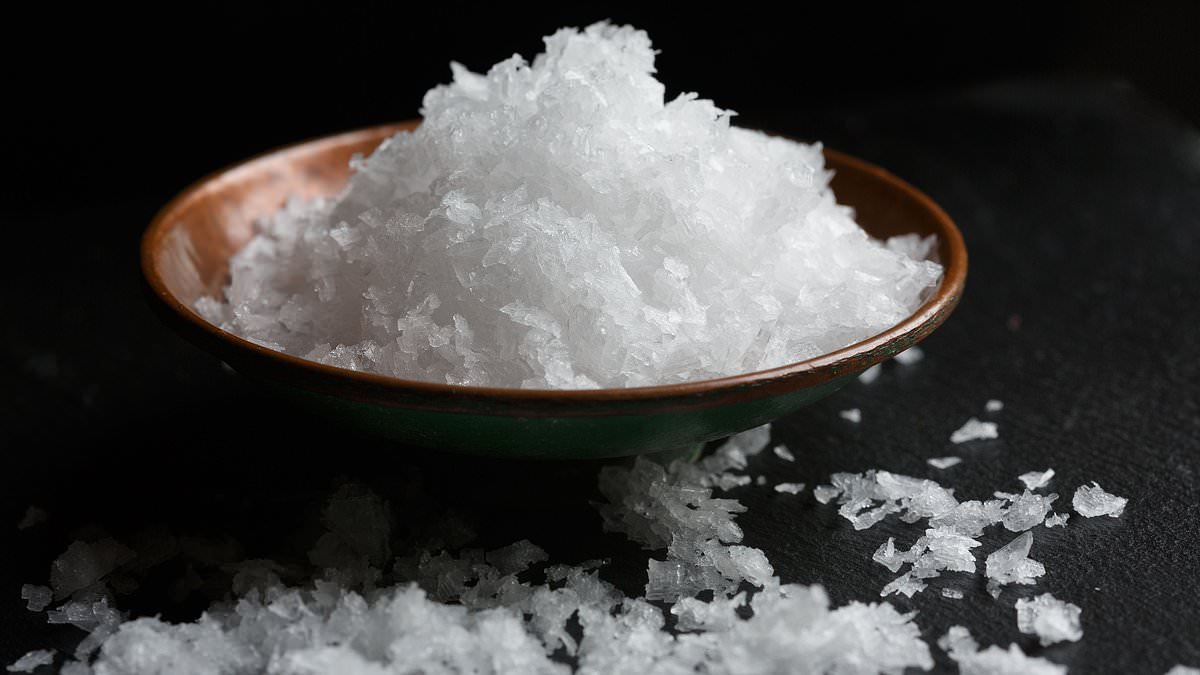
Swapping ordinary table salt for a blood-pressure friendly alternative could prevent almost 13,000 deaths a year in Britain, a study suggests.Researchers found replacing regular salt with a potassium-enriched version could also prevent 60,000 cases of cardiovascular and kidney disease annually in the UK. Globally, the switch could prevent nearly three million deaths and more than ten million new cases of the diseases every year, they estimated. Experts said the findings could act as a 'starting point' for new ways to tackle the health toll of high salt intake.The alternative salt, sold in many supermarkets under brands such as LoSalt, replaces much of the sodium with potassium.Too much sodium raises blood pressure, a leading cause of heart attacks and strokes, by making the body retain water and increasing pressure on blood vessels. Potassium, on the other hand, helps lower blood pressure, while still tasting like regular salt.More than 14 million Britons are thought to have high blood pressure, which is around one in three adults. Swapping ordinary table salt for a blood-pressure friendly alternative could prevent almost 13,000 deaths a year in Britain, a study suggestsThe condition can also trigger damage to the kidneys, due to excess force on the delicate blood vessels and tiny filtering units within the organ.Bruce Neal, a senior professorial fellow at The George Institute for Global Health, which carried out the study, said switching salts could bring 'substantial health benefits'. 'While a global shift from regular salt to a potassium-enriched substitute is aspirational, this is a starting point to get countries thinking about the opportunity - with much greater potential and at much lower cost than many drug-based treatments,' he added.The researchers, whose work was published in the journal Nature Health, modelled the potential outcomes of 193 countries making the switch. They said the move could prevent 2.96 million deaths and 10.17 million new cases of cardiovascular and chronic kidney disease worldwide every year.More than seven million Britons are living with cardiovascular disease, the umbrella term for conditions like stroke and coronary heart disease.A similar number are thought to have chronic kidney disease, where kidneys become damaged and lose their ability to remove waste and fluid from the blood. In the UK alone, the switch could prevent 12,951 deaths and almost 60,000 cases of the diseases every year, the team said. Even small changes had a major impact. Annual health impact of replacing all salt with potassium-enriched salt Country Yearly deaths prevented Cases of cardiovascular disease and kidney disease prevented per year Total fatal and non-fatal events prevented China 1,082,666 3,614,123 4,696,789 India 399,884 1,528,494 1,928,378 USA 104,787 491,905 596,692 Mexico 30,464 138,546 169,010 Nigeria 18,069 59,348 77,417 UK 12,951 59,988 72,939 South Africa 6,761 22,955 29,716 Australia 2,076 15,674 17,750 Replacing only the salt used at home could prevent 1.85 million deaths and more than six million cases of cardiovascular and kidney disease worldwide each year.The researchers also looked at those with high blood pressure only, and estimated that if 80 per cent switched to potassium-enriched salt at home, almost 600,000 deaths and 1.7 million cases of the diseases could be prevented every year. The experts stressed, however, that potassium-enriched salt may not be suitable for everyone.They said people with advanced kidney disease could be at risk from the extra potassium.This is because damaged kidneys can struggle to remove it from the blood – allowing it to build up to dangerous levels. 'People with serious kidney disease and those taking medications that significantly raise blood potassium levels need to take precautions,' said nephrologist Professor Vivek Jha, senior professorial fellow at The George Institute.'Risks for this group can be managed effectively through patient education, product labelling, and clinical oversight.'
Heart-healthy salt could prevent more than 12,000 deaths a year in the UK, experts say - and you can buy it at the supermarket
Full Article
Original Source
Read the full article at Dailymail →KhanList aggregates and links to publicly available news content. We do not host full articles from third-party sources. Always verify important information with original sources.