
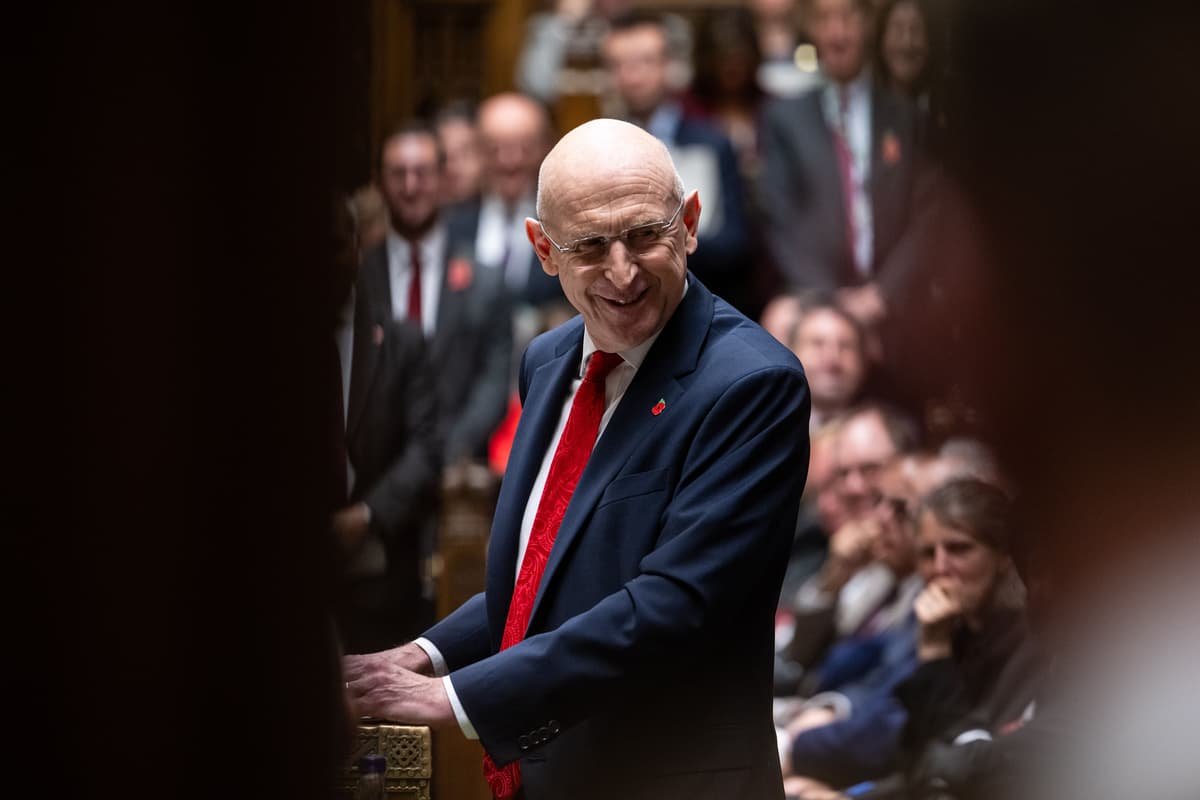
Major departmental spending cuts are coming down the line to pay for the Government’s policies at next year’s spending review, John Healey has indicated.The Chancellor warned that the UK faces more “hard decisions” about its spending priorities in the coming years, after delivering his first Budget.He hit back against accusations it was too modest, saying: “I’d fundamentally contest that this is not a significant Budget.”Tory leader Kemi Badenoch said the Budget was “not good enough, not strong enough, not bold enough”, while Reform UK’s Treasury spokesman Robert Jenrick described it as a “nothing burger”.The influential Institute for Fiscal Studies (IFS) think tank said the Budget’s “raft of fiddly measures” would do little to boost growth and warned it delayed tough decisions, and the left-leaning Resolution Foundation think tank said Mr Healey had “spread the jam thin”.But the Chancellor insisted it included “some big decisions”, pointing to energy reforms including offering millions of households £100 to help with soaring energy bills, as well as defence spending.In Wednesday’s speech in the Commons, he committed to spending 3% of economic output on defence by 2030, and to “fully funding” the £4.7 billion black hole in the defence investment plan (Dip) left by Sir Keir Starmer.The Dip shortfall will be funded “through reprioritisation of capital budgets”, according to the Budget document.Departments across Government will be asked to reduce their capital budgets by 1% each between 2027-28 and 2029-30 to raise some £3 billion.The remaining £1.7 billion shortfall will be made up from an “unallocated contingency in the Treasury’s capital reserve”, the Budget said.In a round of post-Budget broadcast interviews, Mr Healey told Good Morning Britain that funding the Dip “involved hard choices, it’s reprioritising within Government”.And he signalled that departments would have to further slash spending to pay for choices made at the spending review next year.He told Bloomberg: “My Cabinet colleagues are demonstrating that they can also exert fiscal discipline and spending control, and we will take that into the spending review.Read More“But the spending review will be framed by the priorities that we set in the 10-year plan for Britain, that’s as it should be.“Hard decisions about the top priorities for Britain in the years to come, judgments that then follow about how we fund them.”Meanwhile, Mr Healey denied postponing difficult decisions on the welfare system amid criticism he had failed to deal with the ballooning cost of welfare.He said ministers had already brought in a range of measures to cut the cost, including reinstating face-to-face assessments, tweaking the “terms of universal credit, so people don’t have to brand themselves as too sick to work”.Asked whether the benefits bill would be cut before the next general election, Mr Healey told BBC Radio 4’s Today programme: “There will be a reduction in the benefits bill, we’ll do that in a Labour way and we’ll do that because it is simply not good for Britain or progressive to have a bigger and bigger benefits bill.”However, Treasury officials later stressed he was not setting a timeframe for the welfare reduction.Tory shadow chancellor Andrew Griffith argued the Government could find the money to boost defence spending by curbing the welfare bill.He told Times Radio: “It’s not the only area of Government spending that people should look at to try and make savings and live within our means.“But if your welfare bill is going up by £60 billion, and you’re struggling to try and find £10 billion for defence, I honestly don’t think it is that hard.”In the IFS initial response to the fiscal statement, director Helen Miller said: “The plan to reduce borrowing has been pushed back.“This Budget has a raft of fiddly measures but very little that will move the dial on growth.”She added: “Whether reductions in borrowing can actually be delivered depends heavily on public service spending plans, where growth is set to slow sharply after this year.“History warns us to be sceptical of tight spending plans in later years of the forecast.”Ruth Curtice, chief executive of the Resolution Foundation, which has been influential on Labour’s thinking, said: “Faced with a tough backdrop amid global economic turmoil, the Chancellor delivered a scattergun Budget that did little to address the sharp challenges facing Britain.“Cost-of-living support is being spread far too thinly and will leave even those families receiving help facing higher energy bills than they did during the last energy price shock.”The Budget will face closer scrutiny on Thursday when the Office for Budget Responsibility (OBR) watchdog and Resolution Foundation researchers host a post-Budget briefing.The IFS will also give a considered analysis of the Budget.Meanwhile, Prime Minister Andy Burnham, Mr Healey and Business Secretary Jonathan Reynolds will seek to rally support for the Budget on a visit to a Rolls-Royce factory in the East Midlands.
Healey warns of more ‘hard decisions’ and departmental spending cuts
Full Article
Original Source
Read the full article at Standard →KhanList aggregates and links to publicly available news content. We do not host full articles from third-party sources. Always verify important information with original sources.