
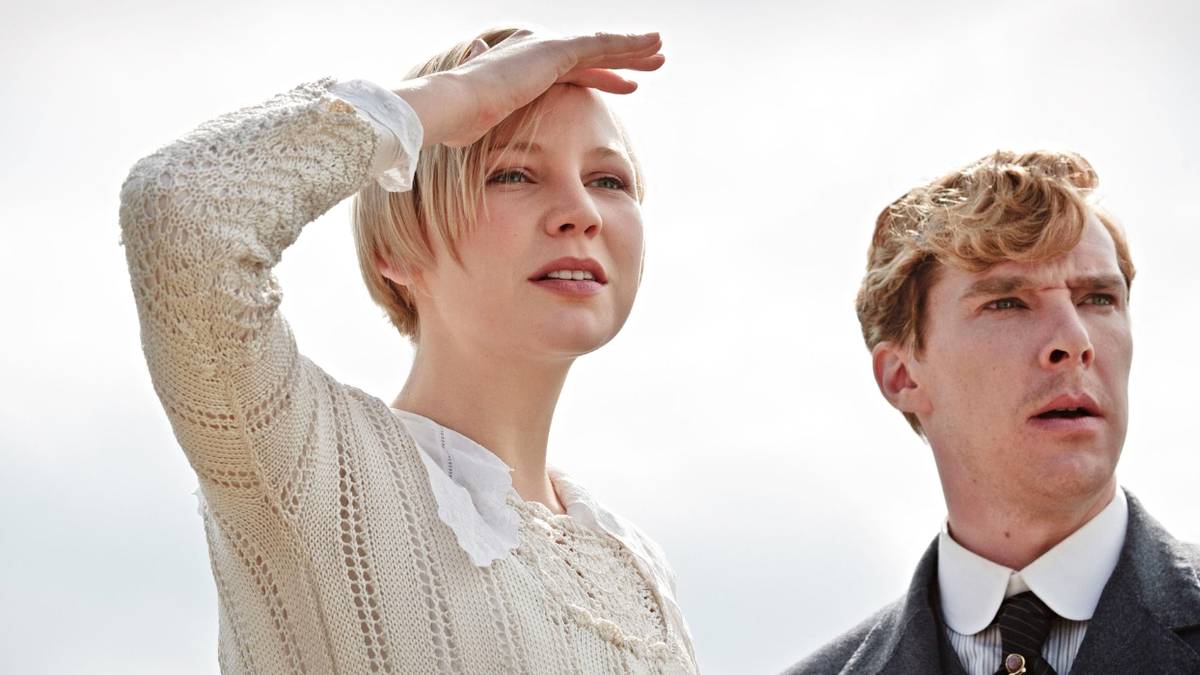
Image via HBO/BBC Published Oct 31, 2026, 3:47 PM EDT Areesha is a Movie/TV Features Author at Collider. Previously, she also worked with the Reality TV vertical at Collider. Sign in to your Collider account Julian Fellowes' Downton Abbey, which ran for six seasons from 2010 to 2015, set a new standard for historical dramas, nearly single-handedly rescuing the dying popularity of the Edwardian period. Any historical drama that came after has had to face the challenge of reaching the bar set by Fellowes' work — and not all are successful. However, the 2013 HBO/BBC miniseries, Parade's End, an adaptation of Ford Maddox's novel of the same name, managed to mount a successful challenge to Downton's legacy. While Downton focuses on telling the story of the aristocratic Crawley family in contrast with the lives of their household staff, Parade's End centers on a complex love triangle between aristocratic Christopher Tietjens (Benedict Cumberbatch), his self-centered socialite wife, Sylvia (Rebecca Hall), and the idealistic Valentine Wannop (Adelaide Clemens). In Parade's End's narrative, the consequences of war shattering and rearranging the elites' principles are given a significant amount of attention. The men of the series are given different character arcs than what we saw in Downton, despite existing in the same time frame and facing the same historical events. Though the two shows are similar conceptually, Parade's End can stand on its own thanks to plotlines and character arcs that zig where Downton's zag. If you find yourself anxiously awaiting the third Downton Abbey film, this underrated series will satisfy your period drama needs. What Is 'Parade's End' About? Described by The Hollywood Reporter as a "less soapy" Downton Abbey, Parade's End actually offers up a version of Fellowes' show that refuses to filter its events through rose-colored glasses. Apart from the two series featuring stunning Edwardian architecture and period costumes, both also center on themes of British social-class structures, their entitlement to old-world values, resistance towards change, and the consequences of both World Wars on society. Downton offers a skewed representation of the Edwardian social code, keeping its audience in a comfort zone and refusing to represent the truer realities of the 20th century. However, Parade’s End, which was written by noted playwright Tom Stoppard, doesn’t shy away from harsher social commentary and depicts how old Edwardian values could not survive the wrath and chaos of war. Parade’s End is a character-driven story that centers on Christopher Tietjens, second son of the lord of the manor of Groby, Yorkshire, who finds himself torn between love and duty. His messy relationship with his abusive wife, Sylvia, is an important part of the series as it pushes him to the edges of his moral beliefs. And because of his hollow relationship with his partner, Christopher is forced to look for emotional companionship with young Valentine Wannop, whose character is symbolic of modernity and change itself. Christopher and Valentine's innocent companionship soon turns into a slow-burn romance. What makes things more complicated is that Sylvia and Christopher have a child. To the audience, the turbulence of the marriage and affair beautifully encapsulates and reflects broader societal changes and tensions that are going on beyond the couples’ relationships. Soon, Christopher is drafted for war, where he witnesses firsthand the rapid dissolution of the old-standing social culture of England, and finds himself questioning everything that he stands for. He is a character of principle and integrity, shown struggling to maintain his values and sense of honor during a time of societal upheaval. With complex character exploration at its core, Parade's End travels through themes of love, war, fidelity, and the changing social fabric of England before, during, and after the First World War. The series is acclaimed for its amazingly realistic representation of the historical and social changes that went down in early 20th-century England. Benedict Cumberbatch's Christopher Makes the Men of 'Downton Abbey' Look Scandalous The two shows can best be put under a comparative lens by noting the social and moral compasses held by Parade’s End’s Christopher and Downton Abbey’s Matthew Crawley (Dan Stevens) and Lord Grantham (Hugh Bonneville). All three of these characters are introduced to represent the morally rigid men of Edwardian England who believed that respectable men must adhere to a sense of "parade" — a code of conduct essential to self-respect and social standing. For an upper-class man in Edwardian society, a scandal meant the danger of being outcast by all social circles, which would ultimately lead to financial losses. Downton's male protagonists don't adhere to the proper English code of conduct that was expected of them. Comparatively, Christopher’s unrelenting sacrifices for his unfaithful wife put Matthew Crawley’s faithfulness to shame. On Downton Abbey, Lord Grantham's Season 3 scandal with his household maid, Jane, took fans of the show by surprise. Viewers had a hard time believing that a character whose entire arc was about adhering to old-world values and resisting change would cheat on a wife as lovely as Cora (Elizabeth McGovern). And he didn't just stop with a romantic attraction, smooching the maid at the heart of his estate. Despite the fact that he's busy cheating, Grantham considers the idea of her doing the same unacceptable. Considering the era in which the show is set, such actions could have not only ruined the husband but also destroyed the Granthams' societal standing. Similarly, Matthew Crawley broke off his engagement with Lord Grantham's daughter, Mary (Michelle Dockery), and left her for Lavinia Swire (Zoe Boyle). But soon after, he found himself in a love affair with his ex-fiancée, with Lavinia discovering Matthew and Mary kissing. Later on, after Lavinia dies, Matthew marries Mary and is haunted by the idea that Lavinia died heartbroken after discovering the affair. Conversely, Parade's End takes a completely different approach to its primary male character. Christopher remains faithful to a wife who tricked him into marrying her while she was pregnant with another man's child. Throughout their marriage, Sylvia involves herself with multiple men and doesn't bother hiding her actions from her husband. Christopher finds himself in love with his acquaintance, Valentine, and the two share an intimate emotional bond. However, he chooses not to make any advances towards Valentine for the sake of his values and the family's social standing. In fact, Christopher is described by his promiscuous wife as a paragon of honorable behavior, even though she is bothered by her husband's virtues. Who Does Christopher End Up With in 'Parade's End'? Image via HBO By the end of Parade's End, Christopher is unable to keep going against the waves of social change flooding his life. The war shatters and rearranges the principles of all the characters involved in the story, and each of them caves into their fate. When Christopher returns from the war injured, he is yet again confronted with the fact that his wife couldn’t stop herself from being unfaithful behind his back. On the other hand, Valentine is adamant about the idea of being with her lover, and to prove it, she openly expresses to her mother that she is willing to become Christopher's mistress upon his return. Initially, Christopher rejects Valentine’s advances, saying he will never divorce Sylvia, for their son's sake. However, he soon gives in and lets Sylvia know that his future is now with Valentine. By the end, Christopher and Valentine are seen celebrating the end of the war together in their new shared flat, and in their flat, the fireplace burns wood from the "Groby Tree," a Tietjens family heirloom which throughout the story symbolized continuity and tradition. Since Downton Abbey ended, Julian Fellowes has moved on to shows like The Gilded Age, which, similar to Parade's End, represent the social struggles of their time in a more realistic manner than Downton did. Perhaps he, in turn, was inspired by Parade’s End, which refused to glorify the characters’ resistance to social change. Parade's End refused to bend reality for the sake of story dramatics or for viewers' comfort. It's an elevated Downton Abbey and one that's less soapy, offering a more realistic representation of its period. It also serves as a comparatively harsher commentary on post-war society and the complications of a period caught between waves of old values entering a changed new world. Because it adheres so closely to the social norms of the day, Parade’s End becomes all the more powerful once those norms are shattered. Parade's End Release Date August 24, 2012 A love triangle forms between a conservative English aristocrat, his mean socialite wife, and a young suffragette.
HBO's 5-Episode Miniseries Is 'Downton Abbey's Darker, Grittier Half
Full Article
Original Source
Read the full article at Collider →KhanList aggregates and links to publicly available news content. We do not host full articles from third-party sources. Always verify important information with original sources.