
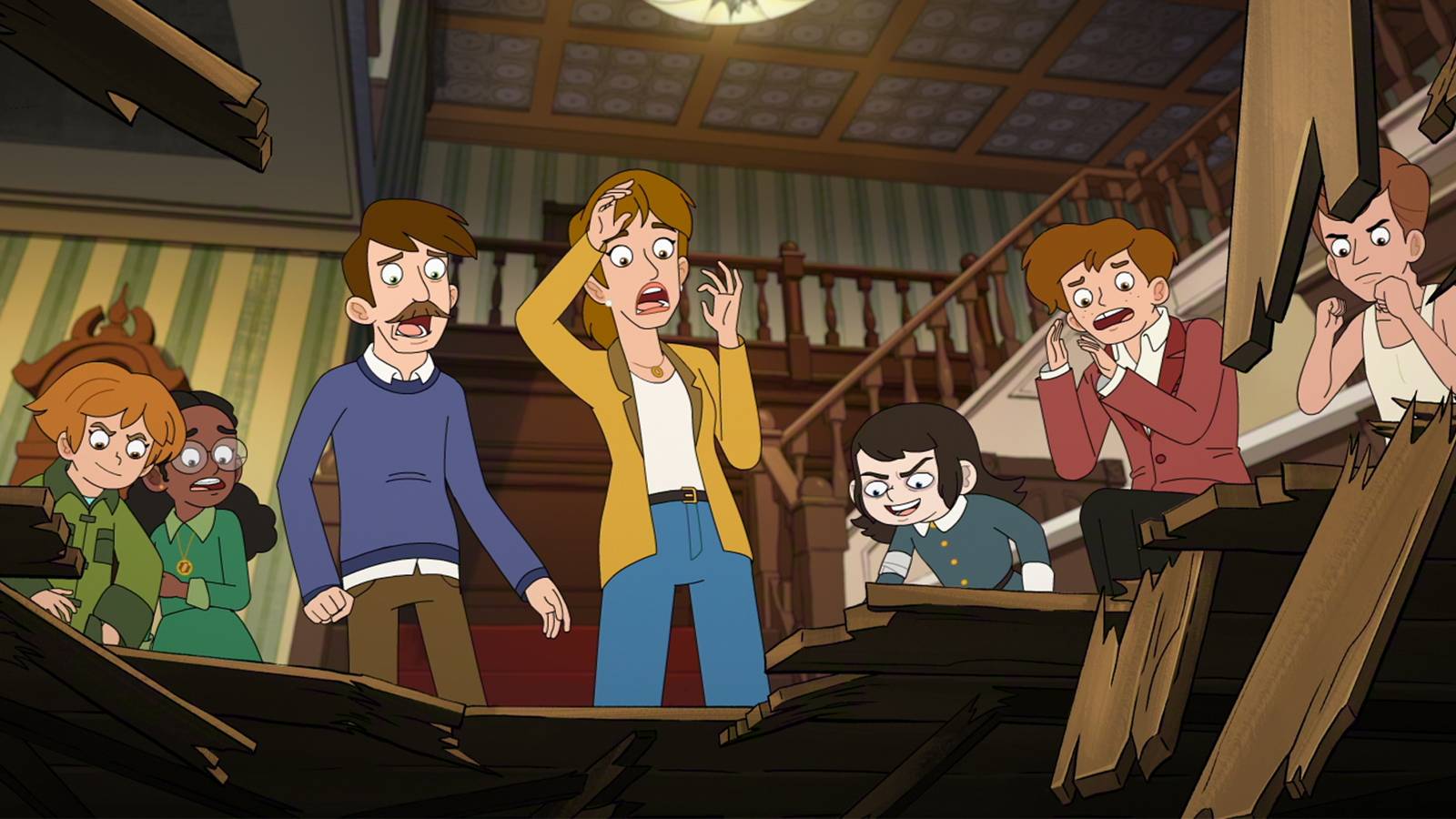
Image via Netflix Published Oct 9, 2026, 3:01 AM EDT Tania Hussain is an Executive Editor at Collider responsible for creative, editorial, and managerial duties. In addition to leading content ideation and development, she works to generate innovative and compelling ideas for feature articles and reviews with her editorial team across Features, Lists, Reviews, and Interviews. She also serves as the primary editor overseeing Collider’s Signature Series profiles, spotlighting some of the most influential voices in film and television. Tania has helped cover and ideate content for major events for Collider, including the Toronto International Film Festival. She has also conducted more than 100 interviews since her start in the business more than 15 years ago. Some favorites include Joel McHale, Charlie Cox, Jennifer Garner, Tina Fey, Kate Winslet, Bob Odenkirk, Andy Richter, Jordan Schlansky, Jamie Dornan, Yeardley Smith, Rafe Spall, Esther Smith, and a reasonable toss-up between Cookie Monster and Kermit the Frog. She has covered set visits, in-person junkets, and red carpets for several films and TV shows, including most recently, The Sheep Detectives, Masterchef, and Star Trek: Starfleet Academy. Sign in to your Collider account Running a hotel is already hard enough without the threat of shadowy ghosts swallowing up your guests. Thankfully, only one single mom shares that burden with her dead brother, two kids, and a demon stuck in a little Victorian boy’s body in Netflix’s Haunted Hotel. Yet somehow, amid the chaos they’re so used to, it’s a witch’s cursed soup that catches the four off guard after a nut allergy sends one of the children to the hospital. Hilariously, the witch is also admitted for a nasty cough that needs some medicine attention, proving even evil has to deal with its health. That ridiculous detour captures the best of Matt Roller’s adult animated comedy (executive produced by Dan Harmon), which is also one of this season’s best returns to streaming. With laugh-out-loud writing and sharper emotional beats, Season 2 turns everyday headaches into some strange, yet endearing jokes. Even with just eight episodes this season as opposed to last year’s 10, Haunted Hotel still gives its characters room to grow, which is the fun (and more emotional) part. With plenty of shenanigans and heart, the result is a humorous, bloody return to the Undervale that earns its surprisingly tender moments. What Is ‘Haunted Hotel’ Season 2 About? After getting a handle on the hotel’s initial vibes in Season 1, Katherine (Eliza Coupe) has finally settled into running the Undervale, though finding reliable help remains a challenge. With a lot on his mind this time around, her brother Nathan (Will Forte) continues to pitch in alongside a growing collection of ghosts who need their issues answered. But along the way, her children have their own problems: Ben (Skyler Gisondo) is still dating his ghost girlfriend, Annabelle (Riki Lindhome), but discovers a relationship across different eras is not easy, whereas his younger sister Esther (Natalie Palamides) gets deeper into dark magic. There also comes a point when her confidence begins to outpace her carefulness, which becomes especially dangerous this season. Collider Exclusive · Horror Survival Quiz Which Horror Villain Do You Have the Best Chance of Surviving? Jason Voorhees · Michael Myers · Freddy Krueger · Pennywise · Chucky Five killers. Five completely different ways to die — if you're not smart enough, fast enough, or self-aware enough to avoid it. Only one of them is the villain your particular set of instincts gives you a fighting chance against. Eight questions will figure out which one. 🏕️Jason 🔪Michael 💤Freddy 🎈Pennywise 🪆Chucky TEST YOUR SURVIVAL → 01 Something feels wrong. You can't explain it — you just know. What do you do? First instincts are the difference between the survivor and the first act casualty. ALeave immediately. I don't need to understand a threat to respect it. BStay quiet and observe. If I can see it, I can understand it. If I can understand it, I can avoid it. CStay awake. Whatever this is, I am not going to sleep until I feel safe again. DConfront it directly. Fear grows in the dark — I'd rather know what I'm dealing with. ECheck everything, trust nothing. The threat might be closer than I think — and smaller. NEXT QUESTION → 02 Where are you most likely to find yourself when things go wrong? Setting is everything in horror. Where you are determines which rules apply. ASomewhere remote — a cabin, a campsite, off the grid and away from people. BA quiet suburban neighbourhood where nothing ever happens. Except tonight. CIn my own head — the most dangerous place of all, depending on what's already in there. DWherever children are — because something about this place attracts the worst things. ESomewhere ordinary — a house, a toy store, a place where the last thing you'd expect is a threat. NEXT QUESTION → 03 What is your most reliable survival asset? Every survivor has a quality the villain didn't account for. What's yours? APhysical fitness — I can run, I can swim, I can outlast something that relies on brute persistence. BSpatial awareness — I always know the exits, the hiding spots, the fastest route out. CPsychological resilience — I've faced my worst fears before. They don't have the same power over me. DEmotional steadiness — I don't panic. Panic is what gets you caught. EScepticism — I don't underestimate threats because of how they look. Size is irrelevant. NEXT QUESTION → 04 What kind of fear is hardest for you to fight through? Knowing your weakness is the first step to not dying because of it. AThe unstoppable — something that will not stop, cannot be reasoned with, and is always getting closer. BThe invisible — a threat I can feel but can't locate, watching from somewhere I can't see. CThe psychological — something that uses my own mind and memories against me. DThe unknowable — something ancient, shapeless, that feeds on the fear itself. EThe mundane — a threat so ordinary-looking that no one will believe me until it's too late. NEXT QUESTION → 05 You're with a group when things start going wrong. What's your role? Horror movies are brutally clear about who survives group situations and who doesn't. AThe one who says "we need to leave" first — and means it, even when no one listens. BThe one who stays quiet, watches the others, and figures out the pattern before anyone else does. CThe one who holds the group together when panic sets in — because someone has to. DThe one who asks the questions nobody wants to ask — because ignoring them gets people killed. EThe one who takes the threat seriously when everyone else is laughing it off. NEXT QUESTION → 06 What's the horror movie mistake you're most likely to make? Honest self-assessment is a survival skill. Denial is not. AGoing back for someone — I know I shouldn't, but I can't leave them behind. BAssuming I'm safe once I've found a hiding spot. That's when it finds me. CFalling asleep when I absolutely cannot afford to. Exhaustion is its own enemy. DLetting my curiosity override my instincts — I always need to understand what I'm dealing with. EDismissing the threat because of how it looks. That's exactly what it wants. NEXT QUESTION → 07 What's your best weapon against something that can't be stopped by conventional means? Every horror villain has a weakness. The survivors are always the ones who find it. AThe environment itself — I use the terrain, the water, the geography against it. BPatience — I wait, I watch, and I strike at the one moment it doesn't expect. CLucidity — if I can stay in control of my own mind, it loses its primary weapon. DCourage — facing it directly, refusing to run, taking away the fear it feeds on. EImprovisation — I use whatever's at hand, however unconventional. Creativity over brute force. NEXT QUESTION → 08 It's the final scene. You're the last one standing. How did you make it? The final survivor always has a reason. What's yours? AI kept moving. I never stopped, never hid for too long, never let it corner me. BI figured out the pattern before anyone else did — and I used it against the thing following it. CI stayed awake, stayed lucid, and refused to give it the one thing it needed most. DI stopped being afraid of it. And the moment I did, everything changed. EI took it seriously from the start — and I never once made the mistake of underestimating it. REVEAL MY VILLAIN → Your Survival Odds Have Been Calculated Your Best Chance Is Against…Your instincts, your strengths, and your particular way of thinking under pressure point to one villain you actually have a fighting chance against. Everyone else — good luck. Jason VoorheesJason is relentless, but he is also predictable — and that is the gap you would exploit. He moves in straight lines toward his target. He doesn't strategise, doesn't adapt, doesn't outsmart. He simply pursues. Your ability to keep moving, use the environment, and resist the panic that freezes most victims gives you a genuine edge. The Crystal Lake survivors were always the ones who stopped running in circles and started thinking about terrain, water, and distance. You think like that. Which means Jason, for all his indestructibility, would face someone who simply refused to be where he expected. Michael MyersMichael watches before he moves. He is patient, methodical, and almost impossible to detect — until it's too late for anyone who isn't paying close enough attention. But you are paying attention. You notice the shape in the window, the car parked slightly wrong, the silence where there should be sound. Michael's power lies in the invisibility of ordinary suburbia — the fact that nothing ever looks wrong until it already is. Your spatial awareness and instinct to map every room, every exit, and every shadow before you need them is precisely the quality Laurie Strode had. You are not a victim waiting to happen. You are someone who already suspects something is wrong — and acts on it. Freddy KruegerFreddy wins by getting inside your head — using your own fears, your own memories, your own subconscious as weapons against you. That strategy requires a target who can be destabilised. You are harder to destabilise than most. You've faced uncomfortable truths about yourself and you haven't looked away. The survivors on Elm Street were always the ones who understood what was happening and chose to face it rather than flee from it. Freddy's greatest weakness is that his power evaporates in the presence of someone who refuses to give him the fear he feeds on. Your psychological resilience — the ability to stay grounded when reality itself becomes unreliable — is exactly the quality that keeps you alive here. PennywisePennywise is ancient, shapeshifting, and feeds on terror — but it has one critical vulnerability: it cannot function against someone who genuinely stops being afraid of it. The Losers Club didn't survive because they were braver than everyone else. They survived because they faced their fears together, and faced them honestly. You ask the questions others avoid. You look directly at what frightens you rather than turning away. That directness — the refusal to let fear fester in the dark — is Pennywise's worst nightmare. It chose the wrong target when it chose you. You are exactly the kind of person whose fear tastes like nothing at all. ChuckyChucky's greatest advantage is that nobody takes him seriously until it's already too late. He exploits the gap between how something looks and what it actually is. You don't have that gap. You take threats seriously regardless of how they present — and you never make the mistake of underestimating something because of its size or appearance. Chucky relies on surprise, on the delay between recognition and response. You close that delay faster than almost anyone. Your instinct to treat every unfamiliar thing with appropriate scepticism — rather than dismissing it because it seems absurd — is the exact quality that keeps you breathing. Against Chucky, not laughing is already winning. You are very good at not laughing. ↻ RETAKE THE QUIZ Adding to the recklessness is Abaddon (Jimmi Simpson), who has become a regular part of the household and basically Katherine’s other child despite his demonic habits. The fights he has with Esther and a growing interest in Ben give him plenty to do beyond causing trouble. New arrivals, including an eager hotel helper and a Constantine-type visitor claiming he can save the world, keep everyone at the Undervale busy and on their toes, especially Nathan, who is forced to feel his feelings more than once. ‘Haunted Hotel’ Season 2 Makes Its Characters Worth Caring About With those relationships now fully established in Season 2, the writing builds jokes around what each character wants. In one episode, Abaddon’s quest for mac and cheese turns a missing dinner into a crisis worthy of his dramatic gifts. Meanwhile, Katherine’s need for help leads to a many-armed concierge that makes her job easier until its methods become a problem and, unfortunately, hurt Ben. The situations are absurd, but the frustrations are easy to recognize. The show also lets its best jokes end without ever explaining them, and it’s that trust in the audience that keeps the pace brisk, even when an episode has several stories running. Simpson’s Abaddon remains a standout. His deadpan delivery demands sound perfectly reasonable as the demon child, which is half the fun and a testament to very specific writing. But his character’s softer side is just as effective, especially when he shares a tender episode with Katherine. But Forte gets the strongest material as Nathan. His reluctance to open up to a ghost support group plants the first hints of sadness that the season takes time to explore, especially after his suicide. In the midseason episode, a rare chance to leave the grounds lets him enjoy activities like standing in a grocery line, which turns into a Before Sunrise date where he briefly imagines life with a lighthouse ghost named Bridget (Zooey Deschanel). Through Forte, the writing brilliantly shifts between Nathan’s excitement and fear, feeling painfully natural without ever treating him as someone to pity. Roller and his team of writers, including Avital Ash and Alix Bloom, build on all of that for the finale with flashbacks of Nathan creating the Undervale. It’s a tender montage that begins with the odd pleasures of renovating alongside ghosts, but then grows harder to watch as time passes and visitors fail to arrive, including his sister and her kids. The hotel becomes a record of his effort and isolation, most sadly when we see the flashes of an ambulance outside the grounds. But when he and Katherine finally express how happy they are to have each other despite him now being a ghost, the simple exchange needs no grand speech. The writers have already shown what her presence means to him through every interaction they have this season, and it’s a moving payoff that trusts a few simple words to carry the weight of everything. ‘Haunted Hotel’ Season 2 Keeps Its Horrors Visually Inventive Image via Netflix With returning animation from Titmouse, Inc., the series’ visuals give its monsters a real bite. They move quickly and smoothly, making something as simple as a tunnel chase feel more dangerous even with Esther and Abaddon bickering. The purple ooze that spreads throughout the building, while bloody vines turn the woods into another place to avoid, adds to Haunted Hotel’s realistic scares and charm. Not to mention, these threats have enough presence to hold viewers' attention between punchlines. But it’s not all thrills and chills, as the quiet details are just as effective. Ghosts lurk in corners and shadows, at least in one episode, adding another layer of creepiness a show like this needs. Those figures also reward a closer look without needing a big entrance, reminding us to check out the whole picture, as Titmouse, Inc. does a strong job of telling the entire story in a single frame. Best of all, its visual comedy works really well. Nathan trying to rescue the boys from hungry mermaids, only to sink through the water because ghosts cannot swim, makes terrific and hilarious use of his physical limits. While we see his eagerness help set up the gag, it’s the animation that delivers the failure cleanly. Through vibrant and visually bold details, Haunted Hotel’s second season makes its busy premise surprisingly easy to manage and stay engaged. A few thinner detours keep it from being great across the board, but its strongest episodes and sharp writing show how much this odd household has to offer. With brilliant jokes, inventive scares, and a few moments that really sting, Haunted Hotel makes a second stay at the Undervale well worth it. Haunted Hotel is now streaming on Netflix. Release Date September 19, 2025 Network Netflix Directors Bob Suarez, Meg Waldow, Christopher Nance, Erica Hayes Writers Matt Roller, Avital Ash, Joshua Corey, Siena East, Dan Guterman Pros & Cons The writing finds fresh laughs in ordinary family problems, letting curses, demons, and hotel disasters complicate situations that already feel familiar. Nathan's story gives the season its emotional weight, with Will Forte making his excitement, loneliness, and love for Katherine feel equally convincing. Titmouse's animation makes the hotel feel dangerous, with fast-moving monsters, bloody vines, and ghosts hiding in corners that reward a closer look. Some side adventures lack the depth of the main family stories.
'Haunted Hotel' Season 2 Proves This Horror Sitcom Is Netflix's Best Dark Comedy Yet | Review
Full Article
Original Source
Read the full article at Collider →KhanList aggregates and links to publicly available news content. We do not host full articles from third-party sources. Always verify important information with original sources.