
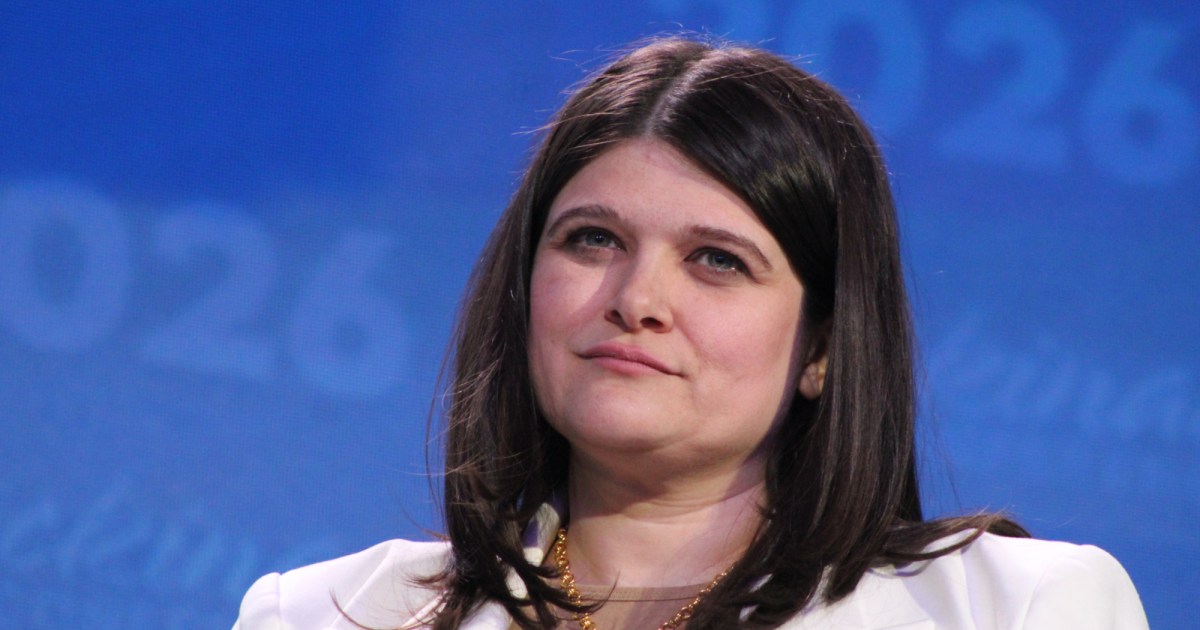
U.S. Rep. Haley Stevens (D-Mich.) speaks during a U.S. Senate Democratic primary debate on May 28, 2026, on Mackinac Island, Michigan.Danielle James/The Flint Journal/AP Get your news from a source that’s not owned and controlled by oligarchs. Sign up for the free Mother Jones Daily. The Democratic Party’s reactions to Rep. Haley Stevens’ sudden decision to walk back her endorsement of US Senate candidate Abdul El-Sayed and back Republican Mike Rogers have been scathing, to put it mildly. Senate Minority Leader Chuck Schumer (D-NY), who had endorsed Stevens in her primary race against El-Sayed before she was narrowly defeated in August, called the move “a despicable betrayal” on social media Sunday. This is a despicable betrayal from Rep. Stevens. Senate Democrats are united in our support for Abdul El-Sayed, because we know he will fight for the economic interests of working families in Michigan, unlike Mike Rogers, who is a tool of Donald Trump and billionaire donors.— Chuck Schumer (@chuckschumer) November 1, 2026 Former House speaker Rep. Nancy Pelosi (D-Calif.) said Stevens chose to “dangerously betray Michigan families’ healthcare, freedoms and future with her horrific endorsement.” Haley Stevens has chosen to dangerously betray Michigan families’ healthcare, freedoms and future with her horrific endorsement of Mike Rogers. @AbdulElSayed must win — because Michigan and our country deserve better. -NP— Nancy Pelosi (@TeamPelosi) November 1, 2026 Chair of the Michigan Democratic party, Curtis Hertel, wrote on social media Sunday that Stevens is not a current member of the party, “nor will she be in the future.” In response to Stevens’ endorsement of Rogers, El-Sayed said: “I actually don’t think about Haley Stevens.” “This is a state of 10 million people who deserve a lot better from their government,” he continued, saying he’s less focused on Stevens and Rogers and more on the other “9,999,998” Michiganders. Predictably, Republicans could not have been happier. President Donald Trump praised Stevens at a Sunday rally in Iowa, saying her decision was “very brave.” “I’ve never met Haley. But Haley said what few people were willing to say,” he added. “I’d love her to join the Republican Party actually.” Over the past couple of days, Stevens demanded that El-Sayed publicly renounce an advertisement from a group unaffiliated with his campaign that she called antisemitic because it blamed US support for Israel for expensive grocery prices. If he did not, she said, she would not attend a campaign event with him on Sunday. El-Sayed stated the ad was not made by his campaign, noting that he did “not agree with the contents of that ad.” He then asked Stevens to stay away from his campaign and rescinded the invitation to join him at a Detroit church on Sunday. As the New York Times reported that same day, citing more than a dozen people involved in or with knowledge of El-Sayed or Stevens’ teams, this was the last straw for Stevens in a longstanding feud with El-Sayed. Stevens had endorsed El-Sayed shortly after the primary, but kept ongoing tension out of public view. He had little communication with her and never invited her to campaign with him. That would have changed on El-Sayed’s Sunday event, which would have demonstrated party unity publicly, but instead of making an appearance there, Stevens showed up at a different Detroit church with his Republican opponent Mike Rogers. In a Sunday evening interview with CNN’s Anderson Cooper, Stevens refused to explain why she suddenly switched her endorsement to Rogers. “I’m just casting my vote this one way,” Stevens told Cooper, maintaining that she still wants Democrats to flip the Senate on election day. “I am not trying to upset anyone,” she added, instead pointing to the “anger and lack of kindness” of El-Sayed’s campaign. “I’m just being honest with my constituents and what I’m hearing from people, and in fact, I’ve been hearing from a ton of Dems, Anderson, who said: ‘Thank you, this is how we felt. We haven’t liked this campaign. It’s painful.’” As I wrote on Sunday, Stevens suggested over the weekend that El-Sayed’s campaign stood with “hate,” linking him to Hasan Piker, a political commentator and online live-streamer. Stevens pointed to El-Sayed’s past comments on Israel—from which he had already distanced himself over the summer. The United Democracy Project, a super PAC backed by the American Israel Public Affairs Committee that works to elect pro-Israel candidates, was Stevens’ biggest contributor to her campaign in the Democratic Party’s most expensive primary race. El-Sayed’s campaign reported on Monday that they broke their single-day fundraising record on Sunday, receiving $2.4 million in donations, with more than 26,000 people contributing for the first time. But what it means for the general outcome of the race is a different story. The latest and final New York Times/Siena poll released yesterday finds El-Sayed with a 11-percentage point lead—beyond the survey’s margin of error but nonetheless conducted before Stevens’ reversal. Only days before the election, much of the discussion has focused on the Stevens drama, which has overshadowed policy issues central to Michigan voters. As Rep. Debbie Dingell (D-Mich.) told Anderson Cooper on CNN just after Stevens’ interview, “I know that Michigan is tired of the drama, that they’re really worried about everyday issues, which are affordability and a very broken healthcare system.” And then she added, “This has been a very difficult week to watch.”
Haley Stevens Turned Michigan’s Senate Race Into a Soap Opera
Full Article
Original Source
Read the full article at Motherjones →KhanList aggregates and links to publicly available news content. We do not host full articles from third-party sources. Always verify important information with original sources.