
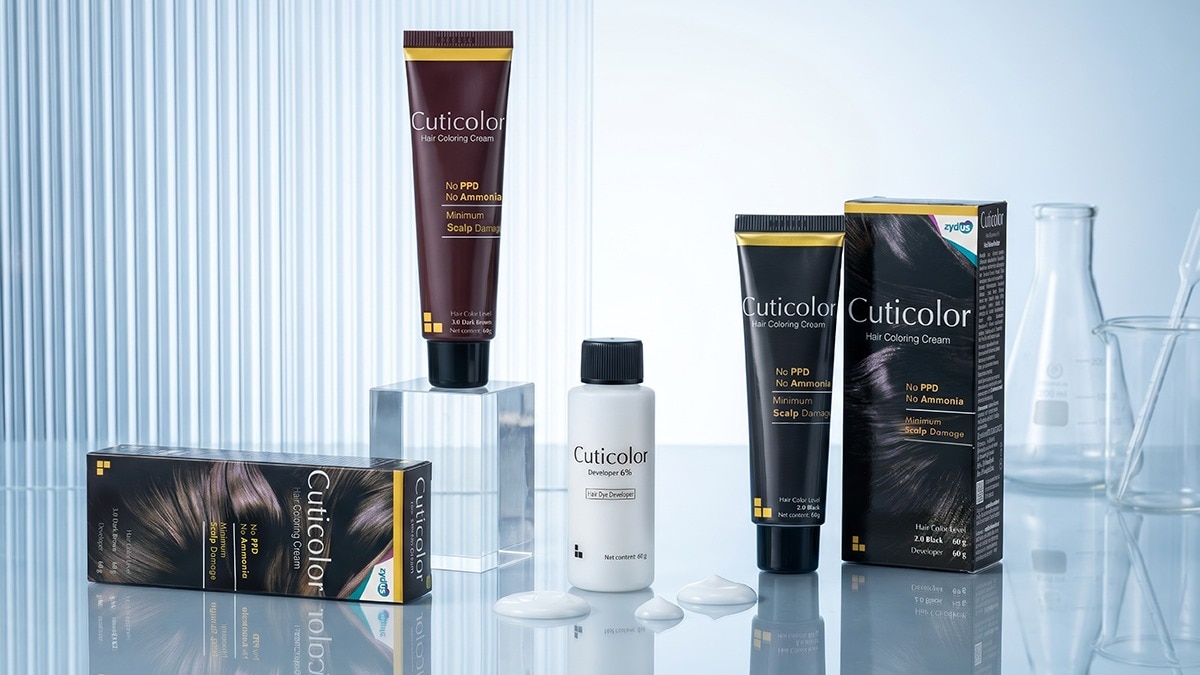
Finding your first grey hair in your 20s or early 30s can be unsettling. Finding a few more a couple of months later can turn that moment of panic into a practical question: How often should I colour my hair, and am I choosing the right product?New Delhi,Oct 27, 2026 16:35 ISTPremature greying can have several contributing factors. Genetics plays a significant role, while certain nutritional deficiencies, health conditions, and lifestyle factors may also be involved. For some people, greying can begin much earlier than expected and progress gradually over several years.But once those first greys become noticeable, covering them can quickly become a regular part of grooming. And that is when choosing a hair-colour product becomes more than simply picking a shade that matches your natural hair.How often should you colour grey hair?There is no fixed timeline. How frequently you need to colour depends on the rate of hair growth, the amount and location of grey, hair texture, natural hair colour, and how quickly the colour fades.For someone with scattered greys, colouring may be occasional. But when grey is concentrated around the hairline, temples or parting, new growth can become visible within weeks. Importantly, regrowth, not fading, is often what determines when it is time for a touch-up.That makes the colour important consideration for how long it holds. Korean brand Cuticolor Hair Coloring Cream promises colour that lasts through 8–10 shampoo washes, offering a clear benchmark for colour longevity. The actual duration can vary depending on hair type, washing frequency and individual regrowth.You may also not need to recolour your entire head every time. When the lengths still look good, a root touch-up can be enough to address new growth. Following product instructions and avoiding unnecessary over-colouring can make regular colouring more manageable.But if hair colour is becoming a recurring part of your grooming routine, how often you colour is only one part of the equation. What you use and what is in it matters too.Ammonia-free, PPD-free: what do these terms mean?The ingredient list on a hair-colour box can look complicated, but knowing a few key terms can make choosing easier.Ammonia is used in some permanent hair-colouring formulations to help open the hair cuticle and facilitate colour development. On the other hand, PPD, or para-phenylenediamine, is a common hair-dye ingredient used to create long-lasting colour, particularly in darker shades. However, PPD can trigger allergic reactions or sensitisation in some individuals. A few brands, such as Cuticolor Hair Coloring Cream, are free from ammonia, PPD, fragrance and alcohol. This offers a more considered formulation by eliminating four commonly scrutinised ingredients from the colouring process, while keeping the focus on effective grey coverage. Yet, a patch test, where recommended by the product, remains important.For today's increasingly ingredient-conscious consumer, these labels are therefore worth understanding rather than simply treating them as marketing claims.Do not forget the scalpHair gets most of the attention when it comes to colouring, but the scalp is where the product is applied. If hair colour is part of a regular grooming routine, scalp comfort becomes an equally relevant consideration.This is where Cuticolor Hair Coloring Cream takes its proposition beyond colour coverage. Made in Korea, its formulation includes Portulaca Oleracea and Boswellia Serrata extracts, along with panthenol and olive oil, that are known for conditioning and calming the scalp,The Korean hair-colour brand also uses eco-mechanism technology designed to support scalp balance during colouring, while helping maintain hair integrity across different hair textures. The proposition, therefore, is not simply about changing hair colour, but about making the colouring process more considered for both hair and scalp.For younger consumers who may begin colouring in their 20s or early 30s, that distinction becomes increasingly relevant. When colouring becomes something you do repeatedly, the question is no longer just whether it covers the grey, but whether the product fits into your overall hair and scalp-care routine.The new way to think about grey coverageIf you are starting to colour at 30, this could potentially become a grooming ritual for years. That makes understanding the formulation, considering scalp comfort and knowing how the colour behaves over time just as important as getting the right shade.Grey hair may be arriving earlier for some people. But perhaps the bigger change is in how we respond to it: from simply covering grey to making more informed choices about how we colour it.Disclaimer: The material, content, and/or information contained within this impact feature are published strictly for advertorial purposes. T.V. Today Network Limited hereby disclaims any and all responsibility, representation, or endorsement with respect to the accuracy, reliability, or quality of the products and/or services featured or promoted herein. Viewers or consumers are strongly advised to conduct their own due diligence and make independent inquiries before relying on or making any decisions based on the information or claims presented in the impact feature. Any reliance placed on such content is strictly at the individual’s own discretion and risk.- Ends
GREY HAIR AT 30: HOW OFTEN SHOULD YOU COLOUR IT, AND WHAT SHOULD YOU LOOK FOR IN A HAIR COLOUR?
Full Article
Original Source
Read the full article at Indiatoday →KhanList aggregates and links to publicly available news content. We do not host full articles from third-party sources. Always verify important information with original sources.