
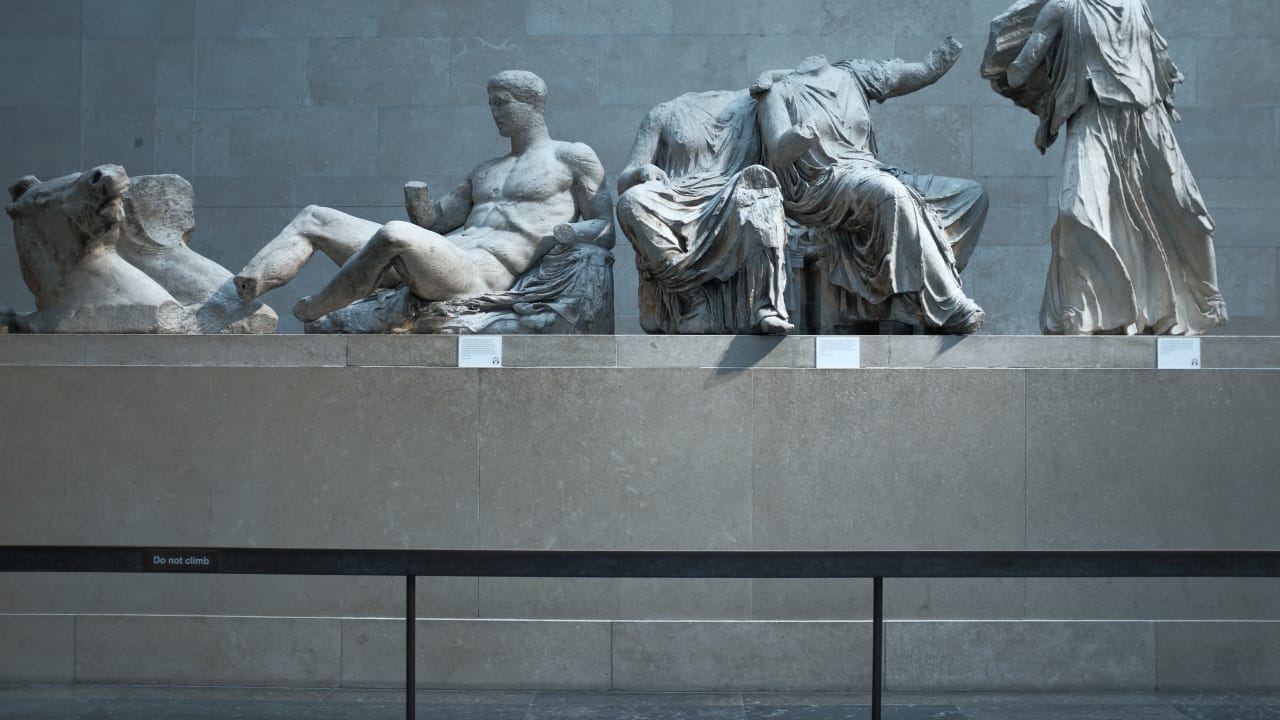
SEPTEMBER 15, 2026 17:24Greece’s Central Archaeological Council advised against letting three Greek museums temporarily loan 12 Parthenon Sculptures to Frankfurt’s Liebieghaus Sculpture Collection, international media reported last week.Deliberation over the request took place on September 1 and was voted against after the council learned that the requested Sculptures would be displayed alongside two sculptures loaned from the British Museum.The sculptures are slated to go on display in November as part of Liebieghaus’s upcoming exhibition titled “Athena, the Stage is Yours: The Parthenon Puzzle.”It is dedicated to the pediment sculptures of the Parthenon, “presenting for the first time an archaeologically sound proposal for the complete reconstruction of the sculptures on the east pediment,” according to the museum’s website.“With this exhibition, we are demonstrating just how vibrant and insightful archaeological research can be today,” said Liebieghaus Director Philipp Demandt in an August press release announcing the exhibit. “The new findings fundamentally alter our view of one of antiquity’s most famous monuments and, at the same time, demonstrate how closely scientific precision and museum education can be intertwined.”The restored western face of the Parthenon, Greece, July 2, 2026. (credit: Acropolis Restoration Service)One single artifact to be displayed togetherThe Parthenon Sculptures are a long-standing point of contention between Greece and the British Museum, tracing back to the 1800s.Between 1801 and 1812, British ambassador to the Ottoman Empire Thomas Bruce, also known as Lord Elgin, and his team removed the sculptures from Greece and brought them to England. The sculptures’ repatriation and legal ownership have been the subject of much debate since.Greek daily paper To Vima explained that the Greek government’s position has been that the Parthenon Sculptures are not individual elements that can be lent out on their own, but rather pieces of a larger piece that must be displayed together. Allowing individual elements of the sculptures to be loaned to Liebieghaus would go directly against the government position, according to To Vima, and would suggest that it and the British Museum hold the ideal that the sculptures can be loaned out as individual pieces.The press release, which was published before the Greek decision was announced, lists the Acropolis Museum as a contributor to the exhibit alongside the British Museum, though it does not go into detail regarding which of the Sculptures would be displayed.In a recent interview with the French outlet Le Monde, British Museum Director Nicholas Cullinan explained that the difficulty of the British Museum permanently returning any artifacts stems from the British Museum Act of 1963, which “prohibits national museums from disposing of their collections.”“Therefore,” he said, “the decision does not belong to the museum administrators, but to the British Parliament.” Which, given the current political climate, “does not seem [to me] that revising this law is a short-term priority for Parliament. That could take 10 years or more.”Greece refuses to ‘loan’ Sculptures from British MuseumDuring the 25th session of UNESCO’s Intergovernmental Committee for the Return of Cultural Property to Countries of Origin (ICPRCP) in May, Greece’s delegation argued that progress to find a solution to the matter has been hindered by the British insistence that it is unable to permanently return the sculptures, as current legislation prohibits such a move, but rather proposed lending the artifacts to Greece.Loaning artifacts from the British Museum, however, requires a precondition Greece refuses to adhere to.Before the museum’s trustees consider a loan request, the borrower – in this case, Greece – must acknowledge the British Museum’s ownership of the object.Both the policy and the museum’s willingness to consider lending artifacts to Greece have been “made clear to the Greek government, but successive Greek governments have refused to consider borrowing or to acknowledge the trustees' ownership of the Parthenon sculptures in their care,” the trustees said in a statement regarding the Parthenon Sculptures.The Greek refusal, on the grounds that the sculptures are objects vital to the country's cultural heritage and identity, has made “any meaningful discussion on the issue virtually impossible,” according to the trustees.Follow us on Google
Greece denies German museum's bid for Parthenon Sculptures amid British Museum ownership fight
Full Article
Original Source
Read the full article at Jpost →KhanList aggregates and links to publicly available news content. We do not host full articles from third-party sources. Always verify important information with original sources.