
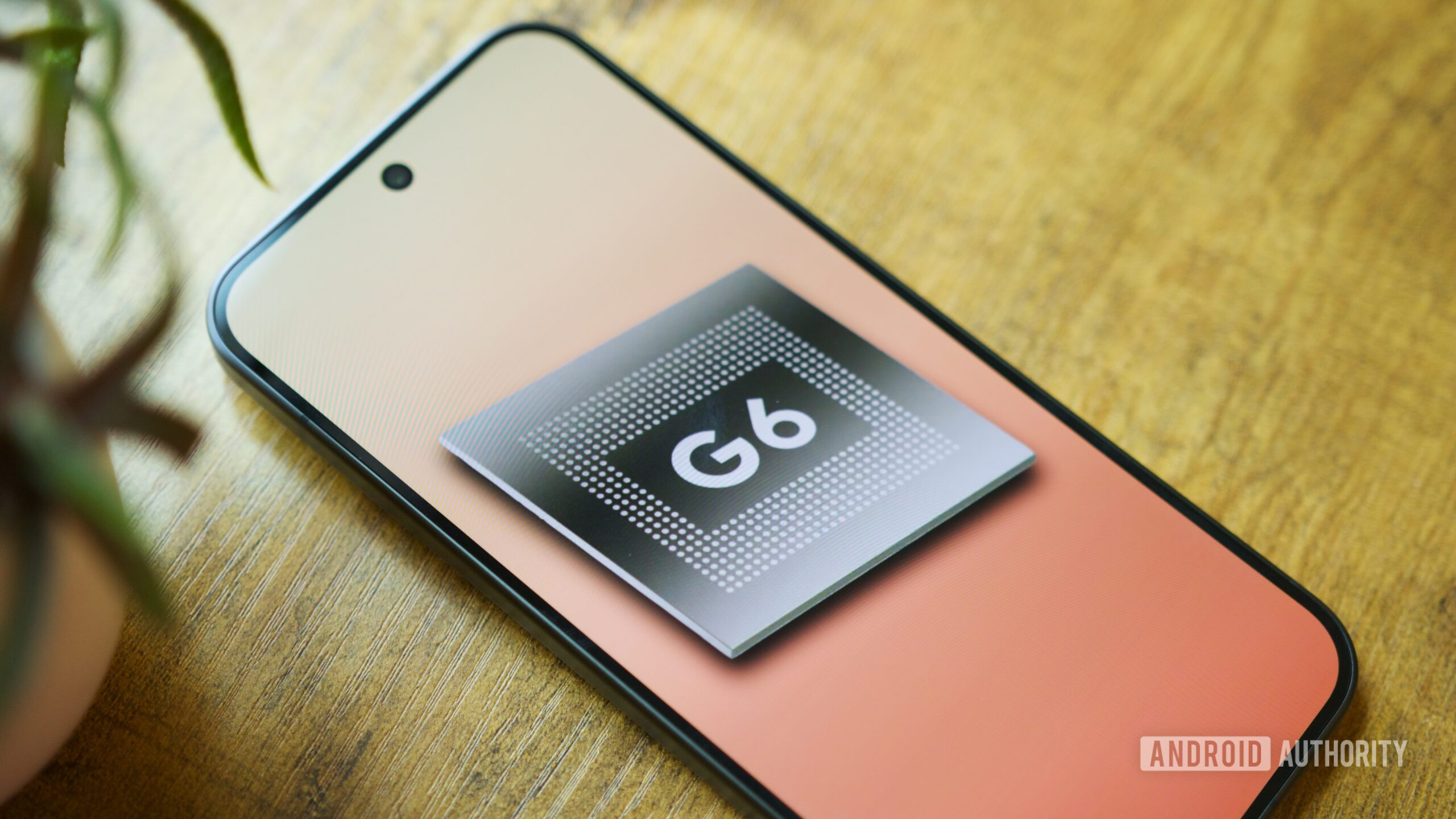
The Pixel 11 series has left Google with something of a dilemma. Based on our time with the phones so far, they remain among the most enjoyable Android handsets to use, thanks largely to Google’s software experience and a growing collection of genuinely useful features. But our testing of the Tensor G6 shows that Google’s custom silicon is falling further behind rival flagship chips; early gaming tests suggest a familiar litany of issues; and a week with the Pixel 11 Pro suggests that many of Google’s newest AI tricks aren’t yet strong enough to make up the difference.That’s not necessarily a problem for the Pixel 11, but it could become one for the Pixel 12.Google doesn’t need to build the fastest smartphone chip in the world, and Tensor doesn’t need to win every benchmark to justify its existence. However, the Tensor G7 needs to close some of the enormous performance gaps, improve efficiency, and provide a hardware foundation for AI features that are actually worth using. Otherwise, Google risks reaching a point where the reasons to buy a Pixel increasingly rest on what the company did several years ago rather than what it’s doing today.What should Google focus on for the Tensor G7?0 votesTensor G7 needs a serious GPU upgradeJoe Maring / Android AuthorityThe most obvious place for Tensor G7 to improve is performance. We saw some meaningful gains with the G6, particularly on the CPU and TPU side, but Google’s latest silicon remains well behind competing flagship processors. The GPU situation is even harder to defend, with rival chips offering more than twice the peak graphics performance in some tests.Google can argue that benchmarks don’t represent everyday phone usage, and there’s some truth to that. A Pixel 11 Pro doesn’t feel twice as slow as a Samsung Galaxy S26 Ultra when opening apps or scrolling through social media. For most people, myself included, the Tensor G6 is more than powerful enough for the tasks they perform every day. But that doesn’t mean performance has stopped mattering.Graphics support is a major weakness for the Tensor G6 that the next-gen needs to fix.CPU power remains important for demanding applications, gaming, video processing, multitasking, and increasingly sophisticated Android and desktop-class features. It’s also an important fallback for AI workloads that don’t run on Google’s TPU. I certainly don’t want to see Google stop improvements here, but the GPU is the component that has most troubled Tensor for the past few generations.And it’s not just about benchmark numbers; Google’s choice of graphics determines how well the Pixel handles modern games and other GPU-bound computations, and how much performance headroom remains as those workloads become more demanding, such as running emulators for classic (and increasingly modern) consoles. Google’s choice of graphics silicon partner also has knock-on effects for driver stability and game support. All are areas where Google is now seriously lagging behind similarly priced rival phones.Robert Triggs / Android AuthorityThat’s particularly important when Google promises seven years of software updates. A phone that’s already significantly behind its rivals at launch has less room to grow in the future. Tensor G7 doesn’t need to beat Snapdragon or Apple’s latest silicon across the board, but it does need to narrow the gap enough that Pixel buyers aren’t making an obvious long-term performance sacrifice just to get their hands on Google’s software today. Unfortunately, the Pixel 11 struggles to play the very best games today; it’ll be outright useless for the latest titles come the end of its seven-year lifespan. The Pixel 12 needs to drastically reevaluate that lack of value.But this isn’t just about packing in more GPU power; it’s also about leveling the playing field for features. Moving to more budget-oriented PowerVR DXT and CXT parts has stagnated Tensor’s performance and feature set at a time when rivals are pushing ahead with ever more powerful rasterization, ray tracing, and AI upscaling features. Making the most of high-fidelity games and emulators on the go is just as much about power efficiency, quality drivers, and features ranging from ray tracing to variable rate shading as it is about sheer number crunching.The Pixel 12 doesn’t need to become a gaming phone, but a flagship costing four figures should have enough graphics horsepower to play today’s demanding titles well while still leaving headroom for next-gen experiences. To do that, it might be time to revisit its GPU partnership with Arm or invest in something newer in the PowerVR portfolio. Whatever isn’t going to end up in another round of driver and support issues that take forever to fix.TPUs need to make Google’s AI ambitions useful, or move overJoe Maring / Android AuthorityOf course, there’s a reason Google is willing to accept these compromises. Tensor was never designed solely to compete with Snapdragon on traditional performance metrics. Google wants its silicon to power the AI experiences that make a Pixel different from every other Android phone. The problem is that those experiences need to be good enough to justify the trade-off.Our first week with the Pixel 11 Pro highlighted the issue. Many of Google’s new features are interesting, but several haven’t proven particularly useful in everyday life. HiLight is a clever piece of hardware, but it currently has very limited functionality. Proactive Assistance sounds promising, but it hasn’t consistently surfaced anything useful for us. Magic Capture and Camera Looks have potential, but neither has become something I would miss if I switched phones.Meanwhile, some of the Pixel’s best features have been around for years. Now Playing, scam detection, At a Glance, and Pixel Screenshots remain excellent precisely because they quietly solve problems rather than constantly reminding you that your phone contains AI.More TPU power is welcome, but it has to elevate the UX to be worth the tradeoffs.That’s an important lesson for the Pixel 12 in general, but also raises the question of whether Google is putting too much of Tensor’s limited silicon budget into the TPU for AI. Rival flagship chips already have dedicated AI accelerators of their own, but they’re not sacrificing CPU and GPU performance to lay them down on silicon. Qualcomm and MediaTek have long had AI acceleration across their SoCs, and newer chips now support Arm’s SME2 to run certain AI workloads efficiently on traditional CPUs. Likewise, modern GPUs (including mobile parts) increasingly support highly parallel quantized math, exactly the sort used for machine learning workloads, and mobile chipset architectures have shifted to shared-memory designs to quickly move data between CPU, NPU, DSP, and GPUs to make the most of their different capabilities.Perhaps Tensor G7 should take a similar approach. Rather than simply making the TPU bigger and faster again, Google could invest in a broader range of AI acceleration options, giving the CPU and GPU greater ability to handle smaller, latency-sensitive workloads while reserving the TPU for the jobs it does best. That could also free up some of Tensor’s finite silicon budget for graphics, cache, memory subsystem, or efficiency improvements that Pixel users can actually feel outside of AI use cases.Google’s AI strategy doesn’t need less ambition. But if the latest Pixel features aren’t proving transformative, I’m not convinced another huge TPU upgrade is necessarily the best way forward. The TPU needs to do more than look impressive on a spec sheet; it needs to enable experiences that rival phones simply can’t match. If it can’t, perhaps Tensor G7 would be better served by becoming a more balanced AI platform rather than an even more powerful TPU attached to a weaker flagship SoC.Pixel 12 needs Tensor to get out of its own wayJoe Maring / Android AuthorityThere’s a bigger question behind all of this: what does Google actually want Tensor to be? Google’s custom silicon project has given it control over the parts of the phone that make a Pixel a Pixel, from computational photography and on-device AI to security and the way hardware and software interact. That’s a significant advantage, and I’d much rather see Google continue developing that expertise than simply buy an off-the-shelf Snapdragon.But Google’s custom silicon shouldn’t be an excuse to lump consumers with other compromises. The Pixel 12 doesn’t need a chip designed around benchmark charts, but it needs one designed around the complete phone that consumers really want to buy. That means enough CPU performance for demanding apps and future versions of Android, enough GPU muscle to handle modern games and graphics features, enough AI acceleration to run Google’s most useful experiences locally, and enough efficiency to do all of this without turning the Pixel into a portable hand warmer.That’s a harder engineering problem than simply making the TPU 50% faster, but it’s the problem Tensor engineers need to solve, and fast. Google has spent several generations proving that it can make Tensor very good at specific workloads. The next step should be to prove that those specialized capabilities can coexist with the fundamentals that we expect from a four-figure flagship phone.Tensor G7 doesn't need to win every race, it just needs to stop losing the important ones.The Pixel 11 Pro remains competitive because Google’s software gives it something rivals don’t quite match. But that advantage becomes less meaningful if competitors can offer their own AI features while also delivering substantially better performance, gaming, connectivity, and efficiency. Google can’t assume the Pixel experience will always be compelling enough to justify those trade-offs. Increasingly, Google’s latest features just aren’t delivering that AI wow factor, but Tensor is giving us plenty of negative things to talk about.Next year’s Tensor G7 doesn’t need to win every race. It just needs to stop losing races that Pixel doesn’t need to lose. If Google can deliver that, the Pixel 12 could be more than just another phone with clever AI features. It could finally feel like the hardware and software were designed with the same priorities in mind. And after six generations of Tensor, that’s probably the most important upgrade Google can make.Thank you for being part of our community. Read our Comment Policy before posting.
Google’s Tensor G7 has one last chance to save the Pixel 12
Full Article
Original Source
Read the full article at Androidauthority →KhanList aggregates and links to publicly available news content. We do not host full articles from third-party sources. Always verify important information with original sources.