
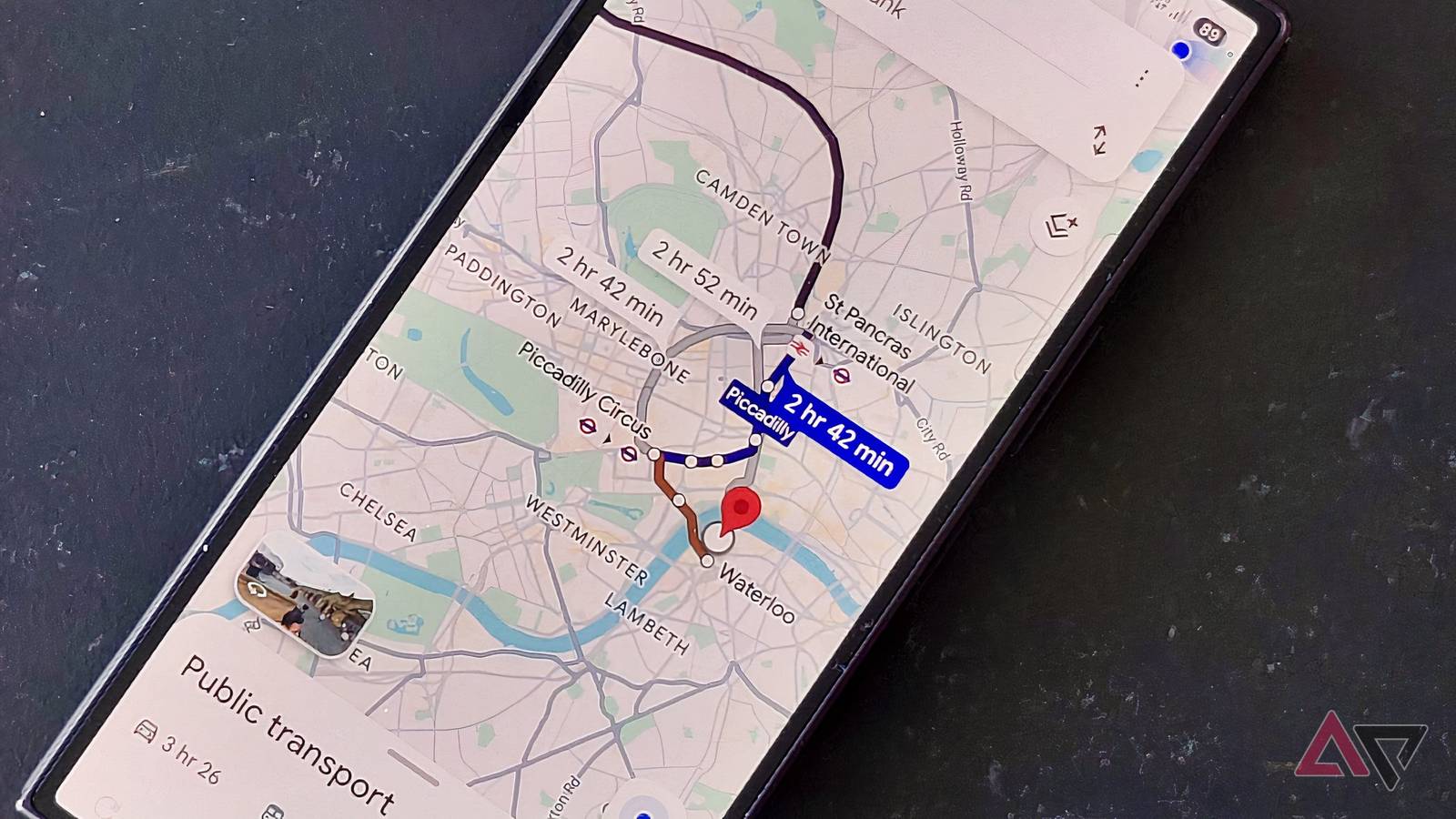
Published Oct 4, 2026, 11:00 AM EDT Tom has been covering technology since 2019, having worked as part of the phones team at TechRadar and then as an editor at What to Watch. Since 2025 he’s been a freelance contributor for many more brands including Digital Trends. BGR, TechRadar Gaming, TechAdvisor and GamesRadar. He's written about myriad topics over his career including phones and tablets, headphones and earbuds, fitness and AV, and enjoys adding more beats to his repertoire. Outside of technology he’s also written reviews and features on games, movies and sports, having worked for many years as an editor at movie & TV website WhattoWatch. He's attended tech launches, product shows, movie premieres and game launches to do so. Tom is based in London, UK, and when not covering technology he does work in the film sector, enjoys to run, cycle, climb and play tennis, and plays several instruments. Despite being the ubiquitous navigation app, Google Maps isn't perfect. I've used it for years, and like any service, product, or app you become overly familiar with, its big problems become blinding. Over years of use, I've noticed that its walking directions are often unreliable, and its cycling directions often require you to break the laws of physics (and actual laws). But I kept it around because it's still the best for public transport (sorry, CityMapper). However, I've started to notice that Google Maps skips the best routes, often sending me on complicated multi-transport jaunts instead of simpler trips. Maybe this is a recent change, or maybe it's been there all along, and I missed it. What's causing Google Maps to send me on a wild goose chase? It's because the app forgets a mode of transport I've used Google Maps for years in my city: London, UK. It's a city with so many modes of transport that you couldn't hope to know timetables and connections yourself: buses, underground, overground, DLR, trams, national rail, even the Thames ferries. But as I've started to notice, if you ask Google Maps for directions, it forgets one basic mode of transport: walking. The app assumes I hate walking anywhere and gives me nearby, slower transport rather than making me walk to a faster transport hub. Case in point: I live a 20-minute walk from one underground stop, 30 from another better-connected one, and 20 minutes from a fast national rail connection. These are generally my best ways to get around the city. However, because of the distance, Google Maps never tells me to take them. Instead, it points me to the bus stop outside my house, giving me routes that combine two or three buses and take longer than my tube trip would. This happened yesterday: Google wanted me to take three buses to a location at the outskirts of the city. However, I found that a national rail train took me to within a 15-minute walk of the destination. I love walking. I often choose to walk to that further underground stop, as it takes me through my local park, even if it adds time to my route. For a while after COVID-19, I'd walk my daily commute: 7km each way. I'll happily walk if it's feasible. Google Maps rarely recommends I walk if it takes more than 15 minutes. It'd rather send me on the bus, assuming that I can't drag myself up the road. And as anyone who's been to London will know, buses are woefully unreliable. This could be a quirk of where I live, but it's been the same in past homes. I was inspired to write this article when someone else recounted the same experience; I'm not the only one who's found Google Maps' dislike for recommending walking. The Google Maps fix takes experimentation It's not as easy as flicking a switch If you use the app, there's a toggle front and center, which lets you choose modes of transport to prioritize (although you have to go into Options if you're on the web). This lets you tell Google Maps, "No, I don't want to use the underground," for example, and it'll give you trips that rely on other modes of transport, even if they're longer, get you there later, or cost more. It's a useful tool, especially if you know something Google doesn't about specific modes of transport being off. But Google doesn't always listen. You'd think turning off "bus" in the options would give me plenty of alternative options. But Google doesn't always listen; its hatred for walking supersedes your preference for not taking the bus. Often, when I use this mode, Google Maps doesn't give me options with no buses, but ones with reduced buses. It still won't let me walk half an hour to my tube stop and instead wants me to take the bus. I know how bad traffic is during commuter hours, though. It'll take me 20 minutes to walk to the station, or 30 minutes on the bus. No thanks. It's still fairly useful for brainstorming alternative modes of transport. When I needed to go to the outskirts, experimenting with toggles highlighted the national rail connection, so I learned something, even if it still wanted me to take a bus. There's also no way to tell Google Maps, "I'm happy to walk some of the way," which is why it never tells me to walk to my tube station. A simple toggle or slider that lets me pick an optimal walking range would make its instructions more useful. It adds stress for those who don't need it I've been living in London for most of a decade, and I'm proud to say I know my way around the city. I've gotten to the point where my knowledge of routes and options beats Google; it's how I know I've become a local. If Google Maps gives me some bizarre three-bus route, I can ignore it and walk a bit to a train stop to get there much faster. However, for tourists, or people not navigationally inclined, like me, poor Maps directions could be unhelpful. Some people find ways to make Google Maps stress-free, but I wish the app catered more to walkers because right now it adds to the stress.
Google Maps has a big problem with route suggestions; nothing I've tried fixes it
Full Article
Original Source
Read the full article at Androidpolice →KhanList aggregates and links to publicly available news content. We do not host full articles from third-party sources. Always verify important information with original sources.