
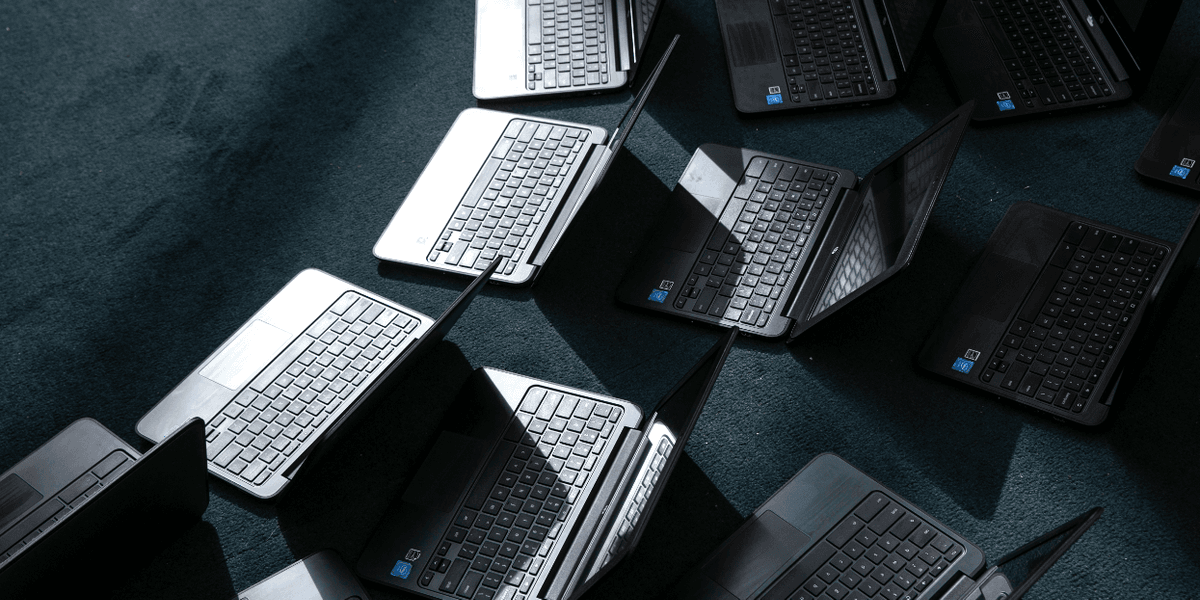
Google Chromebooks initially launched in Spring 2011. They’ve since become a mainstay of public education, thanks to their affordability, simple security, and ease of use. However, Google just announced a successor, and if Google has its way, it will be the thing to kill Chromebooks once and for all.The somewhat clumsily named Googlebook is a hybrid device built to bridge the gap between Chromebooks and more capable machines like Windows PCs and Macs. It’s powered by Googlebook OS, a version of Android tuned specifically for desktop. It also borrows some features from Chromebooks, helping the platform feel familiar to anyone already in Google’s ecosystem. Googlebooks aren’t quite as mature as their Chromebook siblings, but that isn’t stopping Google from officially killing the latter anyway.Just like a Windows or Mac computer, you can connect a mouse and keyboard, drag and drop files to your desktop, enjoy a full desktop browser experience, complete with extensions, and use apps to get work done.It has full access to the Google Play Store library, where some apps like the photo editor Luminar and the calendar app Fantastical already have desktop-class versions on the platform, in addition to the mobile Android counterparts.Googlebooks also have a Debian Linux command-line environment that can be accessed through the Terminal. According to Google, “You can install and run developer tools, code environments, and access other Linux applications.”One of the cooler features, though, is that Googlebooks offer better interoperability between the new laptop and some existing Android phones. With Continue On, you can start a task on your phone and easily pick up that same task in the same spot on your Googlebook. Your files from your phone also automatically show up in the files app in Googlebook. You can cast an app from your phone to your laptop for easy use. You can even sync your phone notifications to your laptop.Ultimately, Googlebooks are a huge upgrade from Chromebooks with premium materials, powerful chips, and a more capable operating system.RELATED: How the laptop revolution destroyed public education Blaze Media illustrationUnfortunately, there are also some clear drawbacks, at least at launch. Now that these machines are out in the wild, reviewers have found some serious flaws.For instance, some Progressive Web Apps, or apps that you can download from the web when a native app isn’t available, don’t work on Googlebooks like they did on Chromebooks. Broader support is coming soon, but for now, it’s limited.The interoperability features between Android and Googlebook require Android 17, which means many Android users will be left behind. These features also don’t work on Samsung devices yet, which account for most of the Android devices in the United States.There are five Googlebooks available from different OEMs at launch — two of them have an ARM-based chip, similar to the ones in virtually all smartphones today, and three of them have x86 chips, like those found in most Windows laptops. Android works on both architectures, but some Google Play apps aren’t compatible with x86, creating potential fragmentation.Needless to say, Googlebooks aren’t quite as mature as their Chromebook siblings, but that isn’t stopping Google from officially killing the latter anyway.When Googlebooks were first unveiled in May, Google made it clear that this new brand targeted the premium hardware market, while Chromebooks were meant to represent the affordable segment. Although Google didn’t divulge official details, there were rumors that both platforms would exist together, catering to different groups in their respective categories. After all, a $300 Chromebook is easier to give to a 3rd grader than a $999 Googlebook.Unfortunately, that’s not the case. Google confirmed that it will phase out support for ChromeOS — the operating system that runs on Chromebooks — by 2034. Existing Chromebooks will continue to receive updates until that time.On the bright side, Google said that, “Many newer commercial Chromebook models will be capable of upgrading to Googlebook OS. Details on migration paths and device eligibility will be shared at a later date.”So newer Chromebooks will get a new lease on life with Googlebook OS, while older models will no longer be supported. That doesn’t mean the devices will cease to operate, but they will no longer receive security patches, potentially leaving your data open to hackers if you continue to use a Chromebook past 2034.The long lead time is meant to give users and educators time to switch platforms over the coming decade, but the elephant in the room remains. Googlebooks are much more expensive than their Chromebook counterparts, and while Google is sure to iron out the bugs discussed above, the laptops that launched this month are more akin to test devices than full-fledged products. If you own a Chromebook, it might be best to hold onto it for now. For those on Windows or Mac who are thinking about switching, just know that there are still some early hiccups that must get sorted out.Like Blaze News? Bypass the censors, sign up for our newsletters, and get stories like this direct to your inbox. Sign up here!
Google is killing its popular Chromebook. Here's what's next — and how to prepare.
Full Article
Original Source
Read the full article at Theblaze →KhanList aggregates and links to publicly available news content. We do not host full articles from third-party sources. Always verify important information with original sources.