
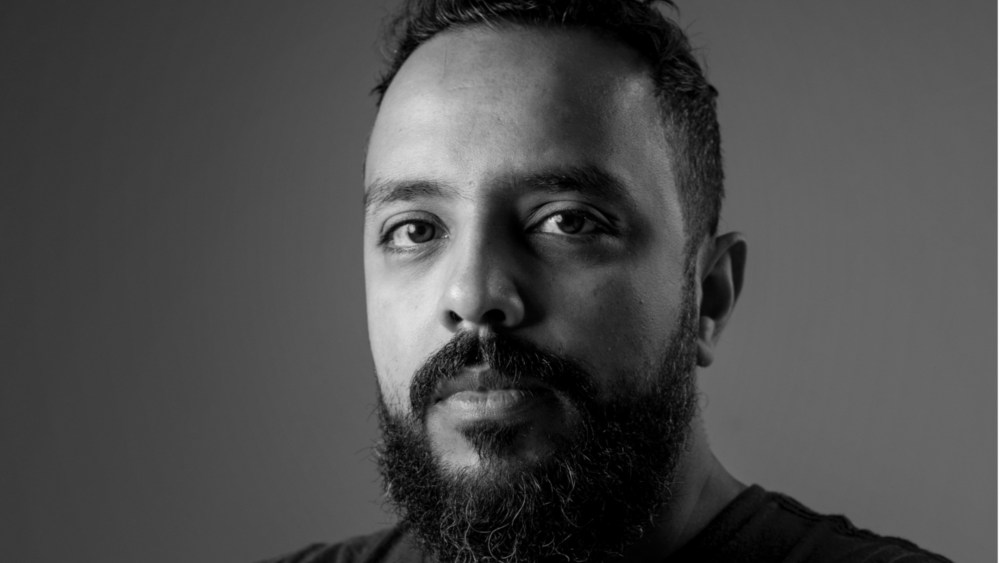
Sudanese filmmaker Mohamed Kordofani, whose debut feature “Goodbye Julia” premiered in Cannes’ Un Certain Regard sidebar, has attracted a raft of partners for his follow-up “About Love & September Laws,” which he’ll be taking to Rome’s MIA Market, running from Oct. 19-23. Produced by Klozium Studios, the production outfit he launched in 2020 with “Goodbye Julia” co-producer Khalid Awad, the film will reunite the core creative team behind Kordofani’s acclaimed debut, including co-producers Marc Irmer, of France’s Dolce Vita; Michael Henrichs, of German production company DGS; and Issraa Elkogali, of Sweden’s RiverFlower. Also on board are “Goodbye Julia” cinematographer Pierre De Villiers, editor Heba Osman, sound designer Rana Eid and co-writer Khaled Alwaleed. “About Love & September Laws” is the second installment in a planned trilogy that tells the modern history of Sudan. Set in 1983, it follows an African American journalist, Carter, who arrives in Khartoum on a mission to revive a struggling newspaper. There he reunites with Nouri, an old friend he hasn’t seen in 10 years, now an idealistic doctor who serves as an ideological counterpoint to the jaded reporter. Popular on Variety Things grow complicated when Carter falls for Fatin, his newly hired translator, unaware that she is Nouri’s ex-wife. The fragile romance collides with the sudden weight of politics when Sharia law is imposed across Sudan, and Nouri finds himself facing the death sentence when he refuses a court order to amputate a thief’s hand. When Carter uncovers a story that could expose the regime’s hypocrisy and save Nouri’s life, he’s forced to choose between the career he came to rebuild, the friendship that gave him a home in Sudan and a love he is only beginning to realize he can’t afford to lose. Speaking to Variety ahead of MIA, Kordofani explains that while “About Love & September Laws” is set against the backdrop of a pivotal moment in Sudanese history, at its core “it’s a story about three people who are entangled in different kinds of love.” The director’s groundbreaking debut was the first Sudanese feature to make the official selection at the Cannes Film Festival. Executive produced by Academy Award winner Lupita N’yongo, the film won the Un Certain Regard section’s Freedom Prize along with 65 other international plaudits, including audience awards at El Gouna and Singapore. In a rave review, Variety’s Jessica Kiang praised the “engrossing” drama as a “well-performed deep cut into Sudan’s recent history [that] unfolds like a morality thriller.” As with “Goodbye Julia,” which takes place in Khartoum during the six years prior to the 2011 secession of South Sudan, Kordofani’s latest again looks to “bridge the personal and the political, the local and the global, the past and the present,” he says. However, after his first feature struggled to break into the U.S. and U.K. markets, the director says he’s determined to “reach even wider audiences.” “Even before ‘Goodbye Julia,’ I’ve always wanted to make films that are for the mainstream but still hold artistic value, educational value — [sharing] something about my country that people don’t know,” he says. “I still want to do the things I want to do, but I want to make the film more accessible. The wider the reach, the better.” “Goodbye Julia” won the Freedom Prize in Cannes’ Un Certain Regard Last December, “About Love & September Laws” scooped a trio of prizes at the Red Sea Film Festival’s industry Souk Awards. In Rome, where it’s among the 12 projects taking part in MIA’s Film Co-Production Market, Kordofani said he’s particularly “looking for partners that can [build a] bridge to the United States.” “It’s a film with an American lead. It’s predominantly English. I think, in the development stage, I should start building these bridges, not only for casting but also for the journey of the film and presenting the film [to a U.S. audience],” he says. Central to that will be the lead role of Carter, a former Black Panther and disillusioned reporter who’s “lost faith in bigger causes and bigger movements,” says Kordofani. Opposite him is Nouri, the idealistic doctor, whose refusal to enforce a Sharia court order puts his life in jeopardy. “There’s this clash of personalities,” says the director, characterizing the film as a “moral drama” where “slowly, the politics will seep into their story and guide how the story unfolds.” A winner of Variety’s MENA Talent of the Year Award in 2023, Kordofani is among the many Sudanese who were forced to flee the country amid the ongoing war. Now based in Nairobi, where he and Awad have established their production shingle Klozium Studios, he nevertheless feels an obligation to his homeland, saying, “I do feel a responsibility to talk about Sudan.” “Living apart from my family, I continue to…search for purpose through filmmaking,” he says. “And especially now, as war rages on, I feel an urgent responsibility to preserve and create our own narrative — before it is stolen, silenced or rewritten by others.” “About Love & September Laws,” he adds, offers “a platform to engage directly with the Western world, not as an outsider telling Sudan’s story, but as someone inviting them into a shared conversation about freedom, sacrifice, love and truth-seeking.”
‘Goodbye Julia’ Director on Reaching for ‘Wider Audiences’ in Sudanese Period Drama ‘About Love & September Laws’ (EXCLUSIVE)
Full Article
Original Source
Read the full article at Variety →KhanList aggregates and links to publicly available news content. We do not host full articles from third-party sources. Always verify important information with original sources.