
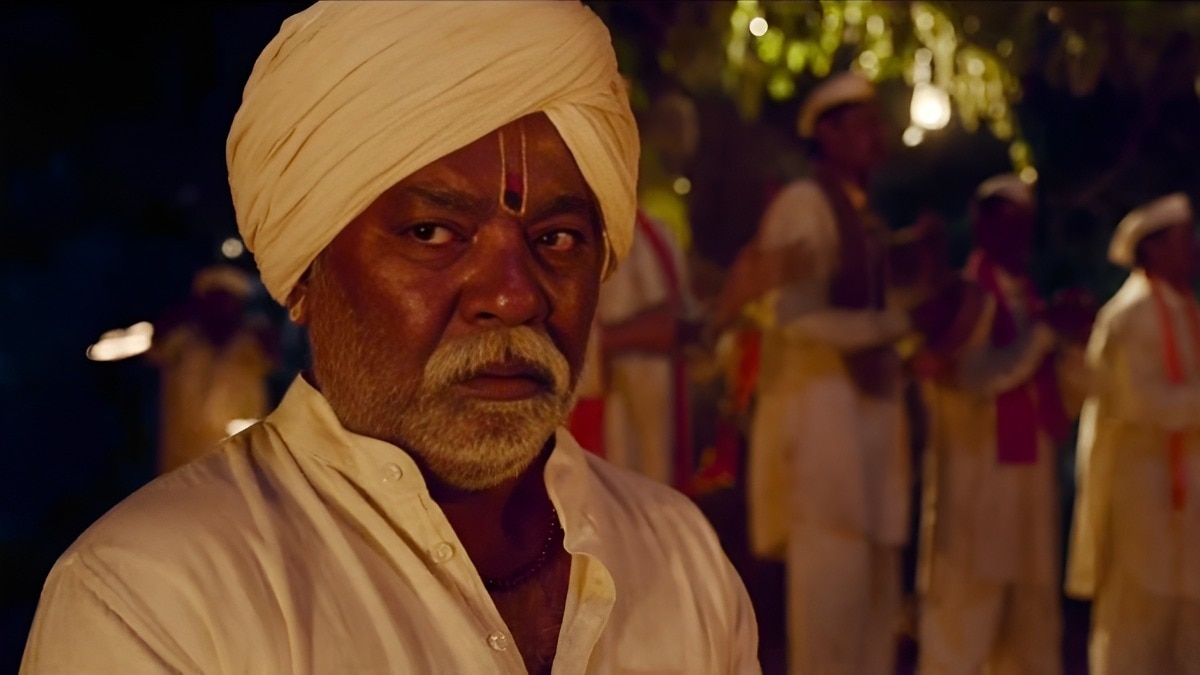
A wedding should be a happy occasion. In Gondhal, however, the celebrations come with its share of secrets, jealousy and power struggles. Set during a traditional Maharashtrian Jagran Gondhal, the film follows a wedding that brings several people together, even as their personal lives threaten to fall apart.Using the ritual, its beats and its promise of divine intervention as the backdrop, Gondhal explores what people do when they believe no one is watching, and how easily authority can be mistaken for respect.The film, which is India’s official entry at the Oscars 2027, opens with a long, roughly 25-minute continuous shot. We follow Bhivaba (Kishor Kadam), an elderly gondhali performer, and his young grandson Vishnu (Dhruv Thoke) as they walk by lantern light towards a wedding. The boy asks about the gondhal, their family's sacred lamp and his absent mother. Bhivaba answers him patiently, though his own story remains largely untold.Vishnu's questions also tell us about the belief behind the ritual. Lord Khanderaya is believed to visit the ceremony and remove obstacles from the newlyweds' lives. Quite a simple explanation but one that takes on a different meaning as the story moves forward. As the two walk through the village, the film gradually reveals its world. By the time they reach the destination and the camera pulls back to show us the newlyweds, their extended families, and the imposing Patil household, we already understand how the village works and who holds power. The wedding itself is far from straightforward. Suman (Ishita Deshmukh), the bride, has a secret of her own. Sarjerao (Nishad Bhoir), the village chief's son, is used to getting his way, while the groom, Anandrao, or Aandya (Yogesh Sohoni), initially comes across as a rather simple man. Each one of them has a part to play in the events that follow, but the film takes its sweet time revealing their intentions.The film effectively builds these tensions as the ritual continues through the night. The singing, percussion and performances hold everyone’s attention, even as the characters deal with their own problems. The village has gathered to pray for the newlyweds, but not everyone seems concerned about their well-being. The chief's treatment of the people around him, in particular, shows how easily authority can turn into exploitation. Kishor Kadam anchors the film as Bhivaba. His performance feels natural and restrained. His presence gives the film an emotional centre as the drama grows more tense.Ishita Deshmukh stands out as Suman, a woman living in a world where others have mostly made important decisions in her life. She wants to make her own choices, but it is not easy. Deshmukh captures both her frustration and her vulnerability, making her Suman feel real.Yogesh Sohoni brings an appealing innocence to Anandrao, a man who does not fit the village's prescribed image of masculinity. Nishad Bhoir makes Sarjerao an uncomfortable presence, capturing the arrogance of a man accustomed to getting what he wants. Yet the character sometimes slips into the known villain zone. Meanwhile, Suresh Vishwakarma is convincing as the intimidating Patil, the village chief.Ilaiyaraaja’s music works best when it accompanies the gondhal ritual. The long sequences of live singing and percussion are among the film’s most engaging moments. The performers’ energy, the crowd’s reactions and the ceremony’s hold over the village bring the music and story together. The background score is less effective at times. The film is strongest when it lets the ritual’s own sounds do the work.Despite these strengths, Gondhal has its flaws. Its atmosphere is stronger than its screenplay. Some events feel convenient, happening because the plot needs them to rather than developing naturally from the characters. As a result, certain decisions and their consequences become difficult to believe, weakening moments that should carry more emotional weight. The pacing is another problem. The extended ritual sequences are important to the film’s cultural setting and slow-building tension, but their repetition sometimes slows the story too much. The opening shot shows how effectively the director uses time to establish a place and its people. Elsewhere, the film is less successful at justifying its slow pace. A tighter edit could have preserved the atmosphere while keeping the central conflict moving.The final stretch builds tension but not every twist has the desired impact. The film raises worthwhile questions about faith, social status, masculinity and the treatment of women, but some ideas remain underdeveloped.Still, Gondhal deserves credit for placing a Maharashtrian folk ritual at the heart of its drama. The ceremony brings the village together while exposing its desires, fears and power struggles.Gondhal will appeal to viewers willing to settle into a slow-moving rural drama. Its performances, folk sequences and atmospheric setting make it worth watching, even when the screenplay loses its grip. The film may not get everything right, but it has a distinct identity and a clear view of how power hides behind tradition and faith.At the beginning, Bhivaba tells his grandson that Lord Khanderaya comes to the gondhal to remove obstacles. The rest of the film asks a simple but unsettling question: what happens when the obstacles are the people themselves?- Ends
Gondhal review: Secrets, patriarchy and a ritual that cannot hide the truth
Full Article
Original Source
Read the full article at Indiatoday →KhanList aggregates and links to publicly available news content. We do not host full articles from third-party sources. Always verify important information with original sources.