
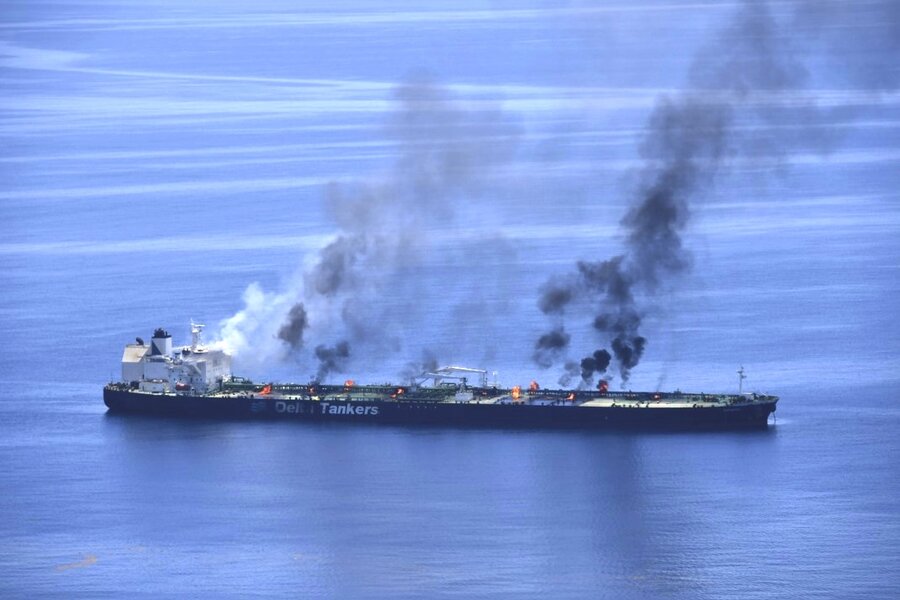
The concept of innocence shows up often in international law, and in recent weeks, a growing number of countries have rallied to defend it – in the narrowest part of the Red Sea, the Bab al-Mandab Strait. The waterway links Europe and Asia, helping ships avoid a long route around Africa.An expanding war to keep the strait open and safe for commercial ships – a historic right known as “innocent passage” – has now gone global, especially after Iran closed the nearby Strait of Hormuz in its war with the United States. Together, the two vital sea-lanes have served as a transit point for more than a quarter of seaborne petroleum. Recent violations of these “innocent” waterways, embedded in rules for the freedom of navigation, have raised prices at the pump everywhere, even in oil-rich North America. The war to keep Bab al-Mandab (“Gate of Tears”) open now involves Saudi Arabia, Pakistan, Turkey, the United Arab Emirates, and, to a lesser degree, the U.S. and several European nations. It focuses on removing control of the strait from a minority militant group in Yemen, the Iran-backed Houthis. The group captured the Red Sea port city of Mokha in mid-September, raising alarm worldwide.“Those who can threaten Bab al-Mandab do not merely control a piece of Yemen, but hold a valuable card in the game of international trade ... with implications for the interests of Washington, Moscow, Beijing, European capitals, Riyadh, Tehran, Tel Aviv and the states of the Horn of Africa,” wrote Mohammed Al-Qadhi, a Yemeni political analyst, in New Lines Magazine.What began years ago as a war for influence in Yemen between Iran and Saudi Arabia has now escalated to a challenge to maritime law rooted in guarantees for harmless passage of commercial ships. Deepen your worldviewwith Monitor Highlights.Politics with respectGet political stories with respectful analysis.There‘s a world of new ideas in everyBooks newsletter.There‘s more to life, enrich yours withCulture & Learning weekly.Follow humanity‘s discoveries withScience & Nature stories in your inbox.Gain a spiritual perspectivefrom the stories in your inbox.Want to understand the deeper impact of critical events? Learn the Monitor‘s insight.Already a subscriber? Log in to hide ads. As fighting escalates in western Yemen involving a range of military powers, the outcome will determine if international norms of innocence – in this case, transport through narrow waterways – will continue to be honored under the United Nations Convention on the Law of the Sea. On Sept. 18, the U.N. Security Council demanded that the Houthis uphold navigational rights and freedoms. “The coming days will reveal how far the struggle for control of the [Yemeni] coastline will go,” wrote Mr. Al-Qadhi, “and what its significance will be for the stability of the global business environment.” ALREADY A SUBSCRIBER? LoginReal news can be honest, hopeful, credible, constructive.The Christian Science Monitor was founded in 1908 to lift the standard of journalism and uplift humanity. We aim to “speak the truth in love.” Our goal is not to tell you what to think, but to give you the essential knowledge and understanding to come to your own intelligent conclusions. Join us in this mission by subscribing.
Global tipping point in a shipping chokepoint
Full Article
Original Source
Read the full article at Csmonitor →KhanList aggregates and links to publicly available news content. We do not host full articles from third-party sources. Always verify important information with original sources.