
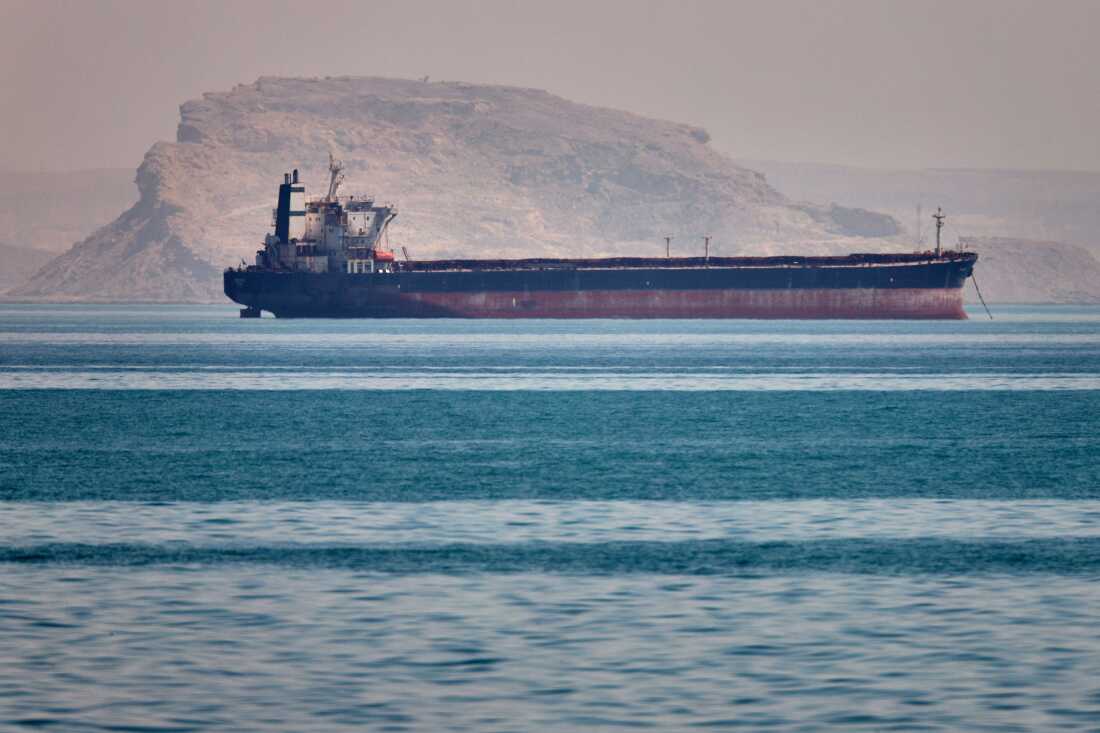
Foreign Affairs Oil is moving again, but markets are skeptical—and with good reason. Amirhosein Khorgooi/AP/ISNA The headline news is good for a change: Energy flows through the Strait of Hormuz are picking up. As of Monday, a seven-day average of 13.5 million barrels of crude oil were transiting the waterway, roughly matching pre-war levels. Two questions arise out of this happy circumstance: First, what has changed operationally? Second, why aren’t markets more jubilant? The second question is easier to answer. A week of good flows does not erase six months of supply disruption. Global reserves are depleted, and even resumed supply will be meeting increased demand as countries try to refill their reserves. The physical supply disruptions—the severe damage to refineries, pipelines, and other infrastructure—will persist in the near to middle term even as the backlog works its way through the strait. On the consumer side, the lag between crude and its derivatives means that prices will remain elevated for some weeks even if flows continue at normal levels. (Will it be enough to bring prices down by midterms? To be determined!) Finally, there is no guarantee that things will continue so smoothly. Markets have seen diplomatic breakthroughs, memorandums of understanding, and “Operation Project Freedom” come and go. Some skepticism is warranted. Which brings us back to the first question: Why are things going so well? There are a variety of possible answers. The first is that American military operations have finally degraded Iranian capacities to the point at which they can no longer constrict flows, or are unwilling to invite the further punishment that will come from reapplying pressure—that is to say, the state of play has basically changed since the abortive Operation Project Freedom in early May. There have in fact been a steady drip of reports about drone attacks on tankers, but these are evidently no longer occurring at a scale sufficient to discourage traffic. If the Iranians are unwilling rather than unable to return to full-scale war, it is plausible that they will escalate and deescalate further as they try to optimize between constricting flows and not inviting an overwhelming kinetic response; they do clearly have significant capabilities in reserve, although perhaps their pain tolerance has changed. Even with inconclusive results, this instability would justify markets’ apparent disbelief that all is well and the future is bright. Subscribe Today Get daily emails in your inbox Another possible answer, which can coexist with the first, is that the Iranians are trying to maintain calm in anticipation of a diplomatic breakthrough. While public rhetoric has remained heated on each side (to say the least), there was some movement around the UN General Assembly in New York last week, including an exchange of proposals for a return to something like the June MOU. Diplomatic conditions seem worse than ever—indeed, at time of writing, it had just been announced that a third U.S. aircraft carrier was in transit to the Persian Gulf—but there are still noises out of both capitals about wanting to call this whole thing off. A goodwill gesture isn’t unimaginable. A third possible answer, compatible with the first but less with the second, is that the Iranians are waiting for an opportune time to escalate. (Trita Parsi has been a cogent proponent of this line of speculation.) The experience of “bringing down Carter” looms large in the Iranian memory. (Somehow, they don’t consider that maybe it was mostly Paul Volcker who brought down Carter.) While the new political dispensation has not settled in the wake of Ali Khamenei’s death, it is true that hardliners like Mohsen Rezaei have gained prominent positions; they are definitionally more amenable to attempting to apply sticks to the United States, and there is a broadly held belief in Tehran that midterms are a useful political opportunity to maximize the administration’s embarrassment. (As I have written previously, I think this is unlikely to be a productive paradigm for them.) This would again justify markets’ skepticism. Time will tell. Good news is good news, and welcome after a fairly gnarly seven months. Yet, as American analysts have consistently failed to consider, there are at least two parties that get a vote in any war. Spiking the football on the opening of the Hormuz seems, at this point, a little premature.
Glimmers of Hope in the Hormuz?
Full Article
Original Source
Read the full article at Theamericanconservative →KhanList aggregates and links to publicly available news content. We do not host full articles from third-party sources. Always verify important information with original sources.