
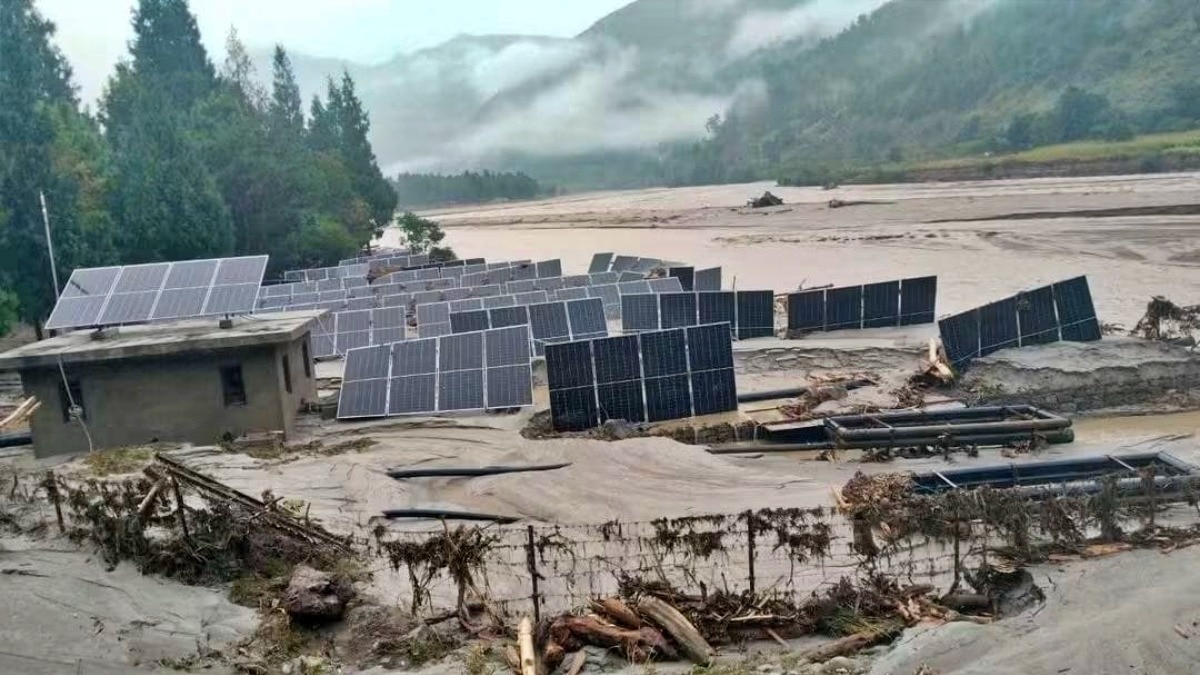
A breach at Bhutan's Shintaphu Lake sent water towards the Sankosh and prompted evacuations in India. The cross-border threat underscores the need for stronger Himalayan monitoring and preparedness.A GLOF is essentially a sudden, often catastrophic release of water stored in a glacial lake. New Delhi,Oct 30, 2026 14:10 ISTA massive surge of water from a glacial lake in Bhutan has triggered flood alerts across parts of northern West Bengal and Assam, forcing thousands of people living along vulnerable riverbanks to move to safer locations.The incident has once again drawn attention to a growing climate-related threat facing the Himalayan region: Glacial Lake Outburst Floods, or GLOFs.A GLOF is essentially a sudden, often catastrophic release of water stored in a glacial lake. These lakes form when glaciers melt and water accumulates behind natural barriers made of ice, rocks and debris, known as moraines.Unlike ordinary river floods, GLOFs can release enormous volumes of water within a short period, sending powerful torrents downstream. These floods can carry massive quantities of rocks, mud, boulders, trees and other debris, destroying bridges, roads, houses and hydropower infrastructure along their path. The latest incident in Bhutan illustrates how a disaster originating high in the mountains can threaten communities hundreds of kilometres downstream.Approximately 7.4 million cubic metres of water surged out of the breached Shintaphu Lake in Bhutan. The water travelled through the Mo (Mofu) river system towards the Sankosh river, raising concerns about sudden flooding in parts of West Bengal and Assam. The administration evacuated thousands of residents, with schools being converted into relief shelters. Disaster response teams were also placed on alert.HOW DOES A GLACIAL LAKE BURST?A glacial lake does not necessarily burst because of rising temperatures alone. Several factors can destabilise the natural dam holding the water.Avalanches and landslides: Large volumes of snow, ice or rocks falling into a lake can displace water, generate powerful waves and cause the lake to overflow its natural barrier.Melting glaciers: As glaciers retreat, new lakes form and existing ones expand, increasing the volume of water stored behind unstable ice or moraine dams.Heavy rainfall: Intense rainfall can rapidly increase the water level of a lake, putting additional pressure on its natural barriers.Earthquakes: Seismic activity can destabilise moraine dams and trigger landslides into glacial lakes.Once the natural barrier gives way, water can rush downstream at enormous speed, carrying rocks, sediment and debris.WHY IS INDIA PARTICULARLY VULNERABLE?India's vulnerability comes from its geography, geology, climate and the concentration of people and infrastructure in Himalayan river valleys.The Indian Himalayan region is home to thousands of glaciers and glacial lakes. As temperatures rise, glaciers are retreating, creating new lakes and expanding existing ones. This increases the potential volume of water that could be released during an outburst.The threat is particularly significant in Sikkim, Himachal Pradesh, Uttarakhand, Arunachal Pradesh, Jammu and Kashmir and Ladakh.A 2020 study published in Water Resources Research assessed 329 glacial lakes in the Indian Himalayas. It found that around 22% presented high or very high hazard levels, considering the likelihood of an outburst and its potential downstream impact.The steep Himalayan terrain makes matters worse. Water released at high altitudes can rapidly gain momentum as it travels through narrow valleys, turning into destructive torrents. Communities located far downstream can be affected even if the lake itself is in a remote mountain region.There is also growing infrastructure exposure. Hydropower projects, dams, roads, bridges and settlements have expanded along Himalayan rivers. A sudden flood carrying enormous quantities of debris can damage or destroy these structures.Climate change adds another layer of risk. The IPCC has warned that glacier retreat, rising temperatures and changing precipitation patterns can increase the formation of glacial lakes and the occurrence of outburst floods in mountain regions.CAN GLOF DISASTERS BE PREVENTED?GLOFs cannot always be prevented, but their impact can be reduced through continuous satellite monitoring of vulnerable lakes, early-warning systems, controlled drainage of high-risk lakes and better flood-resilient infrastructure.India has also strengthened its monitoring and assessment of vulnerable glacial lakes following disasters such as the October 2023 South Lhonak Lake outburst in Sikkim, which triggered devastating flooding in the Teesta river basin.The Bhutan incident is another reminder that glacial hazards do not respect international boundaries. A lake may burst in one country, but the flood can threaten lives, infrastructure and livelihoods in another.For India, monitoring the Himalayan lakes is therefore not just an environmental priority. It is a critical disaster preparedness challenge.- Ends
Glacial lake outburst in Bhutan: What it is and why it threatens India
Full Article
Original Source
Read the full article at Indiatoday →KhanList aggregates and links to publicly available news content. We do not host full articles from third-party sources. Always verify important information with original sources.