
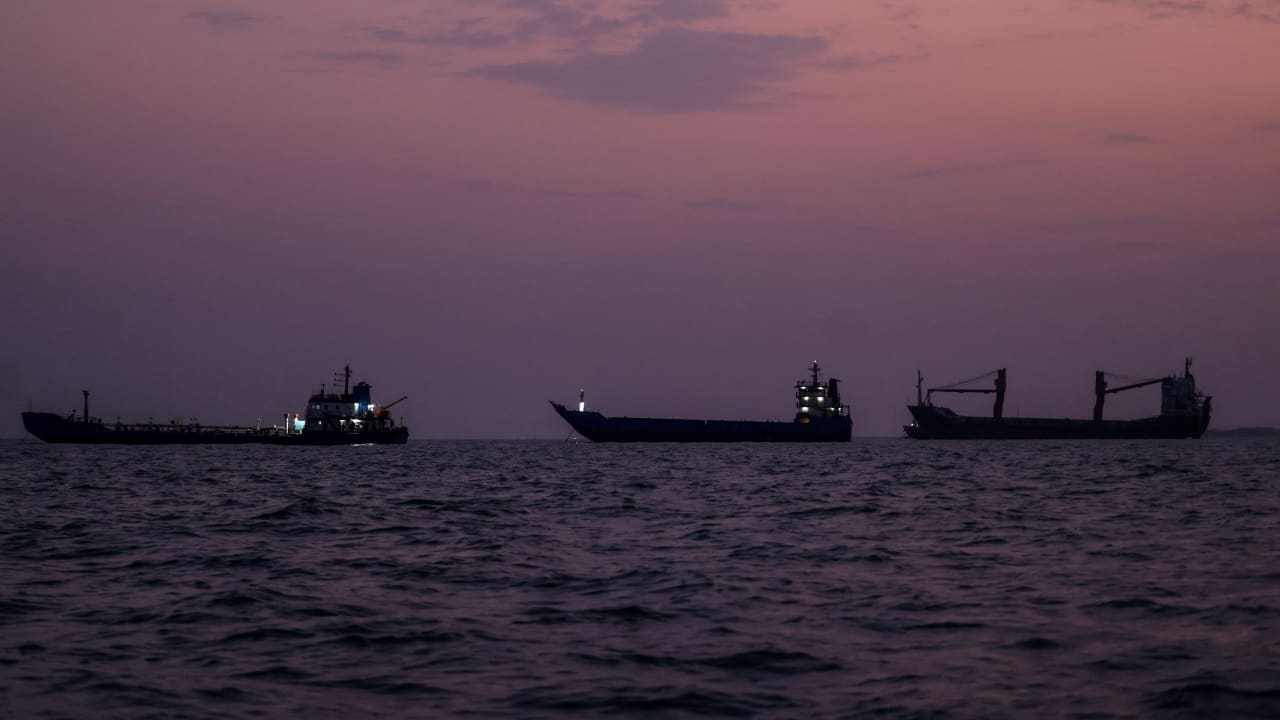
SEPTEMBER 10, 2026 14:47The US is involved in a kind of tit-for-tat tanker war with the Iranians. What began as strikes on Iran by the US and Israel in February has shifted significantly over the last few months. One of the features of the conflict now is the battle for the Strait of Hormuz. That battle is fought in a complex environment and in a unique way.The Iranian threat to shipping in the Gulf is complex. The Iranians have various types of drones and missiles. Iran also borders the waterway. It’s hard to defend hundreds of miles of waterway. History shows that the country bordering the waterway will have an advantage, even if it is weaker.US Central Command (CENTCOM) has begun a new novel approach to this conflict. It is retaliating when Iran strikes at ships: The US is sinking Iranian tankers.CENTCOM said on September 9 that “CENTCOM forces destroyed five Iranian crude oil carriers, Sept. 8, after the Islamic Revolutionary Guard Corps (IRGC) targeted a US Navy warship with ballistic missiles twice over the past two days. The US warship successfully evaded the attempted Iranian attacks and continued to patrol regional waters. No American personnel were harmed.”The Iranians have responded, striking at Jordan and continuing to threaten shipping. Success in the Strait of Hormuz is measured in part by whether ships continued to transit. This depends on several factors, some of which involve international shipping and insurance.US Marines from the 31st Marine Expeditionary Unit board M/V Blue Star III, a commercial ship suspected of attempting to transit to Iran in violation of the US blockade of Iranian ports, April 28, 2026. (credit: US Marine Corps photo)Risk plays a big role. No captain or company wants to risk the crew of ships, even if the chances of them being sunk or struck are low.The US has been conducting naval blockades for hundreds of yearsThe US has been clearing mines and finding other methods to aid shipping. It appears the US may be slowly gaining the upper hand on several levels. However, the history of naval blockades tells us that achieving success is a long haul.Consider the US blockade of the Confederate States envisioned in the Anaconda Plan of 1861.It envisioned blockading the Confederacy, a process that took years.Other wars have also used blockades. Napoleon attempted a reverse blockade of Britain in 1806, essentially trying to cut off British trade with Continental Europe.The Germans used U-boats to do the same. At the same time, the Germans were also blockaded in the First and Second World Wars, and they resorted to using various ships to run the blockade. In each instance, what history tells us is that this can take years.Other examples abound. There was a decade-long siege of Montevideo, Uruguay, in the 20th century. If a small area of Uruguay couldn’t be reduced by blockade, what chance does Iran have? It’s possible that the decision to go to war with Iran directly could lead to a decade-long conflict.This would be similar to what happened with Iraq after the 1991 war. The US helped secure no-fly zones in southern and northern Iraq. It was a complicated mission. The US also has experience with a tanker war, having had to deal with the Iran-Iraq war in the 1980s, when both sides targeted shipping.Can the region get the tanker war right this time? Iran has kept up its warnings. It recently warned South Korea not to get involved in the Gulf conflict. Arab News also reported that Qatar has said that Gulf countries cannot rely solely on the US for security. Iran also said this week it would announce a new “restricted” zone in the Gulf.Iran believes it has options“The new restricted zone will begin from where the US blockade of Iran begins and extend into areas of the Gulf, Mohsen Rezaei, the secretary of Iran's Supreme National Security Council, said on Sunday in an interview with state TV. Few details were provided on the plan, but Rezaei said any ship entering the new zone would be added to a sanctions list,” Arab News noted.The challenge now is going to be to see if Iran continues to strike at ships. Can the US go tit-for-tat with the Iranians and strike enough of their ships to make Tehran choose a new path? Even if the sinkings and strikes on the Iranian tankers do make Iran shift tactics, will the Iranians simply find a new way to cause havoc? Will they strike at energy installations, or attack Jordan more than in the past?One thing is clear about Iran: it believes it has options.Iran also has a long front line to exploit. Not only is the Iranian border with Iraq and the Gulf hundreds of miles long. It also has a long coastline on the Indian Ocean. In addition, it has proxies in Yemen and other places. The Houthis expanding their role in the Red Sea, for instance, can be seen as a way for Iran to open or exploit a new front.Getting the tanker war right will be a challenge for the US because of the factors involved. The White House is already signaling that the conflict and high oil prices will continue through the midterms in November.There doesn’t appear to be much of an appetite to try another deal with Iran. Tehran is duplicitous and isn’t willing to change yet.Facing such an enemy will be a long road.Follow us on Google
Getting the tanker war right: A history of blockades from the US Civil War to Iran - analysis
Full Article
Original Source
Read the full article at Jpost →KhanList aggregates and links to publicly available news content. We do not host full articles from third-party sources. Always verify important information with original sources.