
In advance of its ardfheis this weekend, Fine Gael circulated the report of its commission for renewal. The report makes practical proposals about organisation, but no substantive statements about ideology or purpose, despite hand-wringing about its lack of identity or electoral purchase. One phrase that is repeated throughout the document is “we must connect with people’s lived experience”. It is a good summary of a problem the party has no real idea how to address. It is no longer connected in the real world to those who were once its purpose and foot soldiers. Now party-political organisation is a mirage presided over by communications people – those who have little affinity to the party and less to the groups that until recently defined it. The result is that no political party does more communicating with less effect than Fine Gael. It has a premonition of its demise, but it appears to think that communications and structures, not policy and leadership, are the answers.The identity crisis it faces is far greater than a problem of communications. The centre right, which was once Fine Gael’s natural hinterland, is now an abandoned political space. Fianna Fáil intermittently cohabitated there, but it was never ideologically committed. The Progressive Democrats briefly supplanted Fine Gael’s credentials in the 1980s and 1990s, but that party lost its edge, and eventually its credibility in the embrace of Fianna Fáil. Fine Gael consistently, but not always effectively, stood for economic rectitude, small business, big farmers and the professional classes. It was the party of the State, while Fianna Fáil claimed to be the party of the nation. But although it once had a distinctive political identity, Fine Gael has ceased to have any clear difference from Fianna Fáil – or anything resembling an identity at all. Now, if political parties did blind tastings, you wouldn’t come away from this weekend’s ardfheis in Cork knowing that you’d just attended a convention for Fine Gael. The party has sunk into an overlapping mass of social democratic parties including Fianna Fáil, Sinn Féin, the Social Democrats, Labour and the Greens. They are all partially or increasingly populist. Aontú is also populist but differentiates by being socially conservative. Independent Ireland is both populist and chauvinistically nationalist.READ MOREThis matters not just as nostalgia for the Fine Gael faithful, but because in the absence of a moderate centre right, Ireland is more vulnerable to the rise of populism or even extremism. Populism is an overused word, so let me be specific. On August 28th, the Dáil met in special session to extend temporary excise reductions on petrol and diesel. Fine Gael’s leader and Minister for Finance Simon Harris said that the cost of supports was €1.3 billion over a 12-month period. People Before Profit TD Paul Murphy called it best when he said that fear of public outrage and protest has forced the Government’s hand. That fear was instilled by the fuel protests after Easter, and it is questionable if the Government has really been in charge since.In truth, Fine Gael has not had a real Fine Gael leader since Enda Kenny retired in 2017. Leo Varadkar succeeded Kenny and had considerable intellectual capacity. He was highly effective in dealing with the crises of Brexit and Covid that confronted him. But the economic rigour of the young man on the rise evaporated before he arrived in the taoiseach’s office. His ambition was not matched by affinity with the constituent parts of the party he led. He chased a liberal, social democratic zeitgeist that was fool’s gold for Fine Gael, and he lacked the stamina to perform the tedium which defines most of the working life of a party leader, even one who is taoiseach.As a leader, Simon Harris is unconnected to any Fine Gael tradition I recognise. His rotation of ideas, positions and policies is so rapid as to be meaningless. The party is now 15 years in government, diminished by poor election campaigns in 2016, 2020 and 2024. It has shrivelled in office and lacks figures of substance capable of standing up for the State it created and subsequently sought to embody.Fine Gael cannot outrun the crowd it foolishly chased. Harris has mastered the skills required to lead in the age of social media only to the extent that he is a brilliant distracter. What Ireland needs now, however, is not leadership that follows the crowd but that will face it down.[ Simon Harris cannot have enjoyed reading Sunday’s newspapersOpens in new window ]The State is spending too much on too many priorities and is dangerously exposed to a downturn in its corporation tax take. Recognising that, and reorganising economically, should be a first fundamental step for Fine Gael. When it spends, it should insist on value for money, starting with the public service pay deal. Public servants deserve to be well paid, but the public needs – and Fine Gael in government should insist on – transformative reform. That would start with pinning responsibility on power within the public service by rewriting the Ministers and Secretaries Act, 1924. The party should campaign to repeal Article 16.2.2 of the Constitution, which mandates a TD for not less than every 20,000 and not more than every 30,000 of the population, and cut the number of TDs. In government after 2011, it cut the number of TDs from 166 to 158. We now have 174 TDs, and are likely to have another dozen after the next election. That’s too many.Fine Gael insists that it wants to lower taxation, but that claim is incompatible with spendthrift spending. If party members want to lower taxes, they need to say credibly how they will do it. Finally, the party should resurrect Richard Bruton’s environmental agenda, and lead in capturing the natural advantage that renewable energy offers Ireland. Fundamentally it must start thinking for itself, and stop being a receiving house for sectoral demands. There is a generation of educated, articulate young people who lack economic security. What the country needs is a political culture that understands that there must be priorities, can articulate them and is willing to prudently and sustainably budget to deliver them. There are a few within Fine Gael who really want to regain an authentic identity. Instead, their party huddles inauthentically and unrespected in a crowded space where it will not succeed and may not survive. Persuading a party on the run to stop and stand is no easy task. But if it fails, we all lose.
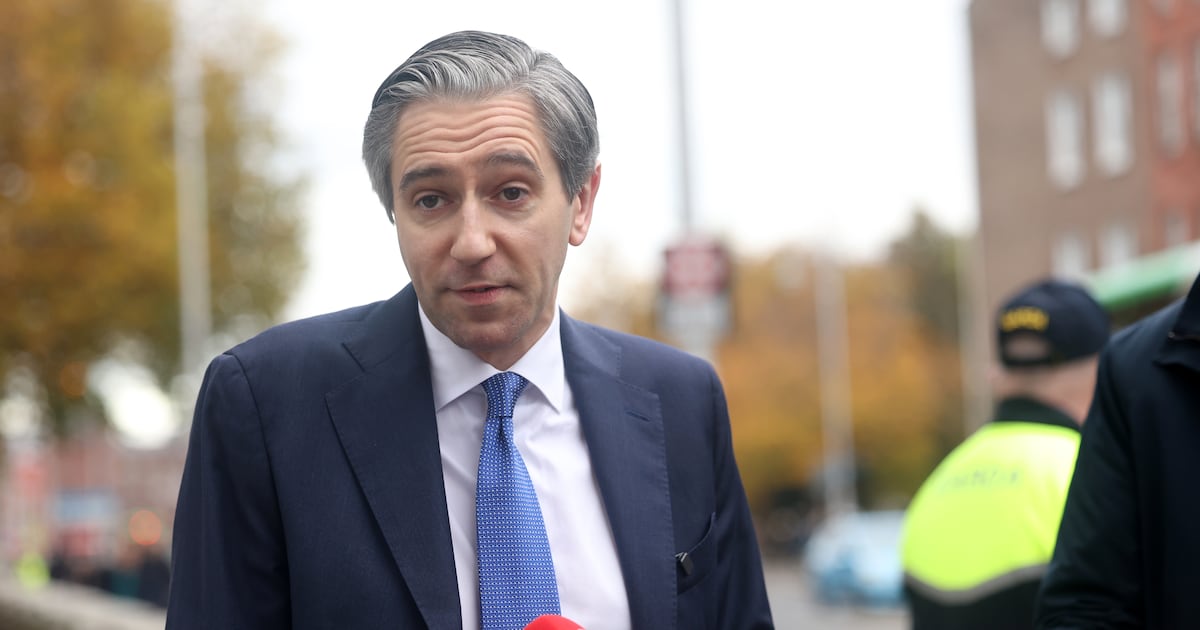
Gerard Howlin: Fine Gael has forgotten its purpose. No other party communicates so much or says so little
Full Article
Original Source
Read the full article at Irishtimes →KhanList aggregates and links to publicly available news content. We do not host full articles from third-party sources. Always verify important information with original sources.