
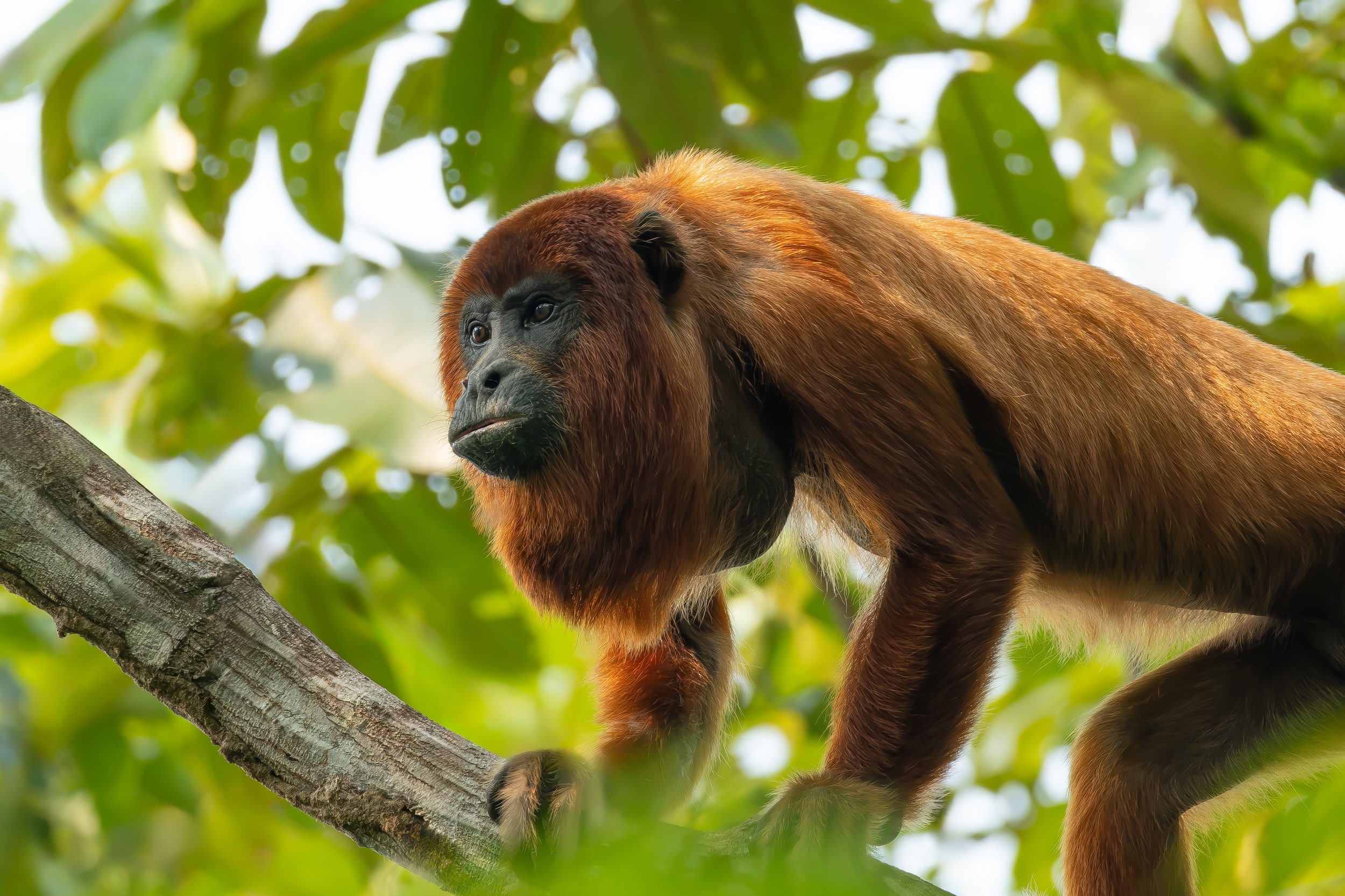
A sweeping genetic study of howler monkeys has revealed two previously unrecognized species in the Amazon, identified a potentially distinct species in the Caribbean and prompted researchers to reconsider how several populations are classified. The new study examined genetic relationships across the genus Alouatta, using genomic data, physical characteristics and museum specimens. Researchers formally described two Amazonian red howler monkeys: the Pantepui red howler monkey (Alouatta iroi) in northwestern Amazonia and the Mato Grosso red howler monkey (Alouatta matogrossensis) in the southern Brazilian Amazon. The research builds on more than a decade of fieldwork and sample collection. Lead author Romina Batista, a biologist at the University of Salford (UK) and Brazil’s National Institute of Amazonian Research, analyzed more than 2 terabytes of raw genomic data. The scale of the dataset helped reveal evolutionary differences that earlier studies had missed. While examining the results, Batista noticed that monkeys on opposite sides of the Branco River in northern Brazil formed distinct genetic lineages. Physical differences, including the more yellowish fur of A. iroi, supported the findings. “When I saw that, I literally called Jean and I said, ‘Jean, there is something different here,’” Batista said, referring to co-author Jean Boubli. Historical museum specimens also helped researchers identify characteristics distinguishing the populations. Batista said the findings demonstrate the importance of preserving natural history collections, which allowed the scientists to revisit older specimens with newer research tools. “If it was not for the natural history museums holding all this information, I think we also wouldn’t be able to find this,” Batista said. The study also recommends recognizing the howler monkey population in Trinidad and Tobago, previously classified as A. seniculus insulanus, as a separate species, A. insulanus. The findings could have important conservation implications, especially for A. matogrossensis. Its range overlaps with Brazil’s arc of deforestation, where agricultural development has contributed to forest fragmentation and extensive habitat loss. The researchers say the species may qualify as critically endangered, although a formal assessment is still needed. “We want to make the scientific community aware, and we need to evaluate it urgently,” Batista said. The other newly recognized population also faces potential threats. The proposed Bem Querer hydroelectric dam on the Branco River could affect A. iroi and its close relative, A. macconnelli. Researchers are sharing distribution data with colleagues and the public to support a potential IUCN assessment. In Mato Grosso, the Reconecta project has also installed canopy bridges to reconnect fragmented forests. Researchers have documented A. matogrossensis using the structures, including a female carrying an infant. Batista described the findings as “a piece of the puzzle” in understanding how Amazonian biodiversity evolved. A female of Alouatta matogrossensis using an artificial canopy bridge installed in Alta Floresta, Mato Grosso. Image by ©Reconecta Project. Banner image: A Mato Grosso red howler monkey (Alouatta matogrossensis) photographed in Brazil. Photo by Kakau Oliveira. Credits Topics
Genetic study describes two new species of Amazonian howler monkeys
Full Article
Original Source
Read the full article at News →KhanList aggregates and links to publicly available news content. We do not host full articles from third-party sources. Always verify important information with original sources.