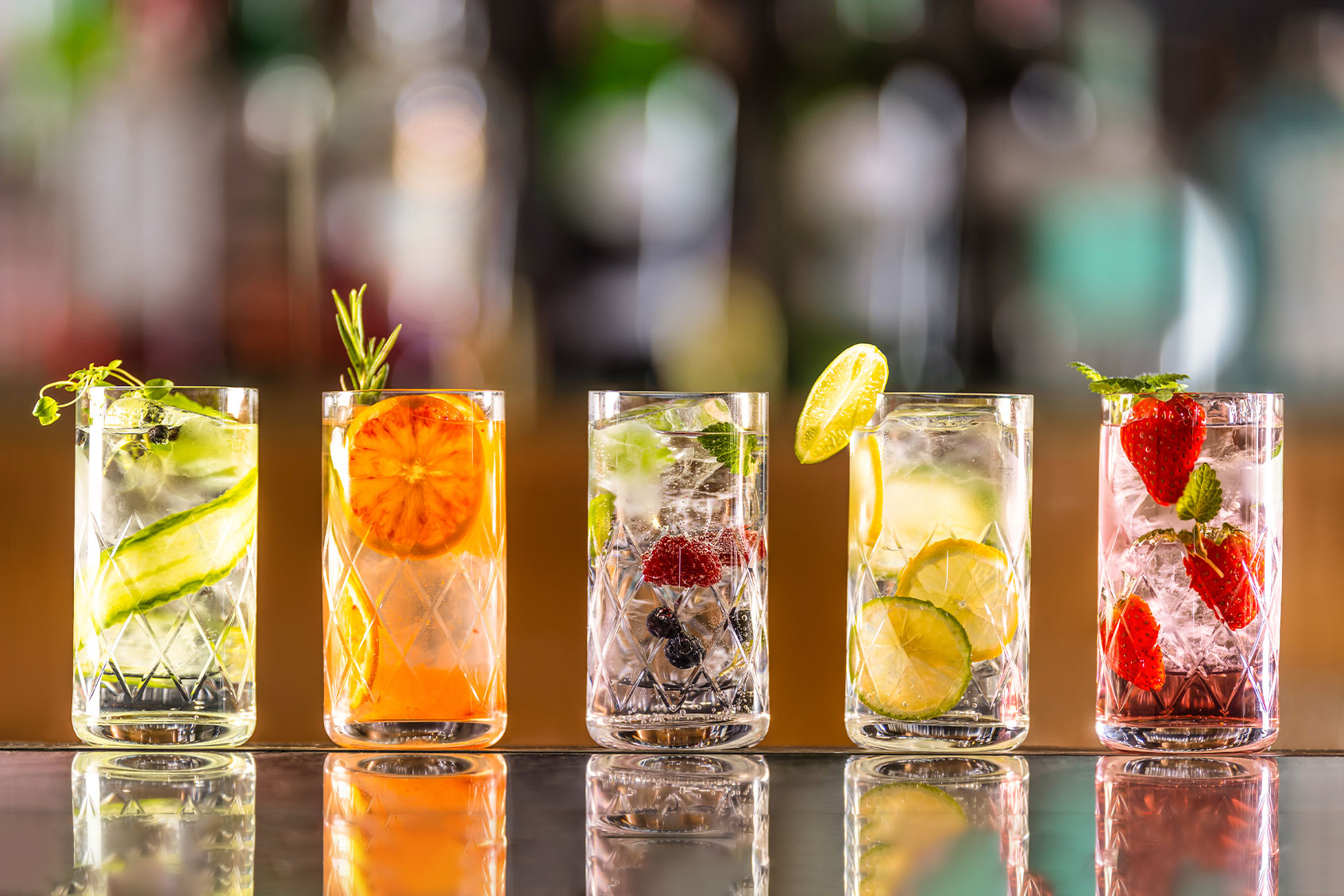
Analysis Gen Z isn’t killing nightlife, it’s just drinking differently Behind the sober-generation stereotype is careful spending and new ways to go out Published August 15, 2026 9:00AM (EDT) Five fruity cocktails (Getty Images/SimpleImages) If I see one more headline announcing that Gen Z has killed alcohol, I might just order another drink. According to the internet, my generation doesn’t go to bars anymore. We don’t party. We don’t date. We’re all sitting at home sipping adaptogenic mushroom tonics, journaling our feelings and politely declining invitations to any event after 7 p.m. because we’d rather optimize our sleep scores than take a tequila shot. There’s just one problem: I have absolutely no idea who these people are. I was born in 2001, making me squarely Gen Z. My friends split bottles of wine over dinner. Our birthday party of choice is a bar crawl to our favorite hot spots. We can always be convinced to order another round of G&Ts with just a glance at each other. On any given Friday night, the restaurants around me are full of twenty-somethings lingering over drinks long after they’ve paid the check. Or getting in UberXLs to the night’s secondary location (i.e. the local dive bar). Even the sober Gen Zers I know still go out — they’ve just swapped negronis for mocktails. So after reading what felt like the hundredth article declaring that my generation had abandoned alcohol, nightlife and socializing altogether, I started wondering whether I was missing something. The statistics behind those stories are real: Younger adults are drinking less than previous generations did at the same age. But somewhere between “Gen Z drinks somewhat less” and “Gen Z is killing the bar industry,” something strange happened. A modest shift in consumer behavior hardened into a cultural stereotype. I wanted to understand what got lost in that translation. I’m not questioning the data or trying to argue that the numbers are wrong. I’m questioning the story we’ve built around them. And if there’s one person who has spent more time thinking about that disconnect than almost anyone else, it’s Dave Infante. The Kernel of Truth Infante, who covers the beverage alcohol industry in his newsletter “Fingers,” has watched that distortion happen in real time. A few years ago, while reporting for VinePair, he interviewed roughly a dozen college students for a series on “the state of the modern keg party.” His findings weren’t especially dramatic. Keg parties still existed. Students still drank. But packaged beverages — hard seltzers, canned cocktails and drinks like High Noon — were beginning to replace the giant communal keg that had become shorthand for college drinking culture. At almost the exact same moment, another drinking trend exploded across the internet: BORGs, or “blackout rage gallons,” the customized gallon jugs of vodka, water, electrolytes and flavoring that briefly inspired a miniature moral panic in national media. If you only followed the headlines, it was difficult to reconcile the two dominant narratives about Gen Z. Depending on the week, we were either frighteningly reckless or hopelessly boring. Infante remembers watching that contradiction play out in real time. “If anything,” he told me, “the story is maybe that youth were more interested in customizing the amount of alcohol they were drinking and the flavors they were drinking — or not drinking at all.” Drinking differently is not the same thing as not drinking. Infante has a phrase he likes to use when talking about stories like these. “There’s usually a kernel of truth,” he said. Then that truth gets “wrenched through this…assembly line,” until what comes out on the other side barely resembles where it started. That’s exactly what seems to have happened here. The original claim — that younger adults, on average, consume somewhat less alcohol than previous generations at the same age — is supported by plenty of evidence. But that’s not the story most people have absorbed. Instead, we’ve somehow arrived at a version where Gen Z has collectively decided drinking isn’t fun anymore, bars are empty because nobody under 30 leaves the house and nightlife itself is quietly dying. Those are much bigger claims, and they’re far harder to prove. Alcohol consumption statistics tell us how much alcohol people consume. They don’t tell us how often young adults see their friends. They don’t tell us whether restaurants are full, whether people are dating, whether house parties have disappeared or whether social life has migrated somewhere else entirely. Every generation seems to inherit one cultural panic after another. That pattern is something Corey Seemiller has spent years watching unfold. Seemiller, a professor and one of the leading researchers of Gen Z, sees the pattern as generationally predictable. “Every generation gets blamed for everything,” she said. When Baby Boomers were young, they were reckless. When millennials came along, they were entitled. Now Gen Z has become simultaneously too online, too anxious, too health-conscious, too antisocial and, apparently, too sober. The labels shift depending on what’s happening in the broader culture. Alcohol consumption statistics tell us how much alcohol people consume. They don’t tell us how often young adults see their friends. They don’t tell us whether restaurants are full, whether people are dating, whether house parties have disappeared or whether social life has migrated somewhere else entirely. What doesn’t change is our impulse to explain complicated social and economic changes by assigning a personality to an entire generation. Because the more Seemiller studies Gen Z, the more she finds a generation responding rationally to the world it inherited — not inventing entirely new values out of thin air. Take socializing. One of the most common assumptions underpinning the “Gen Z doesn’t drink” narrative is that young adults simply don’t want to go out anymore. Seemiller doesn’t buy that. Instead, she thinks we’re asking the wrong question. Instead of asking whether Gen Z drinks less, she suggests: What does social life actually look like now? “There are a lot of things that are going on all simultaneously,” she told me. Yes, the research consistently finds that Gen Z drinks less than previous generations. But that’s only one piece of a much bigger puzzle. “If they were to drink,” she said, “where are they drinking? Are they going to the grocery store and buying something and drinking at a gathering, or are they going to a bar?” For decades, the bar occupied an almost uncontested position in American social life. It was where coworkers met after work, where first dates happened, where birthdays spilled into the early morning and where twenty-somethings figured out adulthood over cheap pitchers of beer. Going out and drinking were so tightly intertwined that they became almost interchangeable in the American imagination. But Seemiller argues that’s no longer the landscape Gen Z inhabits. Bars today aren’t simply competing with the bar down the street. “They’re competing with boba tea houses,” she said. “They’re competing with coffee houses. They’re competing with thrift stores. They’re competing with a local park where you can just go sit down and talk to your friends.” If you meet a friend for an overpriced matcha instead of an overpriced IPA, are you less social? If you spend three hours catching up over dinner instead of hopping between bars, are you participating less in nightlife? If you host friends at your apartment because no one wants to spend $90 before the Uber ride home, have you somehow opted out of social life altogether? Or have the rituals simply changed? Those questions kept resurfacing throughout my reporting, particularly when I stopped talking to experts and started talking to people my own age. One of the first things I noticed was that almost nobody — drinkers or nondrinkers — recognized themselves in the version of Gen Z they’d been reading about. Miranda Ferrante certainly didn’t. Ferrante stopped drinking in July 2024 after alcohol began exacerbating her anxiety, stomach issues and sleep problems. The decision wasn’t part of some grand wellness movement. It wasn’t driven by social media. It was simply a realization that drinking no longer made her feel the way she wanted to feel. But giving up alcohol didn’t mean giving up the rest of her life. Want more great food writing and recipes? Sign up for Salon’s free food newsletter, The Bite. When I asked whether headlines about Gen Z “killing alcohol” felt accurate, she didn’t hesitate. “No, sober does not mean ‘not fun,’” she said. She still goes out with friends. She still celebrates birthdays at restaurants. She still orders drinks — just without alcohol. Her friends make a point of choosing places with thoughtful mocktail menus and are quick to point out alcohol-free options when they’re available. “I think we are changing the definition of what socialization means,” she told me. “I don’t think drinking or not drinking alcohol should have any impact on the definition of socialization.” We’ve spent years treating alcohol as a proxy for social connection. Drink less, socialize less. Order fewer beers, have fewer friends. But those equations only work if alcohol is still the primary reason people gather in the first place. The more people I interviewed, the less convinced I became that it is. Gabi Bradbury, who has been sober for three years, described much the same life: bars, concerts, festivals and nights out with friends, only without alcohol in her glass. “Why do we need to drink to have fun?” she asked. Neither spoke like someone opting out of social life. If anything, both described becoming more intentional about it. That word — intentional — came up so often during my interviews that I eventually started circling it in my notebook. Intentional about drinking. Intentional about friendships. And then Dave Infante gave me a much more practical explanation. Money. The $20 Cocktail “I think that’s a huge part of it,” Infante said when I asked how much economics has shaped the narrative around Gen Z and alcohol. “I don’t think that’s the whole piece… but I certainly think that’s a substantial piece of the puzzle.” “We are very much squarely in the era of the $20 cocktail,” he said. “$10 beer. $18 glass of wine.” Infante pointed me toward research by Rabobank senior beverage analyst Bourcard Nesin that complicates one of the most common assumptions about Gen Z drinking habits. Younger adults are spending roughly the same share of their income on alcohol as previous generations did — but in raw dollars, they’re spending dramatically less. If Gen Z is earning less while simultaneously facing higher housing costs, higher grocery bills and more expensive drinks, declining alcohol purchases start looking a lot less like a cultural rejection of drinking and a lot more like basic math. “If you boil it down like that,” Infante said, “the intuitive idea that, ‘Oh, zoomers just don’t want to drink,’ becomes very hard to defend.” I’m hard-pressed to think of a single friend who’s ever said, “I’m not going out because I don’t believe in alcohol anymore.” I can think of dozens who’ve said, “I can’t justify spending $75 tonight.” Those are not the same conversation, and yet we keep treating them as if they are. “Young adults respond rationally to inflation and stagnant wages” doesn’t inspire quite the same existential panic as “Gen Z killed nightlife,” but it’s probably closer to the truth. Infante sees that framing play out even inside the alcohol industry. As part of his reporting, he regularly listens to corporate earnings calls and began noticing a pattern: When publicly traded alcohol companies missed sales targets, executives often reached for the same explanation. “Guess who’s to blame?” he said. “It’s those darn kids.” Blaming a mysterious generation that simply doesn’t like alcohol is a much easier story than confronting rising prices, changing consumer behavior or whether people still feel they’re getting enough value from a night out. “There’s this very strange frame that happens,” Infante said, “whether it was millennials with the avocado toast, or it’s zoomers who are too into weed gummies to do alcohol.” The implication is always the same: If only young people behaved differently, the industry would be fine. “But ultimately,” he continued, “that is not a zoomer problem. That’s a beverage alcohol firm problem.” Consumers don’t owe industries their loyalty. If restaurants, breweries or liquor companies want people to spend money, they have to convince them the experience is worth the cost. Some bars, Infante noted, are already experimenting with lower-priced cocktails and expanded happy hours after discovering there may simply be a ceiling to what customers will pay for a drink. But price is only part of what has changed. “That is not a zoomer problem. That’s a beverage alcohol firm problem.” Longtime drinks writers Caroline Pardilla and Esther Tseng, who both started covering bars in the early 2000s, remember a pre-COVID nightlife landscape with later hours, more clubs and fewer alternatives competing for young people’s time. Pardilla remembers bar hopping as a routine weekend activity. “It was just what our idea of fun was,” she said. “You’re just being social and it made you feel good and you kind of loosened up and everything.” Tseng remembers going to coffee shops at 10 p.m. and blogging into the early hours of the morning. “What coffee shop do you know is open that long anymore?” she asked. It’s a small question that points toward a much larger shift. People talk about Gen Z as though young adults collectively decided to stop going out, when the physical infrastructure of going out has changed around them. “There were a lot of clubs,” Tseng said. “Stuff used to be open a lot later. People drank a lot more back then, and especially leading up to the pandemic, the hours just kept getting cut shorter.” Restaurants changed. Hospitality changed. Consumers changed. Even years later, many cities still haven’t fully returned to the schedules they kept before 2020. If last call happens earlier, if restaurants close sooner and if people got used to gathering in smaller groups during lockdown, of course the texture of nightlife is going to look different than it did in 2018. That doesn’t necessarily mean it’s disappearing. It may simply be evolving into something else. The Gen Z Era When people describe Gen Z as uninterested in going out, I wonder what exactly they’re looking at. Because I don’t see empty nightlife. I see neighborhood wine bars packed over one bottle, sold-out tastings and cocktail bars where people wait an hour for a seat. The drink still matters, but increasingly it’s part of something larger: the room, the menu, the DJ, the conversation. If previous generations often went to bars because that’s simply where people went, Gen Z seems more likely to ask a different question first. Is this worth leaving the house for? Infante sees that selectiveness reflected in the marketplace. “The motive is a little different,” he told me. “Zoomer’s interest is less driven by conspicuous consumption than seeking out specific experiences.” When older generations describe Gen Z as drinking less, they often seem to hear less interested. But those aren’t synonymous. If anything, many of the Gen Z drinkers I interviewed sounded intensely interested in food, wine, cocktails and hospitality. They just weren’t interested in drinking indiscriminately. Part of the reason that distinction gets lost may be simple nostalgia. Corey Seemiller told me every generation tends to romanticize the version of young adulthood it experienced while quietly forgetting the parts that weren’t so glamorous. “It’s how romanticizing works,” she said. If you survived the reckless decisions, cheap beer and late nights and emerged with nothing worse than embarrassing stories, those stories become legends. The hangovers and genuinely bad decisions tend not to make the highlight reel. To test how much of that nostalgia reflected an actual historical difference, I called alcohol historian Scott Martin. Martin confirmed that alcohol really was more central to American social life. “In terms of sociability, in terms of work cultures, it has been really central to sociability, particularly for men, and increasingly in the 20th century, I think, for women as well,” he said. Drinking also functioned as a rite of passage, particularly as young adults reached legal drinking age. But the social world surrounding that drinking was different, too. “Our society has become much more of a surveillance society,” Martin said. Young people know that if photos or videos of a drunken night end up online, a future employer — or several million strangers — may eventually see them. It’s one thing to wake up with a hangover. It’s another to wake up viral. Add pandemic adolescence, expensive housing and stagnant wages, and different choices begin to look less mysterious than inevitable. Martin described Gen Z as one of the first generations in recent memory to come of age facing markedly tighter economic circumstances. “They’re just not going to do as well as their parents,” he said. Entry-level jobs pay relatively little, job security is tenuous and the math of going out matters. “If you’re going out and ordering those five drinks, some other bill is not getting paid, and that’s not sustainable.” We often compare Gen Z’s present to older generations’ memories instead of their reality. That’s an impossible standard to meet. “For younger people, they’re no longer living in the same kind of possibility that the older generations had,” Martin said. “I think they probably feel that the older generations just simply do not understand that, and perhaps they’re right, perhaps they don’t.” In many ways, Seemiller told me, it’s more useful to think about the “Gen Z era” than Gen Z itself. “Gen Z” implies something intrinsic about the people. “The Gen Z era” shifts the focus to the world surrounding them. This is a generation that entered adulthood during a global pandemic after spending formative years online. We’re navigating historically expensive housing, student debt, inflation, stagnant entry-level wages and a social landscape with more entertainment options than previous generations had. Spend ten minutes on TikTok and you’ll find creators dissecting natural wines, comparing probiotic sodas, reviewing coffee shops, ranking matcha cafés, explaining amaro, making elaborate cocktails and debating whether dirty martinis have finally replaced Aperol spritzes as the drink of the summer. The curiosity is still there. It’s simply spread across a much wider landscape than alcohol alone. When Pardilla was younger, drinking was simply folded into what being social looked like. “Drinking was a sign of maturity, right?” she said. “That’s why a lot of college kids got wasted because you’re like, I’m able to drink now and you kind of go overboard.” She thinks that idea has changed. “I think [Gen Z] can be more selective and they have that opportunity to be more selective,” she said. “They’re more aware of the non-alcoholic options, so it’s not so much the getting wasted, but it’s more just having fun, not necessarily boozy fun. They’re just doing it for themselves.” There have always been people who drank sparingly or didn’t drink at all. What’s changed, Pardilla said, is how visible and socially acceptable those choices have become. Bars have responded. Many now treat their nonalcoholic menus not as an afterthought but as another place to show creativity. “A lot of bars I’ve spoken to, they’re thinking very thoughtfully about how to create non-alcoholic cocktails that have a backbone,” Tseng said. “That have complex flavor profiles, that are not just juice and a splash of soda or a lime or something.” “A lot of bars I’ve spoken to, they’re thinking very thoughtfully about how to create non-alcoholic cocktails that have a backbone. That have complex flavor profiles, that are not just juice and a splash of soda or a lime or something.” I went down an Instagram rabbit hole looking at the work of Austin Hennelly at Kato, a Michelin-starred restaurant whose nonalcoholic drinks include things like a green strawberry daiquiri built with floral aperitif, wildflower honey, whey, oro blanco and lime. Looking at it, I understood immediately why someone might happily pay cocktail prices for a drink without alcohol. On the other hand, if your $16 “mocktail” is lemonade with soda and some mint leaves, we need to have a conversation. Inside the beverage industry, Infante says one of the biggest misconceptions surrounding the explosion of nonalcoholic drinks is that they’re replacing alcohol altogether. “The biggest buyer of non-alcoholic beverages,” he said, “are people who are drinkers.” In other words, the people ordering N/A beer, spirit-free cocktails and alcohol-free sparkling wine are often the exact same people ordering IPAs, martinis and Champagne on different occasions. They’re not abandoning one category. They’re moving fluidly between them. Infante likes using a word coined by journalist H.L. Mencken nearly a century ago: omnibibulousness. It essentially means someone who will drink anything: beer, wine, cocktails, coffee, sparkling water, nonalcoholic beer. Whatever fits the moment. The modern beverage landscape has never offered more options, and consumers are responding accordingly. That isn’t evidence of alcohol’s demise. It’s evidence of abundance. Gen Z isn’t refusing to socialize. We’re choosing among more ways to do it than previous generations had available. Sometimes we’re drinking less because cocktails cost $22. Sometimes we’re alternating between alcoholic and nonalcoholic drinks, prioritizing food over booze, training for a marathon or simply staying home because rent is due next week. The data tells us what changed. The reporting tells us why. Those aren’t the decisions of a joyless generation. They’re the decisions of people living in 2026. Related Topics ------------------------------------------ Related Articles
Gen Z isn’t killing nightlife, it’s just drinking differently
Full Article
Original Source
Read the full article at Salon →KhanList aggregates and links to publicly available news content. We do not host full articles from third-party sources. Always verify important information with original sources.