
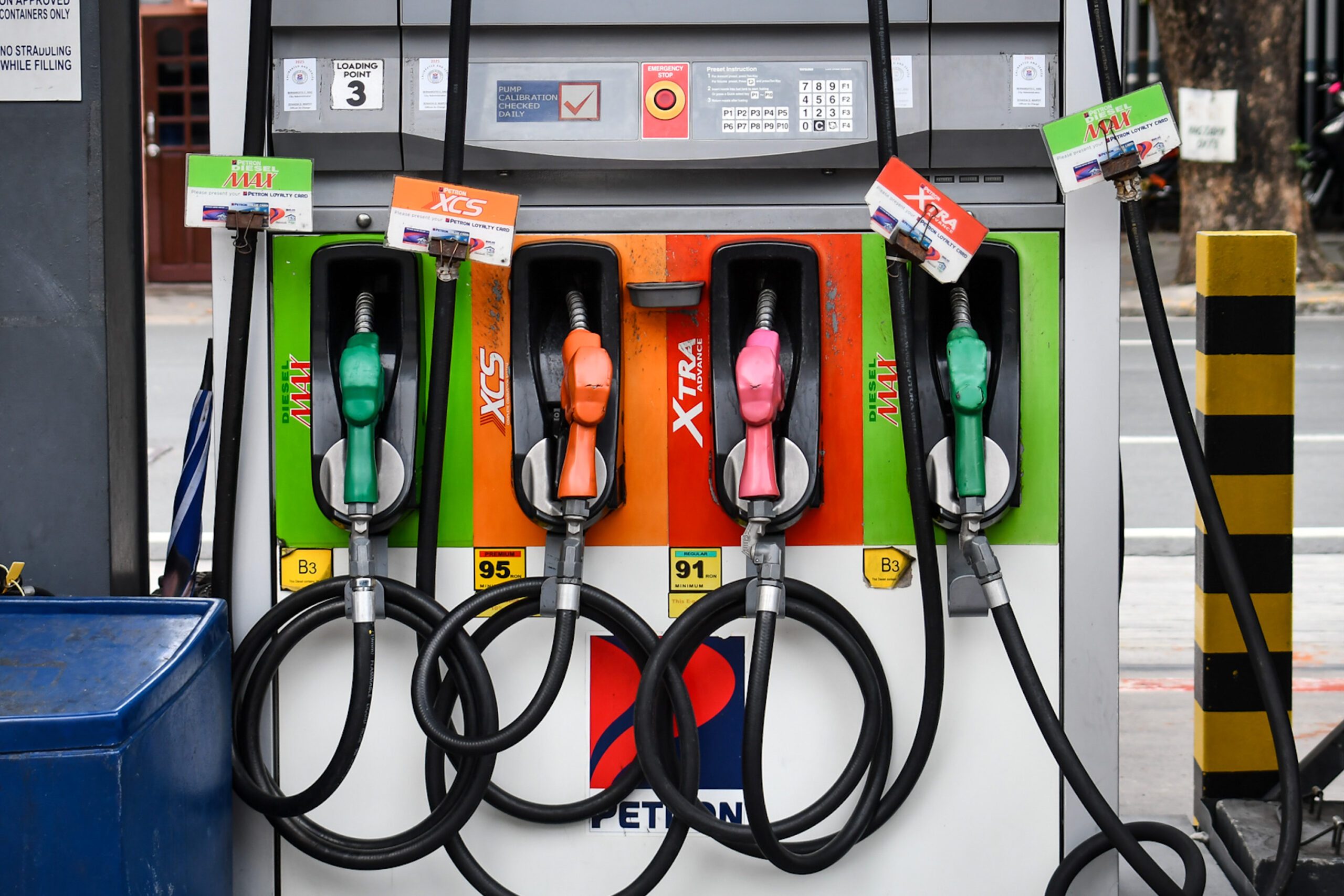
ADJUSTMENTS. A gas station in Paco, Manila, on January 12, 2026. Rappler The upcoming hike marks the third straight week of substantial price increases at the pump Fuel prices in the Philippines will increase starting September 22, with gasoline rising by P4.88, diesel by P8.82, and kerosene by P6.47 per liter. The price hikes are attributed to tight global supply and ongoing tensions in the Middle East, despite efforts by Saudi Arabia to restore export capacity. The Philippine government is considering fuel tax relief due to rising crude oil prices, with a recommendation pending for approval from President Ferdinand Marcos Jr. This is AI-generated. Read the article for full context. Report any errors. MANILA, Philippines – Fuel prices are going up again starting Tuesday, September 22, continuing a run of pump price increases as tight global supply and continuing Middle East tensions keep petroleum markets under pressure. In a press conference on Monday, September 21, Energy Secretary Sharon Garin announced the following fuel price adjustments for the week of September 22 to 28: Gasoline – increase of P4.88 per liter Diesel – increase of P8.82 per liter Kerosene – increase of P6.47 per liter The adjustments will take effect on Tuesday, September 22. Before the latest adjustment, the Department of Energy’s (DOE) price monitoring showed common retail prices in Metro Manila at P91.40 per liter for gasoline RON95, P83.10 per liter for gasoline RON91, P94.50 per liter for diesel, and P124.50 per liter for kerosene for the week of September 15 to 21. The latest increase follows last week’s big fuel price hike, when gasoline prices rose by P5.68 per liter, diesel by P4.31 per liter, and kerosene by P4.62 per liter. The continuing increases come as physical fuel supplies remain tight despite efforts by Saudi Arabia to restore some of its export capacity. Saudi Arabia has been working to bring part of its East-West pipeline capacity back online and offer additional cargoes to Asian refiners, helping ease some of the most severe price pressures seen earlier in the week. But supply risks remain. Vessel traffic through the Strait of Hormuz continues to be constrained, while continuing tensions involving Saudi Arabia and Yemen’s Houthis threaten energy infrastructure and shipping through the Red Sea. The government, meanwhile, is considering another round of fuel tax relief. Last week, the DOE formally certified that the one-month average price of Dubai crude reached $99.41 per barrel from August 13 to September 11, well above the $80-per-barrel threshold that allows the government to consider suspending or reducing excise taxes on petroleum products. (READ: DOE sees ‘no signs’ oil prices will fall as excise tax relief goes on table) The Development Budget Coordination Committee is still finalizing its recommendation on possible excise tax relief, which will be submitted to President Ferdinand Marcos Jr. for approval. The Department of Finance earlier said it was prepared to propose a suspension of excise taxes on liquefied petroleum gas and kerosene. Local pump prices also remain far above levels seen before fighting involving Iran and US-Israeli forces broke out on February 28. In the last full week before the conflict, DOE data showed common retail prices in Metro Manila at P56 per liter for gasoline RON95, P54.70 per liter for gasoline RON91, P55 per liter for diesel, and P83.47 per liter for kerosene. The Philippines is a net importer of petroleum products, making local pump prices vulnerable to global oil price swings, foreign exchange movements, regional refined fuel prices, and disruptions in international supply routes. – Rappler.com How does this make you feel? Loading
Fuel prices rise again with big hike on September 22
Full Article
Original Source
Read the full article at Rappler →KhanList aggregates and links to publicly available news content. We do not host full articles from third-party sources. Always verify important information with original sources.