
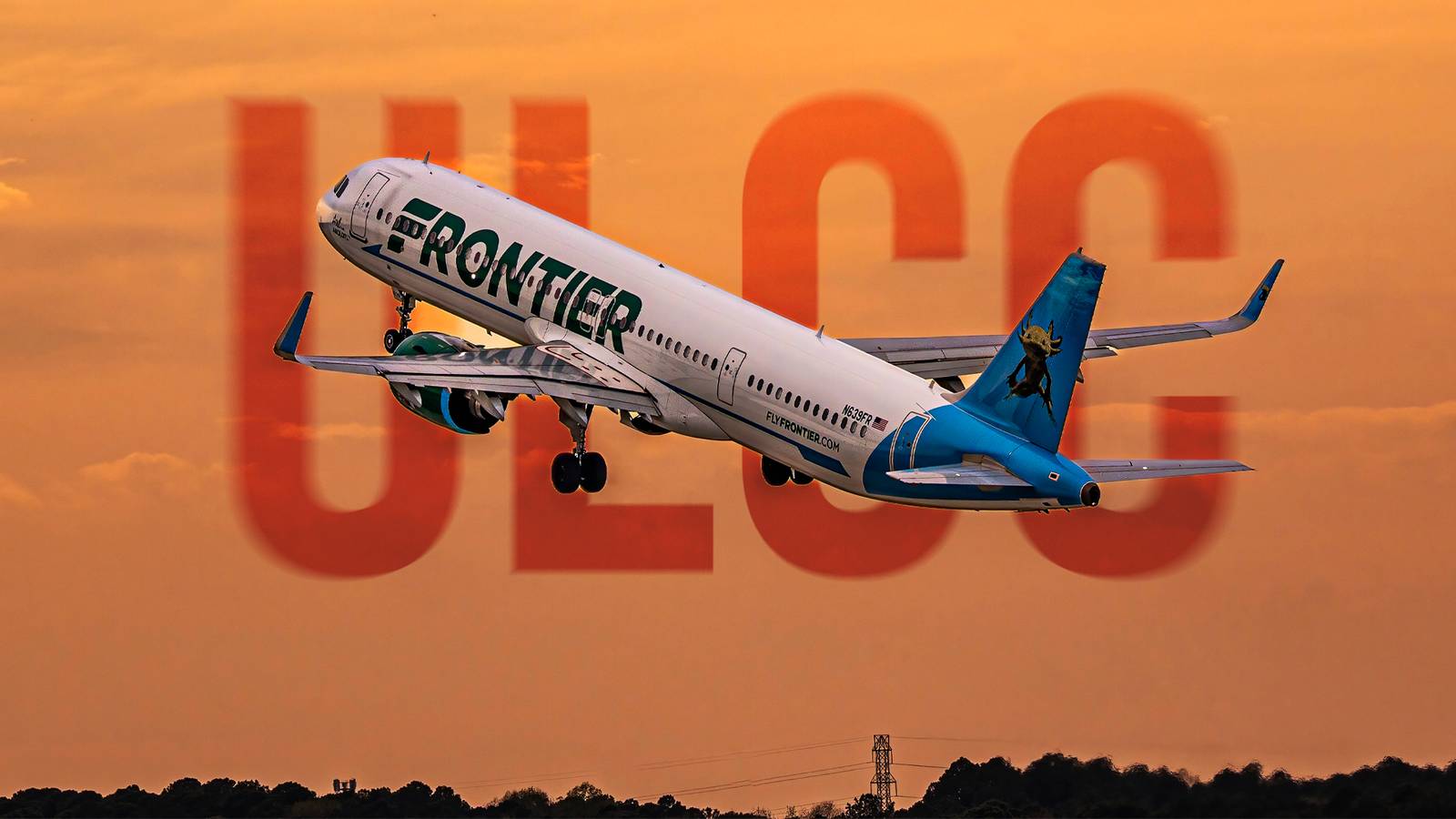
Published Oct 28, 2026, 1:00 PM EDT Brandon's passion for aviation started at a young age. He became involved in the flight simulator and VATSIM communities, which sparked his interest in aviation and eventually led him to earn his private pilot license. Outside of work, he continues to build flight hours, explore new airports, and stay involved in the aviation community. Spirit Airlines ceased operations on May 2, 2026, after a $500 million federal rescue collapsed when creditors balked at the terms. The airline announced an orderly wind-down effective immediately, ending its run as America's eighth-largest carrier and the company that introduced the ultra-low-cost model to the United States. More than 2,000 ALPA pilots lost their jobs. The effect on fares was immediate and measurable. Cirium examined the 1,126 city pairs Spirit served in June 2025 and found prices rose on more than 90% of them over the following year, with a median increase of 25.3%. Frontier Airlines, which had twice tried and failed to buy Spirit, moved into the gap within hours with rescue fares and has since expanded across more than 100 routes the two carriers once shared. It is now the largest surviving ULCC in the United States, operating in a market where legacy carriers have spent years matching ULCC base fares through basic economy. Spirit Shut Down On May 2, 2026 Credit: Markus Mainka I Shutterstock Spirit Airlines ceased all flight operations on May 2, 2026. The airline announced the decision in a statement issued early that Saturday morning: "It is with great disappointment that on May 2, 2026, Spirit Airlines started an orderly wind-down of our operations, effective immediately." The company said it was proud of the impact its ultra-low-cost model had on the industry and had hoped to serve its customers for many years to come. There was no final flight schedule and no wind-down period. Aircraft stopped flying that morning. The collapse followed two bankruptcies since 2024 and a failed attempt to secure federal support. Spirit had been seeking a $500 million lifeline from the White House, and the proposal fell apart when a key group of creditors balked at the terms. Reuters reported late on the Friday that the carrier was preparing to cease operations around 3 AM By then, the focus had already shifted from rescue to shutdown planning. Jet fuel prices had spiked following the 2026 Iran war, which removed what little margin the model had left. Spirit had emerged from Chapter 11 in early 2025 without achieving sustainable operations. The scale of the failure separates it from most airline collapses. Spirit was America's eighth-largest carrier at the time of the shutdown. It was the first shutdown of a significant US airline since Midway Airlines went out of business after the September 11, 2001 attacks, a gap of nearly 25 years. More than 2,000 ALPA pilots lost their jobs, alongside thousands of other employees. The Air Line Pilots Association described the news as a devastating blow to people who had dedicated their careers to the airline. What happened next in the markets Spirit left behind is the clearest measure of what the carrier had been doing to fares. Fares On Spirit's Routes Rose 25% Credit: Leonard Zhukovsky | Shutterstock Aviation analytics firm Cirium examined the 1,126 city pairs Spirit served in June 2025 and tracked what happened to fares over the following year. Prices climbed on more than 90% of them, with a median increase of 25.3%. That is the clearest available measure of what Spirit's presence had been worth to passengers, and it applies to routes where the airline no longer competes rather than to the market generally. On nine routes out of ten that Spirit touched, removing it from the market raised the price of flying. The effect compounds with broader fare inflation. Airfares in August 2026 averaged 24% more than a year earlier according to Consumer Price Index data, and the booking app Hopper reported domestic Thanksgiving fares running 31% above the previous year. Higher jet fuel prices account for part of that, and the same fuel spike contributed to Spirit's collapse, which means passengers are absorbing both the direct cost increase and the loss of the carrier that had been holding fares down against it. What the data captures is the function a ULCC performs beyond carrying its own passengers. Spirit's fares set a floor that competitors on the same routes had to respond to, whether or not a given traveler ever bought a Spirit ticket. Removing the airline eliminated that constraint, and the 25.3% median increase is what competitors charged once it was gone. Cheaper options still exist. Frontier, Allegiant, JetBlue, Breeze, Avelo, and Sun Country all continue to offer lower fares than the legacy carriers, though most charge extra for bags and seat assignments and some do not fly every route daily. None of them had Spirit's footprint, which raises the question of why an airline with that much market influence could not make the economics work. Basic Economy Removed The ULCC's Only Advantage Credit: Robin Guess | Shutterstock Frontier posted record revenue of $1,279 million in the second quarter of 2026, up 38% year over year, with revenue per available seat mile rising 28% to 11.52 cents on 8% higher capacity. Total revenue per passenger reached $131.46, up $22.19 from $109.27 a year earlier. The composition of that gain is the most revealing figure in the release. Fare revenue per passenger rose 54%, from $40.94 to $63.04. Non-fare passenger revenue, covering bags, seats, and bundles, fell from $64.77 to $63.87. The fare delivered $22.10 of the $22.19 improvement. The fees that define an ultra-low-cost carrier delivered negative 90 cents. Adjusted ancillary revenue per passenger came in at $68.42 against $68.33 in the prior-year quarter, effectively flat while fare revenue climbed by more than half. For a business model built on charging low base fares and recovering margin through add-ons, the add-ons stopped contributing. What replaced them was pricing power Frontier did not previously have. Chief Financial Officer Mark Dempsey attributed the increase to "more disciplined revenue management alongside an improved overall supply-demand backdrop, which is further enhanced by Spirit's exit from overlapping markets." Management estimated that removing Spirit from overlapping markets delivered a unit revenue improvement of more than five percentage points. Skift summarized the quarter under a headline noting that an ultra-low-cost carrier can raise fares too, which is accurate and also the problem. A ULCC raising fares is a ULCC operating outside the model that defines it. Frontier Moved Into The Gap, But Is It Alone? Credit: Markus Mainka | Shutterstock Frontier responded within hours of the shutdown. The airline rolled out system-wide rescue fares, discounted base fares by 50% across its network through May 10, and began adding flights on former Spirit routes immediately. By early July, it had launched eight new routes previously flown by Spirit, with introductory fares as low as $39 one way across cities including Boston, Detroit, Dallas, and Las Vegas. Frontier is expanding on more than 100 routes it once shared with Spirit, and Skift reported the carrier is specifically targeting growth in Spirit's core markets of Dallas-Fort Worth, Detroit, Fort Lauderdale, and Orlando. The irony is that Frontier spent years trying to buy what it inherited for nothing. The carrier agreed to merge with Spirit in February 2022, lost the contest to JetBlue, and circled back for a second attempt that also collapsed. Spirit paid Frontier $25 million in cash for its out-of-pocket costs when the first merger agreement terminated in July 2022. Four years later, Frontier has the routes and the market position without having paid for the airline. Whether that makes Frontier the last true ULCC is a harder question than the shutdown coverage suggested. Allegiant Air operates an ultra-low-cost model and continues to fly. Breeze Airways, Avelo Airlines, and Sun Country all hold low-cost positions without matching the pure ULCC template, with Sun Country combining scheduled service, charter work, and cargo under one certificate. Frontier is the largest surviving ULCC in the United States and the only one operating on a national scale, which is a different claim from being the only one. A Record Quarter And A $90 Million Loss Credit: Joe A. Kunzler | Shutterstock Frontier's record revenue did not produce a profit. The company reported a GAAP net loss of $90 million for the second quarter of 2026, and an adjusted net loss of $22 million, in the same quarter that revenue hit an all-time high and unit revenue rose 28%. Fuel is the reason. The cost increase that helped destroy Spirit did not stop at Frontier's door simply because its competitor disappeared first. The fleet is shrinking in response. Frontier ended the quarter with 165 Airbus single-aisle aircraft, down 18 during the three months, after returning 24 A320neos under an early return agreement while taking delivery of six new aircraft. All 165 are financed through operating leases expiring between 2027 and 2038. The airline held $1.16 billion in total liquidity, equal to 27% of trailing 12-month adjusted revenue, which is a reasonable cushion but not one that tolerates many more quarters like this. What Frontier is building instead looks less like a ULCC each quarter. The carrier has added first class seats, with former CEO Barry Biffle telling CNBC in December 2024 that premium and loyalty initiatives would generate more than $250 million in 2026 and over $500 million in 2028. UpFront Plus has reached a paid load factor above 80%, in line with other airlines' premium products. Frontier is also rolling out fleet-wide Starlink connectivity and distributing bundles through New Distribution Capability and online travel agencies.
Frontier Airlines Is Becoming America's Last True ULCC: Is The Model Still Working?
Full Article
Original Source
Read the full article at Simpleflying →KhanList aggregates and links to publicly available news content. We do not host full articles from third-party sources. Always verify important information with original sources.