
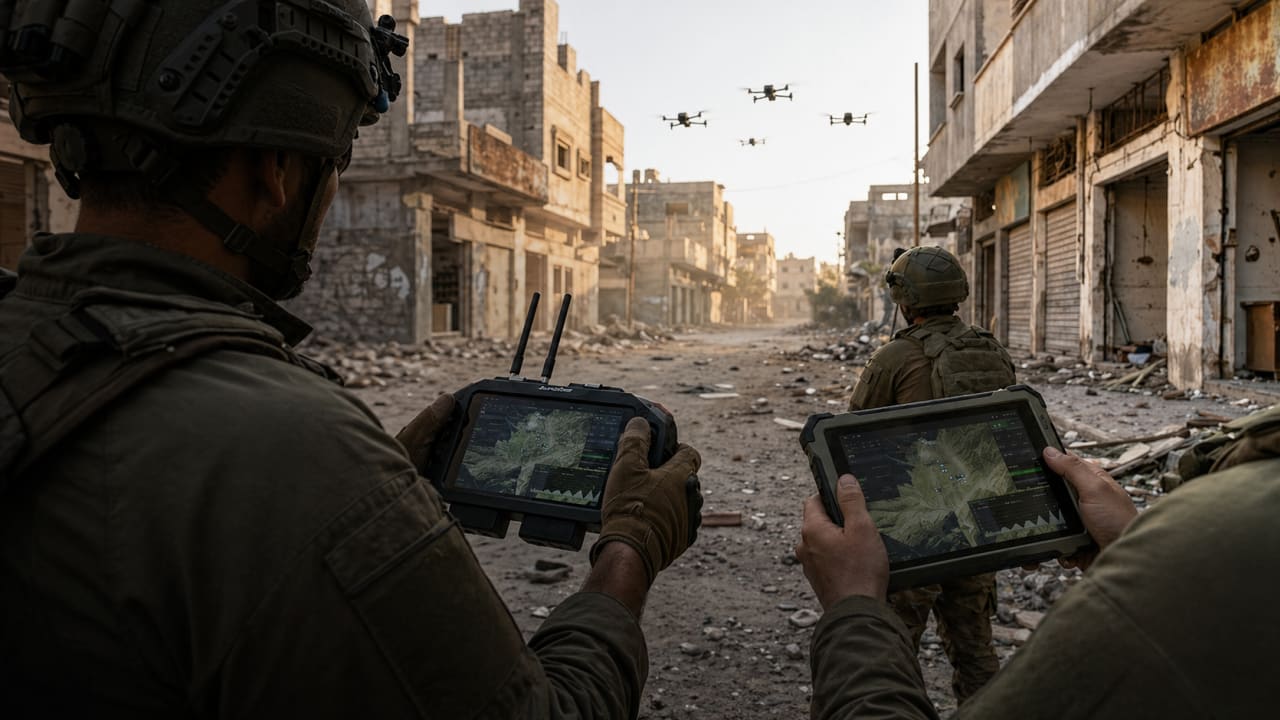
NOVEMBER 26, 2026 09:43The growing use of drones and robotic systems over the past three years has changed how Israeli forces approach ground warfare, allowing machines to encounter threats before soldiers enter contested areas. Now, Brig.-Gen. (res.) Shuki Ribak, who witnessed that transformation firsthand, is joining defense-tech company AITAN as president of AITAN Israel.Ribak, who headed operational planning at the IDF's Southern Command during the Gaza war and helped plan Operation Gideon's Chariots II, will lead the company's operations in Israel and oversee the frontline integration of its robotic weapon systems into combat units. He will also help shape the company's future product development and translate battlefield requirements into operational capabilities.The appointment comes as militaries increasingly turn to unmanned systems and artificial intelligence to change how ground forces operate. Ribak said the war exposed both the potential of these technologies and the significant gap between what they can do and how they are currently used."The IDF was not ready for the last war," Ribak told Defense & Tech by The Jerusalem Post. "From where it was in 2023 to where it is now is completely different, especially with drones."IDF tanks enter Gaza City. September 16, 2025. (credit: IDF SPOKESPERSON'S UNIT)During the fighting, he saw how rapidly unmanned systems were changing battlefield operations. Many of the technologies initially used by troops were commercially available platforms purchased by soldiers themselves or acquired through donations, rather than systems introduced through traditional military procurement programs.The experience accelerated the IDF's adoption of drones and robotics, with soldiers and reservists often driving innovation by adapting available technologies to immediate operational needs.One of the most significant changes, Ribak said, was the ability to send robotic platforms into contested areas ahead of ground forces, giving commanders a better understanding of threats while reducing soldiers' exposure to danger.He pointed to Operation Gideon's Chariots II as an example of how robotic platforms and drones increasingly became part of the ground maneuver."Which robotic platform it was, machine or drone, met the enemy before troops arrived," he said. And that saved countless lives.The experience also shaped his decision to join AITAN, which develops AI-powered robotic weapon systems designed to help militaries operate multiple autonomous platforms across complex combat environments."During the fighting in Gaza, I saw firsthand the impact of robotic systems on the battlefield, but also the significant gap between what they can do and how they are used in practice," Ribak told D&T. "AITAN's autonomous weapon systems offer an opportunity to fundamentally change military doctrine and battlefield tactics through AI and autonomy, rather than simply deploying more equipment."Founded by former Unit 8200 officers and entrepreneurs Udi Oster and Daniel Almog, AITAN is developing technology intended to address one of the growing challenges facing modern militaries: how to coordinate increasingly large numbers of drones and robotic platforms without requiring a dedicated operator and control system for each.The company's edge-based, original equipment manufacturer (OEM)-agnostic platform is designed to bring different autonomous systems under a unified command-and-control architecture. It allows operators to manage multiple drones and robotic assets simultaneously, including systems from different manufacturers, without replacing existing military infrastructure."We don't want one person to operate one platform," Ribak said, explaining that as the number of unmanned systems deployed on the battlefield increases, the ability to coordinate them with fewer personnel could become a significant operational advantage.Brig-Gen.(res.) Shuki Ribak, President of AITAN Israel (credit: Courtesy)With AITAN’s technology, a small number of operators could oversee multiple platforms performing reconnaissance, strike, and logistics missions, while AI and autonomy help manage their operation.However, Ribak stressed that the technology is intended to support human decision-making, not replace it."The human still makes the decision," he said.AITAN said its robotic systems have accumulated more than 500,000 operational hours with IDF units and Israeli security agencies. The company has also secured a joint contract to develop the command-and-control platform for the IDF's next-generation attack drone fleet.The appointment follows AITAN's $41 million funding round in September, co-led by Deep33 and Dell Technologies Capital, which brought its total funding to $54 million.For AITAN, Ribak's appointment is also intended to strengthen the connection between battlefield experience and product development. Udi Oster, the company's co-CEO, said Ribak brings a rare combination of strategic war-planning experience and tactical understanding of ground combat.His military career included commanding the Golani Brigade's 51st Battalion and the Oded Brigade, as well as senior roles shaping IDF ground-force doctrine and readiness."We are building a team that brings together leading technology experts with military strategists and combat professionals who have recent, real-world battlefield experience," Oster said. "There are few, if any, people in the world who combine Shuki's strategic understanding of how to plan a war, together with his tactical understanding of the battlefield."For Ribak, the challenge ahead is to translate the lessons of recent conflicts into systems that can operate at scale as warfare becomes increasingly autonomous."The old ways don't work anymore," he said.Follow us on Google
From soldiers to robots: Former IDF general takes leadership role at AITAN
Full Article
Original Source
Read the full article at Jpost →KhanList aggregates and links to publicly available news content. We do not host full articles from third-party sources. Always verify important information with original sources.