
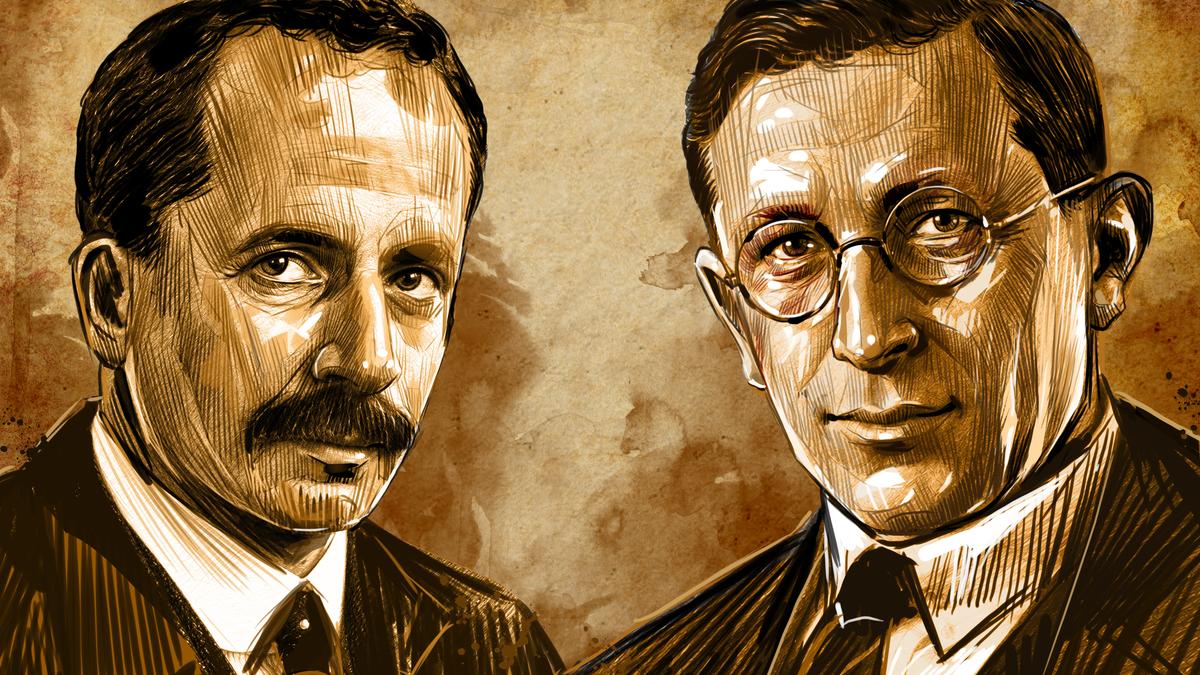
Frederick G. Banting and John J.R. Macleod were awarded the 1923 Nobel Prize in Physiology or Medicine for the discovery of insulin, a hormone that regulates blood glucose levels. Their work helped establish insulin as a treatment for diabetes, a disease that, in its severe forms, had often been fatal before insulin therapy became available.The prize was shared equally. Banting and Macleod were recognised “for the discovery of insulin”. The award acknowledged research conducted at the University of Toronto in the early 1920s, when investigators developed pancreatic extracts that could lower blood sugar in diabetic animals and subsequently demonstrated their therapeutic potential in humans. Charles Best, who worked with Banting, and biochemist James Collip, who helped purify insulin for clinical use, also made important contributions to this work.Research on pancreas and blood sugarDiabetes had been linked to the pancreas decades before insulin was isolated. In 1889, researchers Oskar Minkowski and Joseph von Mering demonstrated that removing the pancreas from dogs produced diabetes. Subsequent research established the importance of the islets of Langerhans, clusters of cells within the pancreas, in regulating blood sugar.The challenge was to identify and extract the substance responsible for this effect. Several researchers attempted to prepare pancreatic extracts, but obtaining a preparation that could be used safely and consistently in patients remained difficult.Frederick G. Banting was a Canadian physician and surgeon whose interest in diabetes led him to investigate the role of the pancreas in regulating blood glucose. After serving in the First World War, he returned to Canada and worked in medical practice before pursuing research.John J.R. Macleod was a Scottish-born physician and physiologist who had built his career around teaching and research in physiology, including carbohydrate metabolism. By 1920, he was a professor of physiology at the University of Toronto.Banting approached Macleod in 1921 with a proposal to isolate a substance from the pancreas that could regulate blood glucose. Macleod provided laboratory facilities, scientific guidance and access to experimental animals. Banting began the work with Charles Best, a medical student who assisted with the experiments. Their collaboration brought together Banting’s research hypothesis and Macleod’s experience in physiology, setting the stage for the experiments that led to the development of insulin as a treatment for diabetes.The researchers tied off the pancreatic ducts of dogs, allowing the enzyme-producing tissue to degenerate while attempting to preserve the islets. They prepared extracts from the pancreas and tested them in dogs whose pancreases had been removed. The extracts lowered blood sugar and improved the animals’ clinical condition.These experiments provided evidence that an extract from the pancreas could help compensate for the loss of its normal blood sugar-regulating function. However, the early preparations were not suitable for prolonged use in humans because they contained impurities that caused adverse reactions.Purifying insulin for treatmentIn 1922, biochemist James Collip joined the research team to improve the purity of the pancreatic extract. His work helped produce a preparation suitable for clinical testing.In January 1922, insulin was administered to Leonard Thompson, a 14-year-old boy with severe diabetes, at Toronto General Hospital. The first injection produced limited results, and an abscess developed at the injection site. After the preparation was further purified, a second course of treatment produced a marked improvement in his condition, with a substantial reduction in blood glucose and urinary glucose.Thompson’s response demonstrated that insulin could be used to treat diabetes in humans. The development of more reliable preparations and the expansion of production subsequently allowed treatment to reach more patients.Insulin did not cure diabetes, but it changed the outlook for people living with the disease. Before its introduction, severe diabetes was often managed through restrictive diets that could prolong life only for a limited period. Insulin enabled patients to use glucose more effectively and helped prevent the severe metabolic disturbances associated with insulin deficiency.The role of Best and CollipThe Nobel decision remains a significant part of the history of insulin research. Although Banting and Macleod received the prize, the work involved a larger research team.Banting was unhappy that Best had not been included among the laureates. He shared half of his prize money with Best. Macleod, in turn, shared half of his prize money with Collip, recognising his contribution to the purification of insulin.Later historical assessments of the discovery acknowledged the importance of contributions made by researchers who were not included in the award.Laboratory discovery,modern diabetes careThe introduction of insulin marked a turning point in the treatment of diabetes. It allowed many people living with severe insulin deficiency to survive and helped establish hormone replacement as a major approach to treating endocrine disorders.Insulin is produced by beta cells in the islets of Langerhans in the pancreas. It helps glucose move from the bloodstream into cells, where it can be used for energy or stored for later use. When the body produces insufficient insulin, or cannot use it effectively, blood glucose levels can rise.Insulin remains essential for people with type 1 diabetes, in which the immune system destroys the pancreatic beta cells that produce the hormone. It is also used by some people with type 2 diabetes when other treatments do not adequately control blood glucose.The treatment has evolved considerably since the first pancreatic extracts were administered. Modern insulin preparations are manufactured under controlled conditions, with different formulations developed to vary how quickly they begin working and how long their effects last.The Nobel recognitionBanting and Macleod received the Nobel Prize in Physiology or Medicine for 1923. Banting delivered his Nobel lecture, titled ‘Diabetes and Insulin’, on September 15, 1925, while Macleod’s lecture, ‘The Physiology of Insulin and Its Source in the Animal Body’, followed on May 26, 1925.The discovery also has a lasting connection to World Diabetes Day, observed on November 14, the birthday of Banting, who was born in 1891. More than a century later, insulin remains a cornerstone of diabetes treatment, changing a condition that was once often fatal into one that can be managed with sustained treatment.
Frederick G. Banting and John J.R. Macleod’s Nobel-winning discovery of insulin
Full Article
Original Source
Read the full article at Thehindu →KhanList aggregates and links to publicly available news content. We do not host full articles from third-party sources. Always verify important information with original sources.