
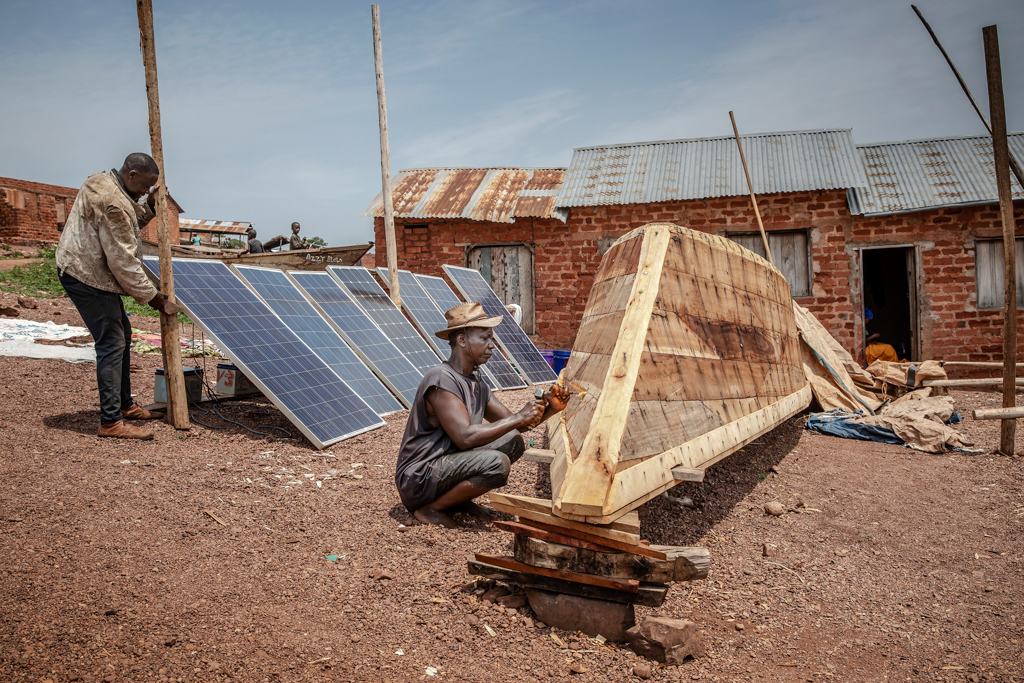
At the U.N. Climate Change Conference, African governments are arguing for increased financial and technical support to respond to climate change.The question of access to energy and what role remains for fossil fuels is a contested one, with many African governments planning continued reliance on coal, diesel and natural gas for transport, industry and electricity generation.Some African leaders argue that fossil fuels, notably gas, can underwrite the growth and development needed to make a transition to clean energy.Campaigners warn that relying on polluting fuels can crowd out necessary investment in renewable energy, leave African economies exposed to global price volatility, and ultimately undermine the collective effort to curb greenhouse gas emissions that cause climate change. As the 2026 edition of the annual U.N. Climate Change Conference reaches its conclusion in Antalya, Türkiye, on Nov. 20, African governments are arguing for increased financial and technical support to respond to climate change. Top priorities include more money for protection of forests and other landscapes, funding to help vulnerable communities and economies adapt to a changed climate, and financial backing for a just energy transition for fossil-fuel producing and consuming economies on the continent. Access to energy and what role remains for fossil fuels are contested topics, with many African governments planning continued reliance on coal, diesel and natural gas for transport, industry and electricity generation. Jane Mbabazi Byaruhanga, responsible for environmental and social affairs at Uganda’s Petroleum Authority, is among the thousands attending the summit. Africa’s households, schools, health centers and businesses lack access to affordable, reliable energy, she told Mongabay in a phone interview from Antalya. Two in five Ugandans lacked access to electricity from the national grid in 2025, according to government records; in rural areas, access was 43% of the population. This situation is mirrored across the continent: The International Energy Agency estimates that nearly 600 million of the continent’s 1.5 billion inhabitants do not have access to electricity. “Africa, to begin with, needs reliable and affordable energy to enhance their development, and we should always aim at the continent to have energy that is produced and also used responsibly,” she said. Byaruhanga said that despite the record of social and environmental harm left by extracting and burning oil or coal in places such as Nigeria or South Africa, developing Uganda’s oil and gas resources offers more benefits than risks. “I would like one to look at it on the other end of the coin, to say that if we actually develop our oil and gas resources, then this will help us have a pathway and revenues to get to the [energy] transition faster,” she said. Echoing an argument made by some African leaders, she said that fossil fuels have the potential to underwrite the creation of jobs, skills and industrialization, and to expand public services on the continent. Images provided by Earth Insight show the route of the East Africa Crude Oil Pipeline (EACOP) and its impact on several important ecological areas. Uganda’s Energy Transition Plan aims to achieve universal access to electricity by 2030 and eliminate use of solid biomass — firewood and charcoal, which currently make up almost 90% of energy consumption — completely by 2050. The plan envisions electricity will make up 56% of the energy mix in 25 years’ time, including solar, geothermal, and hydroelectric generation. It says liquefied petroleum gas (LPG) from the country’s own growing oil sector, alongside imported LPG from Tanzania, would initially meet demand for cooking and power heavy industry — a “transition fuel” towards a future shift to renewables, she says. In December, Uganda also plans to formally open the East African Crude Oil Pipeline, which at its peak will export 190,000 barrels of oil per day from the Tilenga and Kingfisher fields on Lake Albert, which straddles Uganda’s western border. Byaruhanga told Mongabay that the pathway to clean, renewable energy for a country like hers can’t be the same as for an EU member or China. “We can’t move at the same pace,” she said. “Because one size of a shoe does not fit all over, given our economic situation, given our background, given our energy access.” Yegeshni Moodley is a climate and energy justice campaigner from South Africa, a country with a very different energy and economic profile to Uganda. She agreed that access to reliable and affordable energy remains a burning question across the continent. “Several hour long blackouts, choices between food and electricity, are the common and daily experience of Africans,” she said in an email interview with Mongabay, while attending the climate summit in Türkiye, also called Turkey. “This has built a culture of scarcity and low resource consumption, but we view energy as a catalytic resource that could improve quality of life, life expectancy, and economic output,” she said. “It has the potential to dramatically shift our population into new ways of living.” Moodley said having access to sufficient energy means people can spend less time on securing energy resources, such as collecting firewood. “It also means reliable supply that can be used at all times of day and night, without excessive spend on battery backups,” she said. “For business, this is a dramatic shift as operations can continue uninterrupted. This is especially critical in the healthcare sector, where we have seen surgical procedures performed in candlelight, essential operations postponed, backlogs in delivery, and increased safety concerns for clinic personnel under darkness.” But she said she rejects that fossil fuels should have a role in expanding energy access and pointed to the danger of temporary or tactical use of fossil fuels in a world that is certain to overshoot the limit of 1.5 degrees of global warming due to the release of greenhouse gases into the atmosphere. “The continued use of fossil fuels derails our ambition for a liveable world and a climate where we can survive and thrive,” Moodley said. TotalEnergies oil terminal at Djeno, Republic of Congo. Image by Elodie Toto/Mongabay. Moodley is the climate and energy justice program lead for Friends of the Earth affiliate groundWork, one of three non-government organizations that have filed a court challenge against the South African government’s approval of a liquefied natural gas project in KwaZulu-Natal province. In a Nov. 17 press release, groundWork, the South Durban Community Environmental Alliance (SDCEA) and nonprofit The Green Connection say that the environmental assessment of the LNG Hub Project in Richards Bay, a planned LNG project in the city on the Mhlatuze River, ignores 99% of the greenhouse gas emissions linked to the extraction, shipping, transport and eventual burning of imported gas by the project’s own earlier accounts, breaching South African environmental law and the constitution. “That means that they ignored the greenhouse gas emissions from where the gas came from, like Nigeria and the United States, and they also ignored the climate impact of how gas is used in electricity production,” said Jonty Cogger, a climate justice lawyer at the Centre for Environmental Rights (CER), which is representing the three organizations in court. Cogger told Mongabay it is easy to understand the appeal of continued use of fossil fuels for African governments and business leaders, with the promise of foreign exchange earnings, energy security and construction of well-known generation and transmission infrastructure. But he said that across Africa and beyond, this path has delivered uneven benefits so far. “A large portion of the population still live in poverty and lack reliable electricity,” he said. “It also does seem like, you know, oil and natural gas reserves mostly benefit the state and narrow elites.” There is a risk that relying on oil and gas can crowd out investment, demand and construction of infrastructure for other energy sources, he added. Recent events, including Russia’s invasion of Ukraine or the joint U.S.-Israeli strikes on Iran, also illustrate how reliance on globally traded fossil fuels can leave African economies exposed to volatile prices. “The risk is still there that anything, any fossil fuel burn, creates carbon and greenhouse gas emissions,” he added. “But unfortunately, the planet doesn’t see boundaries. So, the more you burn, the worse it’s going to be, you know, no matter where you are in the world.” He said South Africa’s plans to include natural gas or other fossil fuels in its future power mix, or Uganda’s East Africa pipeline, undermine the force of the Africa group’s arguments at the climate summit. “If I do something in my backyard that causes damage to your property, then I owe a moral duty to you as well,” he told Mongabay. “And so I think the best way to understand the climate crisis is that whatever happens in the world, no matter where, we are all joined together as brothers and sisters in this pending process.” Members of the Sukumani Environmental Justice group protesting at a coal mine in Dannhauser, South Africa, in November 2023. Image courtesy of Sukumani Environmental Justice. Addressing the climate summit in Antalya on Nov. 12, U.N. Secretary-General António Guterres said the last four years have been the hottest on record. “Fossil fuels must go the way of the dinosaurs,” he said. “But that won’t happen on its own. The dinosaurs did not have a lobby, but fossil fuels do. And their strategy is simple. Distort the science, delay the policy, delay the action, delay the accountability.” Guterres said that in the third quarter of 2026, the world’s nine largest oil companies made $95 billion in profits while the U.N. Framework Convention on Climate Change’s loss and damage fund, intended to provide assistance to comumunities harmed by rising sea levels, heatwaves, and other unavoidable risks of climate change. received just around $600 million. Expanding access to electricity to all Africans would require an investment of $25 billion per year, according to the International Energy Agency — around 1% of current global energy investment. Guterres said developing economies as a whole receive less than 20% of global clean energy investment and most of them pay heavily to borrow. “If they cannot access affordable clean energy, fossil fuels will fill the gap, locking in emissions for decades,” he said. “It’s time for governments to tax these windfall profits and use them to help vulnerable countries recover. Polluters must pay.” Banner image: Solar panels charge batteries as a man fixes a traditional fishing boat near Lake Tanganyika in Kigoma, Tanzania. Image © FAO/Luis Tato. What does the just energy transition mean for Africa? Is natural gas the solution to Africa’s energy needs? New research says no. Total’s oil pipeline gets go-ahead from Ugandan MPs despite secret terms Credits Topics
Fossil fuels’ role in Africa’s energy transition contested as UN climate conference closes
Full Article
Original Source
Read the full article at News →KhanList aggregates and links to publicly available news content. We do not host full articles from third-party sources. Always verify important information with original sources.