
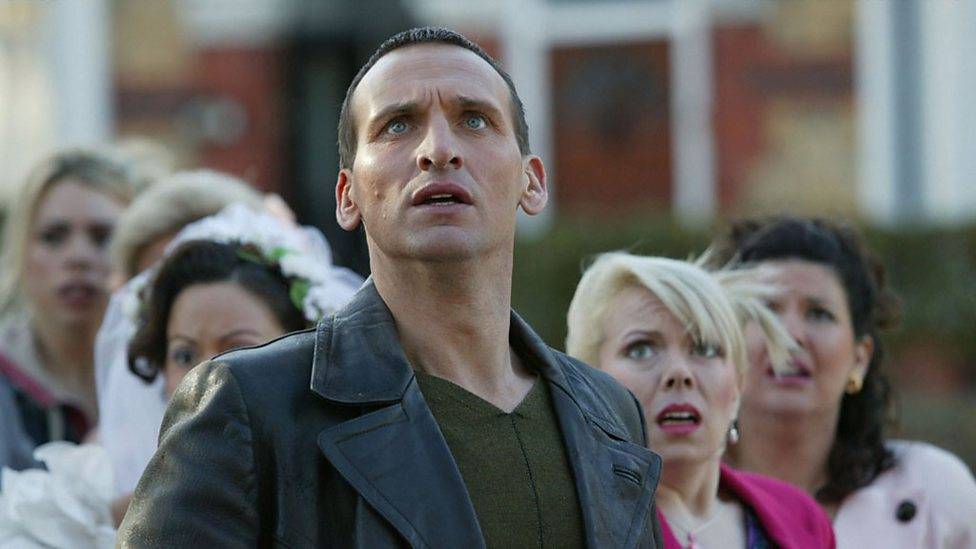
Published Oct 9, 2026, 6:00 AM EDT Four words were enough to scare a nation 21 years ago, Doctor Who traumatized children everywhere Image: BBC Russell T. Davies had a lot to prove when the BBC put him in charge of giving Doctor Who a new lease of life after the 16-year gap between Classic Who in 1989 and New Who, which launched in 2005. Davies was not only successful, with the premiere episode “Rose” bringing in over 9 million views overnight, but he also went on to create some of the most iconic episodes in Doctor Who history. Coming hot on the heels of the Time War, Davies introduced a darker Doctor (played by Christopher Eccleston), struggling with the grief of being the last of the Time Lords. This grimmer slant didn’t just extend to our favorite alien but to the episodes themselves—including one that haunts me (and everyone who grew up watching New Who) to this day. The Doctor Who episodes that won a Hugo Award “The Empty Child” has many iconic parts surrounding its conception. It introduced one of the Doctor’s most rakish companions, a lovable con man from the 51st century known as Captain Jack Harkness (John Barrowman), and it was also the first Doctor Who episode Steven Moffat wrote; he would later take over from Davies as Doctor Who’s showrunner in 2010. However, the most important thing about “The Empty Child” is this: It is, without a doubt, the scariest episode of Doctor Who’s first season (along with its follow-up, “The Doctor Dances”). Image: BBC The episode follows the Doctor and Rose (Billie Piper) as they arrive in London during the Blitz in 1941. While the Doctor investigates the metal cylinder that brought them there, Rose encounters a boy in a gas mask on a rooftop. Frightened, she is rescued by Jack Harkness. But the Doctor, Rose, and Jack haven’t seen the last of the child. When they reunite at a hospital treating victims of the London bombings, they discover the cylinder is connected to the boy’s appearance — and that several other patients have gas masks glued to their faces. On the surface, a gas mask isn't inherently scary. They were used during the Blitz to keep people safe from poisonous gases and other chemical warfare. But look beyond its uses and focus on its appearance: the sunken, circular eyes, the elongated mouth, and the tubing coming from it… No matter how you cut it, it’s nightmare fuel. Image: BBC Moffat went a step further, though. A gas mask can be horrifying in the right context, sure, but what's even more terrifying? Historically speaking, a creepy child. Yet even that wasn’t enough: The child terrorizing the Doctor, Rose, and Jack moves with the slow, unnatural gait of something not quite alive. This kid needed to be more than creepy in appearance; he needed something unnatural and unnerving about him. So Moffat gave the child a catchphrase that still sends a shiver up my spine: “Are you my mummy?” In an interview with Half the Picture, Moffat explained that, originally, the child was just supposed to say “Mummy” all the time. However, once Moffat saw the payoff for the two-episode arc (by the end, a character named Nancy reveals she is, in fact, the child’s mother), he quickly shifted the catchphrase into a question. I'm glad he did. The single use of “Mummy,” while creepy, doesn’t hit as hard as a question. With the child asking, it creates a sense of unease and a series of other questions in Whovians' minds — why can’t it recognize its mother, is it blind, and does this imply there’s more like it if it has a mother? Image: BBC The phrase — and its repetition from not just the child, but from every individual with a gas mask on their face — makes “The Empty Child” feel less like an episode of a family-friendly sci-fi show and more like something straight out of a Clive Barker movie. It certainly traumatized me, and as it turns out, I wasn’t alone. “Kids will be saying that in playgrounds,” Moffat told HTP, recalling how he convinced the BBC to keep the phrase repeated in the episode. “And the playgrounds of Britain had 'Are you my Mummy?' all over the place. So, [the episode] was a huge storming success.” Plenty of other episodes filled with terrifying creatures have followed, including the memorable Weeping Angels and even Satan, but for me, the quiet unease of a young boy in a gas mask will always be the Doctor Who "creature" that still makes me reach for comfort, even 20 years later.
Forget the Weeping Angels, This WW2 Episode Is the Scariest 'Doctor' Who Has Ever Been
Full Article
Original Source
Read the full article at Polygon →KhanList aggregates and links to publicly available news content. We do not host full articles from third-party sources. Always verify important information with original sources.