
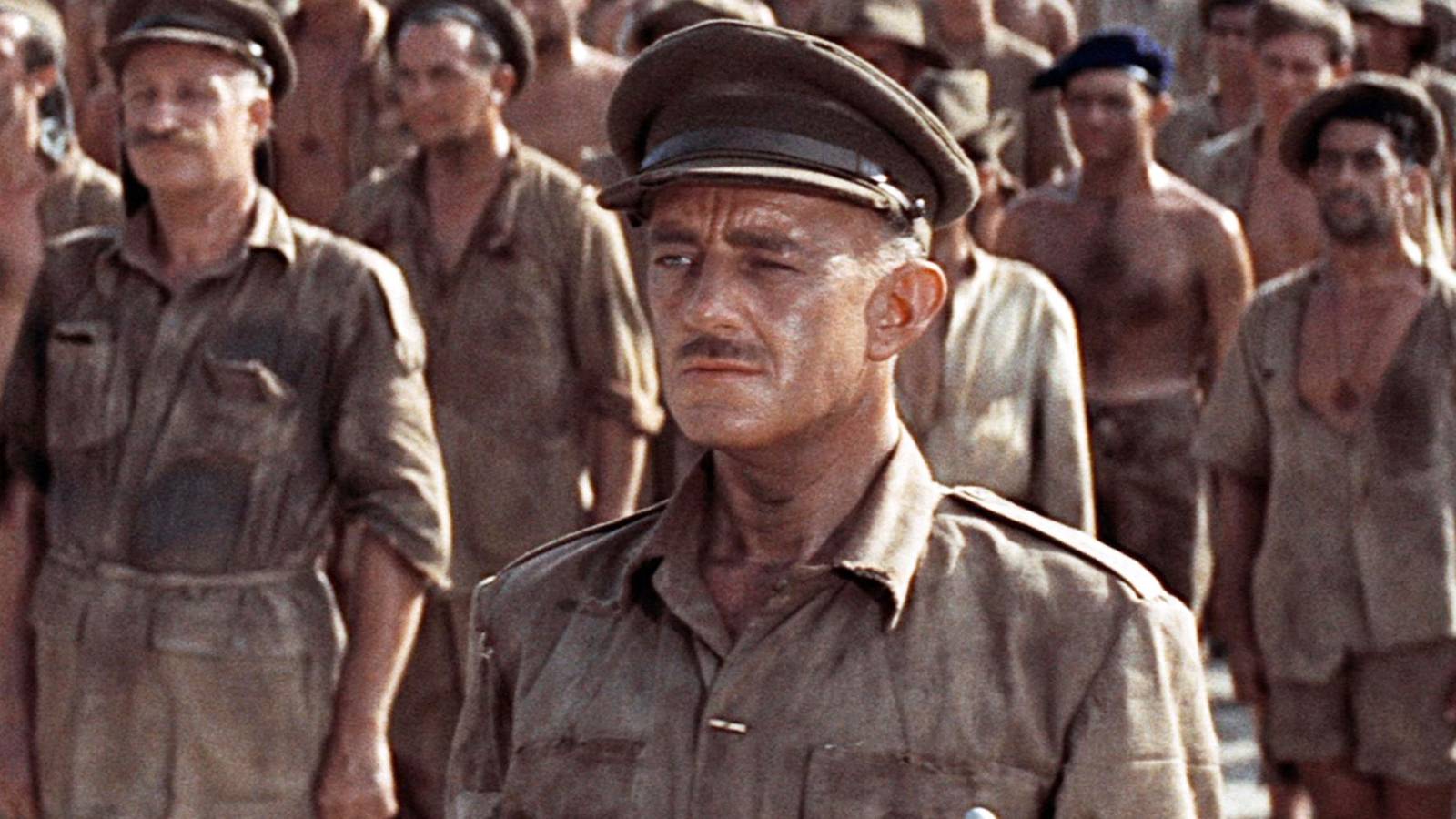
Published Nov 2, 2026, 5:09 AM EST Anthony Crislip has always loved movies and television, and has been published in outlets such as SlashFilm and Ultimate Classic Rock. While working as a film programmer or judge at a film festival, he has striven to develop interest in underseen films. He is a particular fan of digging deep into forgotten corners of film history. Just a couple of years before he fully redefined the cinematic epic with his 1962 World War I biopic Lawrence of Arabia, David Lean (along with producer Sam Spiegel) offered audiences another epic, this one set in the Pacific theater of World War II. His 1958 film Bridge on the River Kwai could have been a proto-Great Escape, a movie about daring men breaking out of their harsh conditions. The story, about British and American prisoners of war in a Japanese camp, would seem to demand it, and a decent chunk of the movie does revel in some heroic moments of adventure. But at its best, it’s something much stranger — a story of obsession, corruption, and even British supremacist thought. Much like Lawrence of Arabia, it sits in the uneasy space between lionizing the hypothetical heroes and examining them with more psychological depth. Based on Planet of the Apes author Pierre Boulle’s fictional novel about the building of a strategic bridge for the Burma railway, Bridge on the River Kwai is driven by two stories. On one end, you have the American soldier Shears (William Holden), whose early escape from the prison ultimately leads to him being sent back to liberate it in regular episodes of derring-do. On the other, there's the British officer Nicholson (Alec Guinness), whose strict submission to the rules of international warfare makes him a thorn in the side of the prison camp’s leadership. He particularly annoys Colonel Saito (Sessue Hayakawa), who throws him in the brig when he complains righteously about the British officers being forced into manual labor. But the movie truly begins when he is set free. Like David Lean's Other Films, 'Bridge on the River Kwai' Is Epic and Intimate Image via Columbia Pictures Coming in over three hours long, and with many thousands of extras, David Lean’s Lawrence of Arabia redefined the epic film. In many ways, the director continued to chase it for the remainder of his career, with movies like Doctor Zhivago and Ryan’s Daughter competing for the movie’s scale and runtime — they are a far cry from the beautiful and sharply observed romantic drama of his classic 1945 film Brief Encounter. Bridge on the River Kwai was something of a middle ground between those intimate early films and the massive scope of his later career. It’s exciting, huge, but remarkably interested in the psychological makeup of its characters, especially Nicholson. While Shears is able to give audiences the thrill of watching Allied forces setting up explosives on the bridge, Nicholson provides something more unstable and fascinating. As in Lawrence of Arabia, the man stands in for a kind of old-school, refined British imperial character. Rather than the more rebellious characters in The Great Escape, he has a strong belief in the rules of war. He is as much a diplomat as he is a soldier. While he protests the officers being put to work building the titular bridge, his time being imprisoned changes him. As he notices the officers have sabotaged the bridge day after day, he takes charge of the camp and forces them to tighten up their approach. Rather than heroically fight to keep the bridge from being built, he decides to turn it into a symbol of British supremacy, a monument to their engineering prowess. In doing so, Guinness is given the chance to imbue the character with incredible complexity. Alec Guinness and David Lean Fought Behind the Scenes of 'Bridge on the River Kwai' Despite acting in six of David Lean’s films, Alec Guinness seemingly never wanted to be in them (it was probably for the best that they never got too far with their Gandhi biopic, which ended up becoming a breakout role for Ben Kingsley). Each film got something profound from the actor, even when he and Lean butted heads, a phenomenon that hit its nadir with Bridge on the River Kwai. Per Michelangelo Capua's biography on William Holden, Lean’s vision of Nicholson as a straitlaced officer became a point of contention, and Guinness challenged his directorial choices repeatedly, which led to Lean regularly reminding Guinness that he wasn’t the first choice for the role — it was actually Night of the Hunter director Charles Laughton. But if the future Obi-Wan Kenobi took issue with his Bridge on the River Kwai director, it doesn’t show in the finished product. Nicholson’s effective betrayal of his countrymen, complete with his monologues about British (effectively European) supremacy, makes him a fascinating character. The ways in which his sense of duty becomes a noose around his neck are as compelling as the movie’s men-on-a-mission subplot, and the tension it creates within the camp is as riveting a political scenario as anything Lean created in his more celebrated follow-up. The performance at its center is as much of a spectacle as the movie’s views of its bridge, which we see constructed and ultimately destroyed, leading to the movie’s surprisingly bittersweet denouement. The movie would be great as spectacle, but its masterpiece status comes from its ambivalence towards war and the men who make it, all tied together by Guinness’s performance.
Forget 'Saving Private Ryan,' This World War II Movie Is the Perfect Replacement
Full Article
Original Source
Read the full article at Collider →KhanList aggregates and links to publicly available news content. We do not host full articles from third-party sources. Always verify important information with original sources.