
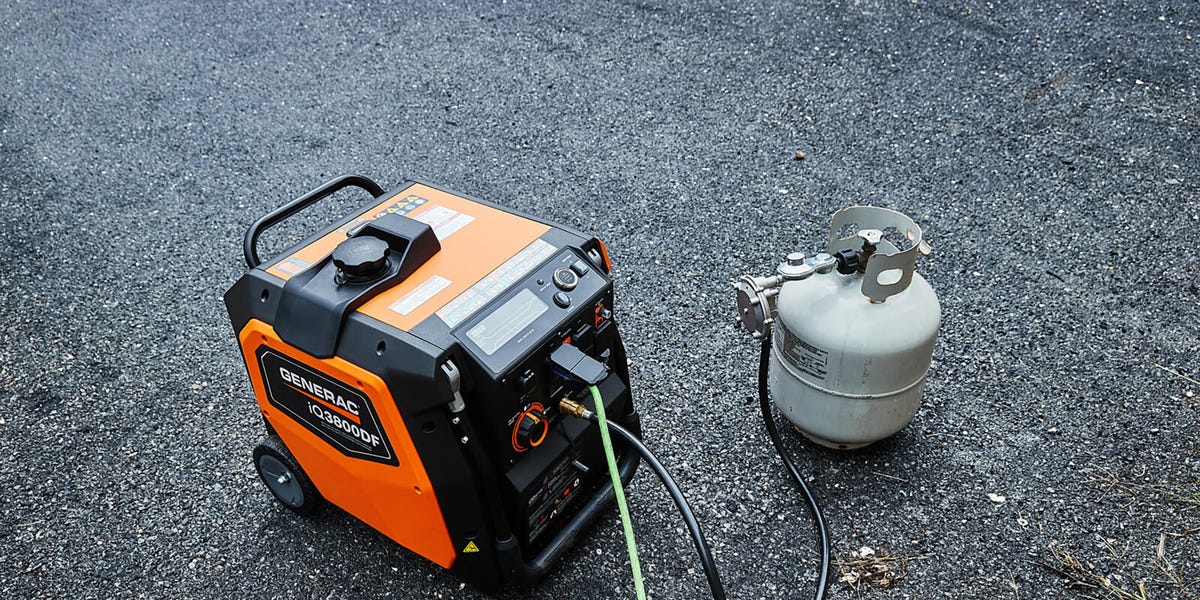
2 min readDual-fuel generators have become both more common and more affordable—so much so that I would strongly recommend one to just about anyone over a single-fuel, gas generator.Of course, that recommendation comes with questions and qualifications. Mainly, why exactly do you need a generator in the first place? If it’s to supply power on a job site, or some other function, regularly—think daily or weekly—then a single-fuel gas generator, like the Honda EU7000iS 7,000-Watt Inverter Generator, is fine. But if it’s for emergency use during power outages, which in most places are a lot more sporadic than daily or weekly, then it’s dual-fuel, all the way. The reason? Operating on propane is going to save you a lot of trouble in the long run.The Problem With GasolineWhen gas generators sit for long periods of time, the fuel in them can degrade, making them hard to start. Worse yet, additives in gasoline can also break down, corrode, and clog components of the fuel system. This can happen even if you’re careful about treating fuel or running equipment out of fuel for storage. I had a Honda generator for 30 years and replaced the carburetor twice in that time. If a generator won’t start when you need it, you might as well not have it at all.Propane doesn’t have the long-term storage issues that gasoline does. It can be stored for years with no degradation. For this reason, the two dual-fuel generators I currently own, a 7,250-watt Pulsar and a 12,000-watt DuroMax, have run solely on propane—and I have never had any starting issues with either of them, regardless of how long they sit unused. I refuse to put gas in their tanks unless there is absolutely no other option.Generators We LoveBest for High-Voltage AppliancesWhat You Should Do After Using Gasoline in Your Dual-Fuel Generator If you end up having to use gasoline, you can minimize the long-term risk afterward with just a couple steps. The first thing to do is to turn off the fuel valve, start the generator, and let it run until it stops. Remove the hose from the fuel valve, and drain the tank completely. Then, connect the propane hose, start the generator, and let it run for a few minutes. This should evacuate any gasoline left in the fuel system, leaving it as clean as possible.One thing to keep in mind is that propane has less available energy per gallon than gasoline, so a generator’s output capacity, in watts, is reduced by about 10 percent when you use propane exclusively. If you have a small generator and run it near capacity with heavy loads, this might be an issue. When people ask me what size generator they need, I usually recommend getting one that’s 20 to 25 percent bigger than needed because once you have power available during an outage, something else will inevitably need power from the generator as well.Brad Ford has spent most of his life using tools to fix, build, or make things. Growing up he worked on a farm, where he learned to weld, repair, and paint equipment. From the farm he went to work at a classic car dealer, repairing and servicing Rolls Royces, Bentleys, and Jaguars. Today, when he's not testing tools or writing for Popular Mechanics, he's busy keeping up with the projects at his old farmhouse in eastern Pennsylvania.
For Trouble-Free Operation, Stop Using Gasoline in Your Dual-Fuel Generator
Full Article
Original Source
Read the full article at Popularmechanics →KhanList aggregates and links to publicly available news content. We do not host full articles from third-party sources. Always verify important information with original sources.