
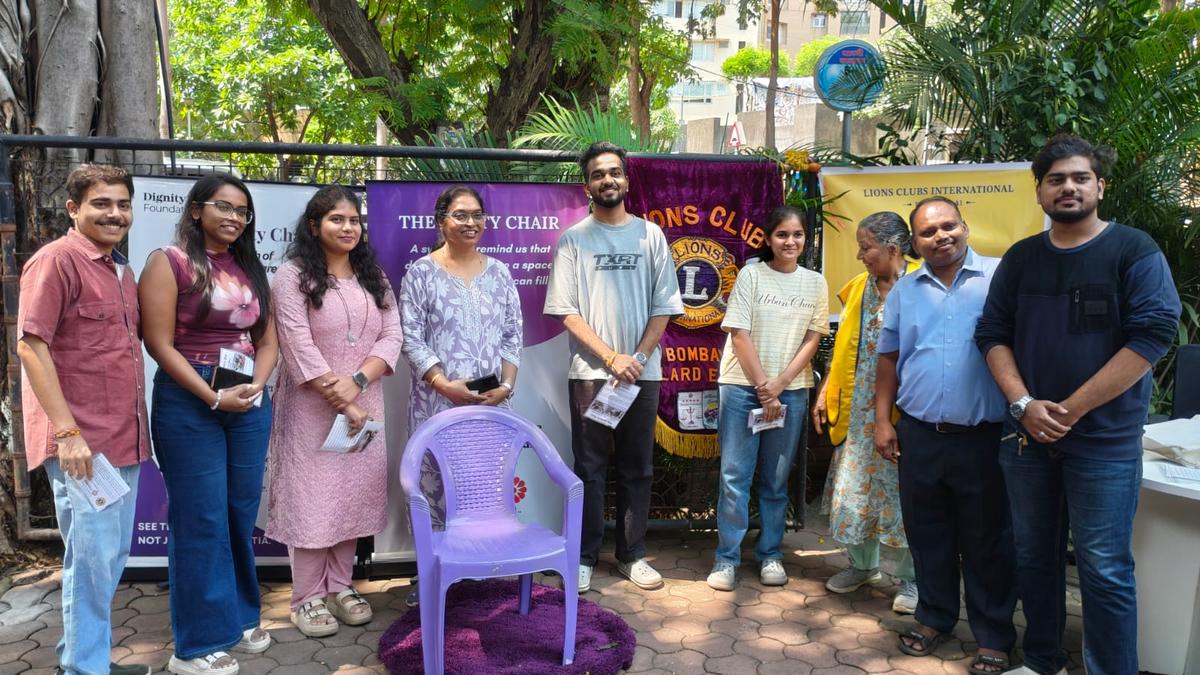
“Are you hungry?” “Do you want some water?” “Are you in pain?”The questions were simple. The answers were not.Sometimes the 87-year-old woman replied only with a faint “hmm,” her gaze fixed on one spot. Other times, she talked and carried on as usual. Getting a response could take several attempts.In 2024, she was brought to Mumbai after a fall in her washroom, and her family's attention was on her injury. No one saw a pattern at first.As the family began noticing these episodes — the lack of response, the fixed gaze and, occasionally, unfamiliar names called out — they sought medical advice. She was subsequently diagnosed with dementia.For Itishree, a Mumbai resident, the diagnosis of her husband's grandmother settled one question and raised another for the whole family: how do you care for someone with dementia when you have never done it before?Their difficulty finding a trained caregiver pointed to a question that reaches well beyond one household. As the city's population ages, is Mumbai ready for the families who will be asking the same thing? Specialists in the city can diagnose and treat dementia. What can be considerably harder to find is what comes after: accessible, affordable and continuing care.An estimated 7.4% of Indians aged 60 and above — around 8.8 million people — live with dementia, according to a nationwide study using data from the Longitudinal Ageing Study in India (LASI). The study found that prevalence increased considerably with age, from 2.94% among people aged 60-64 to 25.41% among those aged 85 and above.At Mumbai's civic-run King Edward Memorial (KEM) Hospital in Parel, a dedicated Memory Clinic was started on September 21, 2022, on World Alzheimer's Day, by former Neurology department head Dr Sangeeta Ravat, senior neuropsychologist Dr. Urvashi Shah and Dr. Neeraj Jain, who is presently Head of Neurology at KEM Hospital.The clinic has registered 375 patients since it opened, according to Dr. Jain. Patients with dementia are also seen through the hospital's general neurology OPD, including those with advanced disease who may not be registered through the dedicated Memory Clinic.Dr. Jain said KEM's clinic is the only dedicated Memory Clinic in a government hospital in Maharashtra. While private hospitals offer memory-related services, he said a comparable multidisciplinary government facility is not available elsewhere in the State.The clinic brings together neurologists, neuropsychologists and occupational therapists. Patients are assessed for cognitive impairment and undergo detailed neuropsychological evaluation and other investigations to determine the cause, nature and extent of their condition. Some causes of cognitive impairment can be treatable or reversible, while neurodegenerative dementias are progressive.Depending on the patient's condition, KEM can also provide or refer them for occupational therapy, physiotherapy and cognitive stimulation. Occupational therapy can help patients retain or relearn everyday activities, while cognitive stimulation may be used particularly among those with milder dementia.Dr. Jain said people should seek an assessment when memory or other cognitive difficulties begin interfering with everyday activities or normal routines. Reaching a clinic early can allow doctors and families to plan interventions and future care.However, he said many patients seen at KEM arrive when the condition has reached a moderate stage. Among the lower-income population the hospital serves, cognitive changes may initially be dismissed as something that naturally accompanies ageing, delaying assessment.The challenges can become greater after diagnosis.Dementia care cannot depend on medication alone, Dr Jain said. It can require continuing input from neurologists, neuropsychologists, occupational therapists and physiotherapists, depending on the needs and stage of the patient.“Management of dementia is a team effort,” he said.Geography further complicates access. Therapy may need to be provided regularly, making repeated journeys across Mumbai difficult for a person experiencing cognitive impairment and the family member accompanying them.Dr Jain pointed to the example of a patient living in Virar who may need services available at KEM in Parel. Travelling such a distance repeatedly for therapy may not be practical, while accessing several professionals privately closer to home can be expensive.“Not everyone can travel every day for consistent therapeutic help,” he said.Dr. Harish Pathak, Dean of Seth G.S. Medical College and KEM Hospital, Mumbai, said the city needs more dedicated dementia-care homes as well as affordable professional assistance. Relatively few centres bring the different professionals required for continuing dementia care together in one place.What the city needs, according to Dr. Jain, are dementia-specific services distributed closer to where people live, where neurologists, neuropsychologists, occupational therapists, physiotherapists and other professionals can be accessed together and at an affordable cost.Maharashtra's National Health Mission (NHM), meanwhile, states that special Memory Clinic OPDs for senior citizens affected by dementia have been established under the District Mental Health Programme in 34 districts. Staff under the programme have received specialised training, and dementia patients are provided medicines free of cost.The NHM website, however, does not provide a district-wise list of these Memory Clinic OPDs or specify whether they provide multidisciplinary services comparable to KEM's dedicated clinic.The Union Health Ministry's National Programme for Health Care of the Elderly (NPHCE) also envisages a continuum of geriatric services, including geriatric clinics, rehabilitation and home-based care. Its tertiary-care framework provides for Memory Clinics and day-care services for rehabilitation, respite and dementia care.Outside hospitals, some continuing support is provided by non-governmental organisations.Dignity Foundation runs a specialised Dementia Day Care Centre in Mahim with a capacity of 20 people diagnosed with dementia. The centre provides cognitive stimulation, art and music therapy, physical exercise, reminiscence therapy and group activities, with an emphasis on maintaining abilities that patients retain as the condition progresses.Its work also extends to families. The organisation provides caregiver counselling, support-group meetings and training intended to help relatives understand and manage the practical challenges involved in caring for someone with dementia.The NGO also conducts dementia awareness programmes in colleges and workplaces. During World Alzheimer’s Month in September, its “The Empty Chair” campaign focused on recognising early signs of dementia, dispelling misconceptions and encouraging young people to support elderly family members. The foundation said the campaign reached over 1,000 students and 200 corporate employees across Mumbai.For Itishree's family, those practical challenges became apparent soon after the diagnosis.“We tried looking for full-time help through an agency, but it was difficult to find people trained to take care of dementia,” she said. “People were unwilling to take care of anyone with dementia. So we did not find appropriate help from outside.”After around a month in Mumbai, the family decided to move their relative to Kerala. Their Mumbai home was small, Itishree said, while noise from construction and celebrations in the neighbourhood could be difficult for her. In Kerala, more relatives could interact with her in a familiar language, and she would have greater opportunities for social interaction.The family gradually learnt how to adapt. Following medical advice, they would keep her engaged in conversation, ask simple questions about her day and surroundings and show her old family photographs, encouraging her to recognise relatives. They also drew on advice from friends who had experienced dementia care in their own families.The experience left Itishree with a clearer idea of what would have helped when the family was first trying to navigate the diagnosis.“I wish we knew of agencies or organisations where trained professionals were available for full-time or part-time care,” she said. “Having trained help for us — who knew nothing about the practicality of caregiving for someone with dementia — would have been beneficial.”
For Mumbai’s dementia patients, diagnosis is only the beginning
Full Article
Original Source
Read the full article at Thehindu →KhanList aggregates and links to publicly available news content. We do not host full articles from third-party sources. Always verify important information with original sources.