
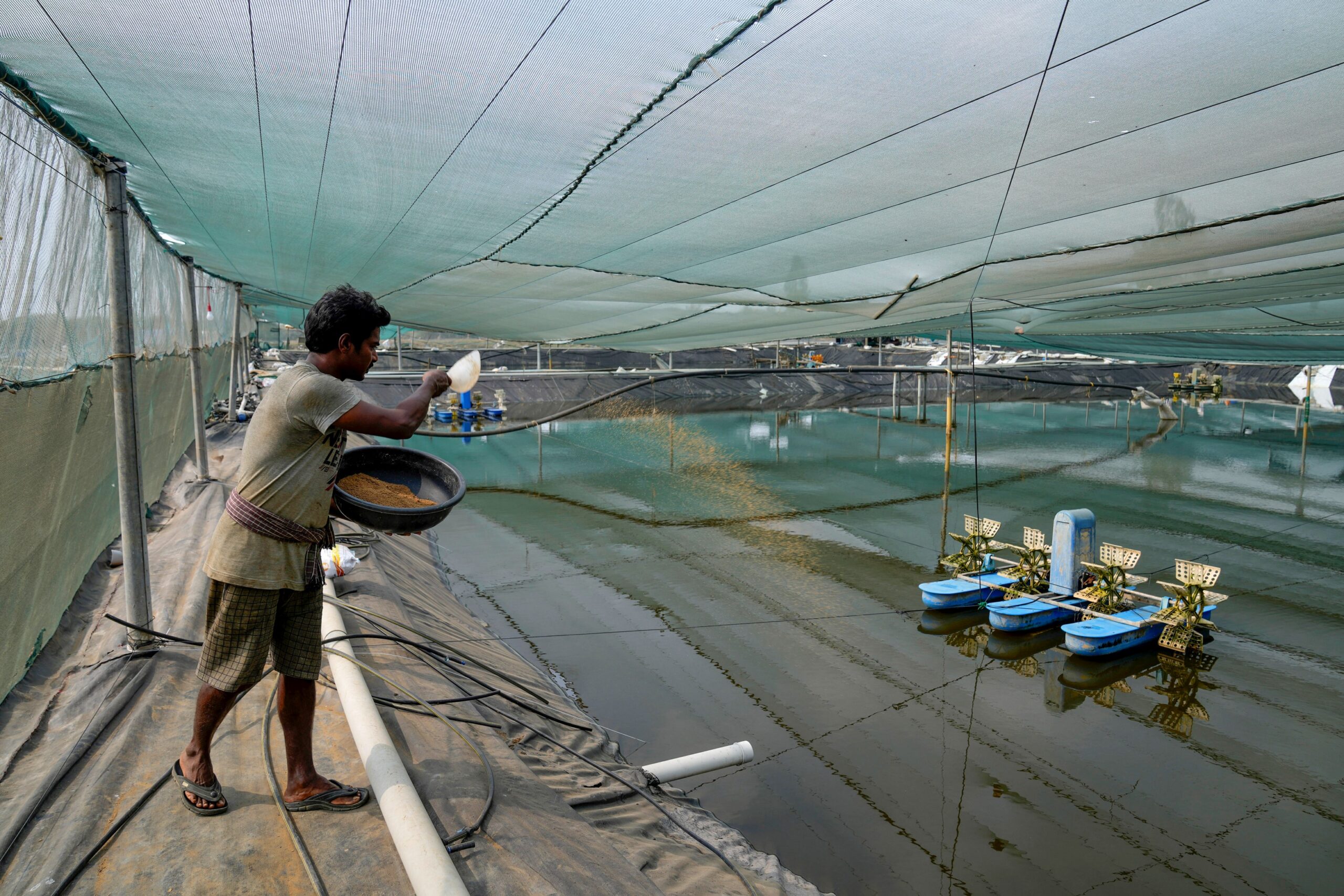
A proposed fishmeal plant in Cuncolim on India’s southwestern coast has reignited opposition to an industry accused of pollution, unsafe working conditions, and unsustainable fishing practices.An Outlaw Ocean Project investigation found at least 30 Indian fishmeal plants linked to environmental violations or other legal infractions between 2018 and 2024, as well as 18 episodes of civil unrest.The industry provides jobs and tax revenue, but also diverts fish from local food supplies, exposes workers and nearby residents to health and safety risks, and contributes to pressure on overfished species.Despite documented concerns, India is backing further growth in fishmeal production, with the government lifting a moratorium on new plants and officials approving the Cuncolim facility in February 2026. This article is from Food for Feed, a series investigating the global fishmeal industry. It is produced by the Outlaw Ocean Project, a news organization based in Washington, D.C., and excerpted by Mongabay. In late August 2025, a company named Marine Impex Pvt. Ltd. contacted the city council of Cuncolim, a city in southern India, to propose constructing a new fishmeal processing plant. Each month, the 1.6-hectare (4-acre) facility would process at least 2,400 metric tons of fishmeal, a protein-rich, dark-yellow powder made by pulverizing and cooking wild-caught fish, which is used as feed for farm-raised seafood like shrimp, salmon, and tuna. The proposal sparked outrage. In media coverage, local environmental advocates and politicians voiced strong objections. “If this project is allowed, it is as if we have killed the people of Cuncolim,” said city councilor Landry Mascarenhas. State lawmaker Elvis Gomes drafted a letter to the governor of Goa state, where Cuncolim is located, asking him to intervene and explained that the stench from existing plants chokes “the lungs with such foul air that the effect of it pervades for a prolonged period.” He added, “It is simply beyond a normal human’s capacity to endure.” The outcry in Cuncolim cast a spotlight on a powerful industry with a history of wrongdoing. Between 2018 and 2024, at least 30 Indian fishmeal plants were involved in a range of environmental violations and other legal infractions, such as dumping waste into waterways and boreholes, evading taxes, using illegal timber to fuel boilers, and failing to implement adequate safety protections, according records examined by journalists from the Outlaw Ocean Project. The plants were the target of at least 18 instances of civil unrest during this period, including protests that sent hundreds of people to the streets in half a dozen cities and villages, with some blockading roads to stop trucks and violently clashing with police. In one instance, demonstrations spurred a boycott of local elections. Fishmeal is made from fish caught primarily in nearshore waters by hundreds of Indian ships. It’s processed into flour or pellets in more than 70 plants spread across the country. The industry has brought millions of dollars in tax revenue and tens of thousands of jobs to India while helping grow more seafood to meet burgeoning global demand. Yet while the fishmeal industry has benefited some people, it has harmed others. The question that separates the two groups is who benefits and who pays the hidden costs for fishmeal and aquaculture. Fishmeal powder. Image by Phu Thinh Co via Wikimedia. CC BY-SA 2.0. A four-year investigation by the Outlaw Ocean Project, a news organization in Washington, D.C., uncovered the depth of those costs, including the loss of fishing jobs, chronic chemical exposure, avoidable worker deaths, violent protests typically sparked by the horrid stench from fishmeal factories, and escalating geopolitical tensions as countries compete for scarce sources of protein. The journalists found that the social and environmental impacts exact a price primarily paid by the poorer countries where the feed ingredient is harvested and processed, far from where the seafood raised from fishmeal is eaten. In India, the industry takes the heaviest toll on the residents who live nearest the plants. The stench emanating from the fishmeal plants is more than just an annoyance; it corrodes the local economy, undercutting tourism, driving away beach visitors and restaurant patrons. “My entire house stinks,” a resident from coastal Mangaluru, more than 300 kilometers (190 miles) south of Cuncolim, said about the fishmeal factory next door. The foul smell also indicated the release of noxious chemicals such as ammonia, hydrogen sulfide, cyanide, and methane. Fishmeal plants in Ullal, a municipality in southwestern India. Image courtesy of Changing Markets Foundation These substances have been linked to serious health problems, including nausea, pulmonary edema, and even death among plant workers and neighbors. The primary source of the “fishy” odor is trimethylamine (TMA), a colorless gas identified as “strongly toxic and carcinogenic” by the U.K.-based Society of Chemical Industry in 2021. As of 2025, more than 285,000 people, including more than 6,400 children under the age of 15, lived within a mile (1.6 km) of fishmeal plants in India. In 2024, India’s fishmeal industry generated $200 million in annual revenue and employed tens of thousands of people on fishing boats, in processing plants, and in ancillary services like ship maintenance, fuel transport, and port services. Work in India’s fishmeal plants can be dangerous, with fatalities resulting from asphyxiation, fires, and explosions. The process of cooking rotting fish not only produces foul odors but also dangerous gases, including hydrogen sulfide. In India, the industry’s reliance on old machines means sparks can ignite easily, and fishmeal itself is highly flammable and notorious for spontaneously combusting as it decays. These hazards have led to tragic incidents. In December 2021, at Bismi Aquatic Products in the south of India, a migrant worker died after cleaning a wastewater tank, passing out from the fumes, and falling in. Two other workers who tried to save him were hospitalized, and government regulators filed criminal charges against the plant for lax safety. In a written response to the Outlaw Ocean Project, Bismi Aquatic Products stated that the worker who died had failed to follow safety protocols and added that the incident “left an indelible mark” with “lessons learned ensuring better operating safety guidelines.” The company also said that it provided financial compensation to the deceased worker’s family. A few months later, on Feb. 20, 2022, two migrant workers were killed and three others injured in a boiler explosion at Bismi Fisheries Private Ltd., which is run by another fishmeal company in southern India. Government regulators filed criminal charges against this plant for negligence. Bismi Fisheries did not respond to a request for comment. Beyond problems on land, India’s fishmeal industry has a spotty record offshore. Many of the ships supplying the country’s fishmeal plants fish illegally or unsustainably. About a third of all fish caught in Indian waters goes into making feed, with plants mostly processing small pelagic fish that play a crucial role in the local ecosystem. Researchers and ocean conservationists fault this system, which processes large piles of fish inside factories, as unsustainable and wasteful, effectively extracting vital sustenance from poorer nations to produce seafood typically consumed in wealthier ones. Large catch of fresh sardines piled in fishing boats in Mahabalipuram, India. Image by Adin Mohan via Pexels. Pexels License. The consequences of this extraction are evident: Two key species, Indian oil sardine (Sardinella longiceps) and Indian mackerel (Rastrelliger kanagurta), were classified as “overfished” in Indian waters in a 2021 journal article assessing the status of Indian marine fish stocks, meaning they are caught faster than they can reproduce, shrinking the population and reducing its capacity to recover to healthy levels. Overfishing has pushed some species to the verge of extinction; Indian oil sardine, a staple food in southern India, saw a stock collapse in 2016, partially driven by fishmeal production. Subsequent stock assessments, including one by India’s Central Marine Fisheries Research Institute in 2024, indicate a significant increase in the biomass of Indian oil sardine and fluctuating increases for mackerel. But scientists caution that the boom-bust nature of these fisheries makes it difficult to estimate the longer-term health of their waters. Virtually all farmed shrimp in India, fed on fishmeal, is exported because it’s too expensive for local buyers — despite the fact that much of the forage or pelagic fish caught along Indian shores and used as fishmeal could be eaten locally. India, the world’s most populous country, is also the third-largest consumer of seafood, with at least a fifth of its protein coming from fish, according to a 2022 estimate by the U.N.’s Food and Agriculture Organization. Ongoing pollution by the fishmeal industry has sparked intense pushback. In the state of Tamil Nadu, for example, residents of Pottaloorani village in Thoothukudi district waged a sustained protest for more than 175 days in 2024. They demanded the closure of three nearby fishmeal and fish oil plants due to the unbearable stench and alleged contamination of air, water, and soil. Villagers reported that for four years, their groundwater had been spoiled, while the government ignored their complaints. The protests eventually culminated in a boycott of local elections and residents organizing parallel governance meetings, passing resolutions against the factories. During this long-running set of demonstrations, tensions also boiled over when a visit by a state fisheries minister led to a violent clash between protesters and authorities in May 2024. The fallout resulted in a local schoolteacher, who helped organize the protests, being transferred, in a move that local news outlets described as retribution. In August 2022, the Karnataka state pollution agency filed an order against Mukka Proteins and other fishmeal plants in the state in response to violations of the Water and Air Prevention and Control of Pollution Act. Local communities suffered from “stench, pungent toxic odours, smokes of poisonous gases and water pollution caused by the fishmeal factories in Suratkal, Sasihithilu-Mukka area,” according to a Change.org petition signed by more than 600 people. Beaches were also polluted because of fishmeal factories from Mukka Proteins, the petition said. The company shipped fishmeal to mills in India and Vietnam that supplied feed for farmed shrimp sold by Gordon Food Service, one of the largest food distributors in the U.S., and Hanos, a wholesaler based in the Netherlands. In emailed correspondence with the Outlaw Ocean Project, the Mukka Group said it has addressed pollution issues through increased monitoring, inspections, and “substantial upgrades to its Effluent Treatment Plants and odour control systems.” Gordon Food Service and Hanos did not respond to a request for comment. In November 2020, authorities discovered that United Marine Products, a fishmeal plant in Goa, disposed of effluent by injecting it into secretly drilled boreholes in a field behind the factory, contaminating groundwater, and sickening livestock and locals. Authorities soon announced plans to file criminal charges, impose suspensions, and issue fines, but the charges against United Marine Products were dropped several weeks later, allegedly a result of pressure from politicians and industry representatives, according to local media. United Marine Products has shipped fishmeal overseas to a mill that supplied feed for farmed salmon sold by Safeway and Albertsons in the U.S., according to trade data spanning from 2018 to 2024. United Marine Products said an investigation by regulators proved that the allegations of illegal borewells within its premises were unfounded. Albertsons did not respond to a request for comment. India is likely to support further growth of the fishmeal sector. The industry is bullish and defends its environmental track record. “Rather than causing pollution,” Dawood Sait, the president of the Indian Marine Ingredients Association, said of fishmeal, “it helps clear pollution-causing waste.” Fishers at Tuticorin beach. Image by Sathish DJ @ SatZ DJ from Tuticorin – Own work via Wikimedia. CC BY-SA 4.0. The association has said it aims to triple its output in the coming years to keep up with the rising global demand for shrimp. The government is eager to boost the economy. Toward this end, the Indian government announced plans in 2024 to help the industry by lifting a moratorium on new fishmeal plants. This paved the way for companies to build new factories in Cuncolim and other cities. In February 2026, state officials overruled the city of Cuncolim and issued Marine Impex Pvt. Ltd. permission to operate, under the condition that it treat noxious gases with scrubbers and biofilters. The approval of the project “marks a collapse of environmental governance,” said Aviraj Desai, a local activist. Vijay Prabhu, a former lawmaker who opposed the plan, added, “Cuncolim now pays the price of official indifference and political agenda.” This story is excerpted and edited by Mongabay from Food for Feed, a global investigation into the fishmeal industry conducted by an international team of journalists at the Outlaw Ocean Project. Reporters examined more than 1,400 fishmeal factories across 64 countries — tracing supply chains from fishing vessels to processing plants, feed mills, fish farms, and seafood retailers. The reporting effort involved dozens of journalists visiting factories and farms and boarding fishmeal ships at sea. The project includes Bait to Plate, an online tool developed by the Outlaw Ocean Project that tracks the fishing and seafood industries. Banner image: A worker throws feed into a pool at a shrimp hatchery at Nagulapally village, Uppada, Kakinada district, Andhra Pradesh, India, in 2024. Activists say India, the largest supplier of U.S. shrimp, America’s favorite seafood, is polluting the environment through aquaculture. Image by AP Photo/Mahesh Kumar A. Citations: Sathianandan, T. V., Mohamed, K. S., Jayasankar, J., Kuriakose, S., Mini, K. G., Varghese, E., … Deepthi, A. (2021). Status of Indian marine fish stocks: Modelling stock biomass dynamics in multigear fisheries. ICES Journal of Marine Science, 78(5), 1744-1757. doi:10.1093/icesjms/fsab076 Small sardines signal a potential bumper catch Catching fish to feed fish: Report details ‘unsustainable’ fishmeal and oil industry ‘Annihilation trawling’: Q&A with marine biologist Amanda Vincent Credits Topics
For Indian communities, fishmeal factories bring pollution, danger and protests
Full Article
Original Source
Read the full article at News →KhanList aggregates and links to publicly available news content. We do not host full articles from third-party sources. Always verify important information with original sources.