
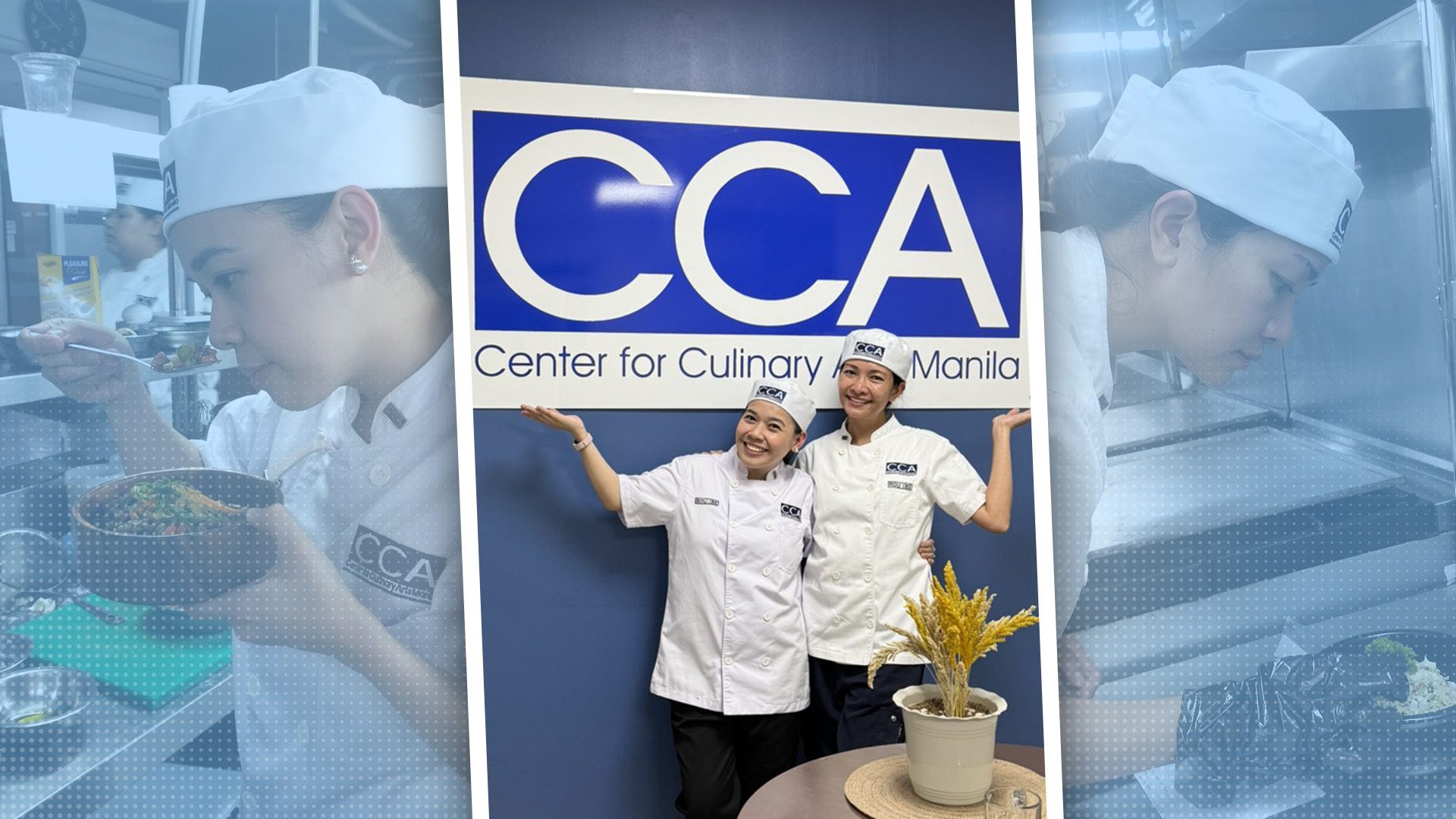
Bolinao, Pangasinan wakes to the sounds of water. Before the first guest opens the door at Birdland Beach Club, the sea has already been at work all day, dragging itself up the sand and letting go over and over, the slow percussion of a shore town that has never known silence. By the time the sun clears the treeline, the roast smell from the coffee bar is pushing its way out the open windows, warm and nutty, drifting across the lot where Joanna Ledesma’s Kopi Kubo Kollective stands on the highway: a coffee shop built on land with a rice field view, where the evening fog lifts. Joanna Ledesma at Kopi Kubo Kollective. Contributed photo Two hundred kilometers south, in a small dining room on D. Tuazon, Santa Mesa Heights in Quezon City, a different pot has been at work since morning. At Nam Jai Thai Noodle House, khao soi is a study in contrast: soft egg-wheat noodles below, crisp ones on top, all meeting in coconut-curry broth. The broth takes six to eight hours to prepare. Jeremaine Sze makes the curry paste from scratch, imports ingredients from Thailand, and works with local farms to source herbs and spices. Just like in most things she does, there is no shortcut: no pressure cooker and no premade paste. Jeremaine Sze with her staff at Nam Jai Thai Noodle House. Contributed photo Two women head these two kitchens. Ledesma owns the Birdland Beach Club and runs the Kopi Kubo Kollective in Bolinao, while Sze leads as the executive chef and owner of Nam Jai in Quezon City The businesses are different. But the question that brought the two owners to the same culinary school was the same. Although both have long been passionate about cooking, they always get the the question: “Are you a culinary graduate?” Ledesma heard it while running a restaurant and coffee shop in Malaysia. “Everybody’s telling me, ‘Are you a culinary graduate?’…I felt like there’s something missing on my side,” she recalled. Ledesma knew how to cook and create menus, but the question left her feeling inadequate. When culinary terms meet credentials Working with a staff who had formal culinary training also brought the knowledge gap into focus. For Ledesma, the hardest part was memorization — the terminologies refusing to stick to a 40-year-old brain. She recalled hearing terms such as “mise en place” and “bouquet garni” and realizing she could not explain them, even as the head of the kitchen. It’s the same for Sze, who found herself having to look up certain words that her assistant, who is a culinary school graduate, would often use in the kitchen. Both women had learned cooking by doing. This time, both wanted the formal grounding to match what they already knew. Taste of home Before the resorts and the noodle houses, Ledesma and Sze were just two girls who had something to sell. For Sze, learning to cook began with learning to taste. At home, her parents would ask what a dish needed: more salt, more sweetness, a better balance. She was often asked to try the dish, identify what was missing, then add it herself. That early practice of testing and adjusting became a way of thinking about food. Sze was eight when a move to Davao had her wanting to help earn money for tuition and personal expenses. She made yema and polvoron, learning to craft these sweets through family and necessity. While this was her first foray into the culinary world, she attests that they aren’t really considered cooking. Jeremaine Sze checks her food creation. Photo by: Jade Tan/Rappler Years later, under the name Manila Flavorful Asian Favorites, Sze would run catering services and work on party trays and food carts from a studio condominium. In peak periods, she cooked 40 to 80 trays a day, starting as early as 2 or 3 am. It was a lot to prepare all on her own. Her husband would come home from work and face the pile of dishes at the sink, waiting to be washed. The work filled the small space. Sze recalled cooking until late at night, with dishes and cookware covering the floor from 3 in the morning until 10 at night. Ledesma’s first kitchen memories had her standing beside her parents and grandmother, watching them cook, tasting the food and being handed broth while the pots were still going. In second grade, like Sze, she made sweets to sell to her classmates. “When I was in Grade 2, I started making yema, I started making polvoron, I started making turon. I learned how to make money at a very young age because I love making food, also so I could sell them.” Later on, while living independently with housemates who did not cook, she made a dish of ampalaya with eggs and shared it with them. Her housemates would tell her that it tastes different, and their enjoyment encouraged her to keep experimenting with food. “So there, when people eat my food, it makes me feel different and happy,” Ledesma shared. Joanna Ledesma cooks for her family. Contributed photo Her love for cooking grew from family. Ledesma’s grandmother had a restaurant; her parents ran businesses, including a grocery and salon, and cooked at home. In Bolinao, seafood, sea salt, and fermented fish are part of their local food landscape. So early on, Ledesma built food businesses in the Philippines and Malaysia. She also traveled through Southeast Asia, taking short cooking courses and seeking local families who could teach her the food of their communities. In Malaysia, she also put up a Kopi Kubo in Kuala Lumpur after staying there for two years. In Bali, Indonesia, she went to a village in 2023 and asked her driver’s mother to show her how they made babi guling, which is similar to the Philippines’ lechon. She wanted to understand not only the recipe, but the traditions behind it. But Ledesma graduated in finance from St. Louis University, shaped by a family that’s strongly into commerce. In Makati, she sold healthy juices, then built Simone’s original snacks, fruits, vegetables, and meat dried into jerky. She worked the market for two to three years until she knew every vendor in the aisles and navigated the crate-stacked chaos. Ledesma did it all, running two businesses in two countries, while raising two children. Still learning Sze’s decision to open Nam Jai came while she was in her first trimester of pregnancy, tired of managing tray orders alone. “The only thing that I craved during the pregnancy was having my own restaurant,” she joked. Ledesma, meanwhile, shared it was her husband’s idea to put up a coffee shop on a lot they had bought along a highway, partly so he could have his coffee on long drives. Amid their growing success, both Sze and Ledesma felt the need to go back to school. At 40, with two kids and multiple businesses, Ledesma initially hesitated until she found the Center for Culinary Arts’ (CCA) professional weekend program, which had people around her age. She traveled to Manila from Bolinao every week. During the finals, she lived in Manila for an entire month to fully focus. Chef Marco critiques the dishes prepared by students Joanna and Jeremaine at CCA. Photo by Jade Tan/Rappler Sze had already taken introductory courses at CCA, but wanted more depth. Her progression included signing up for Kitchen Discovery, Food and Culture Appreciation, Fundamentals of Culinary, and ProChef. The credential question followed her there. “Being a good cook is not enough,” Sze said. “People will still ask you, ‘Culinary graduate ka?’ San ka nag-aral? (Are you a culinary graduate? Where did you study?)” The school experience tested Sze and Ledesma in various ways. The pressure weighed in for Sze as she juggled culinary school and her business along with her pregnancy. During classes, Sze kept her phone so she could check the CCTV and monitor the restaurant’s staff and customer flow. For Ledesma, the lesson of formal technique arrived through heat. She was not used to a kitchen with many stoves running at once, or to washing and cleaning her own station, after being accustomed to directing operations and focusing on menu development and recipe research. “Hindi ako sanay, mainit sa kitchen (I’m not used to it, it’s hot in the kitchen),” Ledesma shared. But completing the work gives her a sense of accomplishment: “Oh, kaya ko pala (Oh, so I can actually do it).” Back to the kitchen At Nam Jai’s kitchen, Sze’s culinary school habits became evident, from the color-coded cutting boards to sanitation practices and house rules. Sze feels fully stepped into her role as a chef, confident enough to direct experienced staff, lead training, and instill cooking discipline. “Yung seven to eight hours na broth [of khao soi], I don’t do shortcuts,” she said. “So, parang in life, I’m also that kind of person, that I don’t do shortcuts.” (The seven to eight hours of cooking the broth of khao soi, I don’t do shortcuts. So, like in life, I’m also that kind of person, that I don’t do shortcuts.) Ledesma’s kitchens also had school imprints: knife skills, ingredient evaluation, seafood technique — all of them also taught to staff and family, quietly correcting provincial habits, like how shrimp shouldn’t be boiled too long or else they turn rubbery. Her signature dishes involve the fresh seafood of her beach town; her philosophy: all healthy, organic, pesticide-free, MSG-free, non-GMO cooking. For Ledesma, one of the satisfying moments at graduation was when she could finally call herself a chef. “Don’t hesitate,” Ledesma said. “If you have the means of doing culinary, please do it. It will improve you a lot, physically, mentally, and emotionally.” – Rappler.com Jade Tan is a Rappler intern studying AB Journalism at University of Santo Tomas, Manila.
For chefs Joanna Ledesma and Jeremaine Sze, success is on the menu — but so is learning
Full Article
Original Source
Read the full article at Rappler →KhanList aggregates and links to publicly available news content. We do not host full articles from third-party sources. Always verify important information with original sources.