
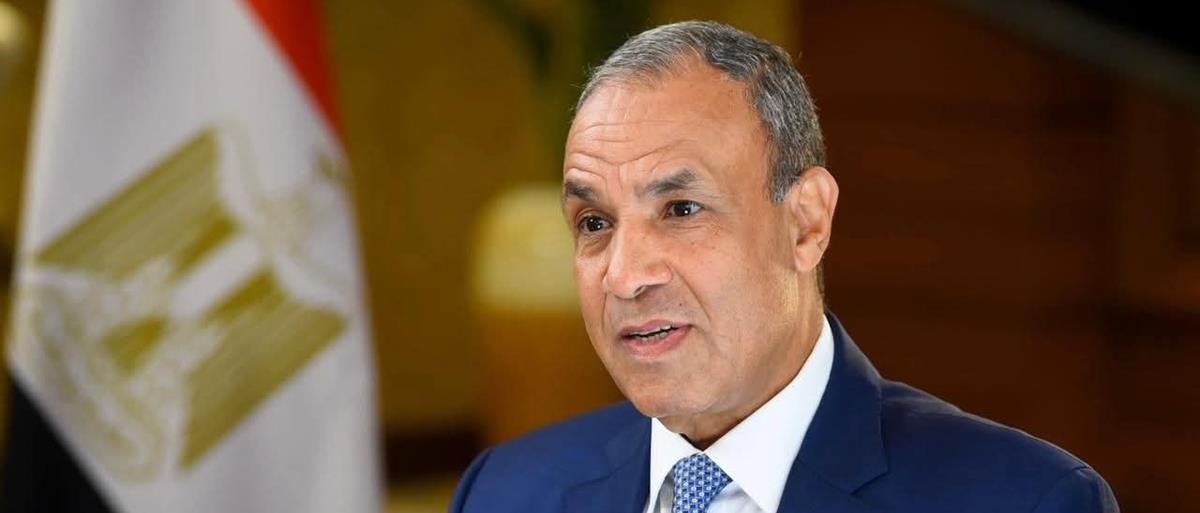
Minister of Foreign Affairs, International Cooperation and Egyptian Expatriates Affairs Badr Abdelatty Saturday, September 26, 2026, said that Egypt’s foreign policy is based on the principle of “strategic commitment” established by President Abdel Fattah al-Sisi, with de-escalation and political solutions among its key pillars, stressing that crises have no military solutions. In a special interview with Al Qahera News Channel, where he is participating with the Egyptian delegation at the United Nations General Assembly, Abdelatty said Egypt’s stance consistently supports dialogue, negotiations, and the rejection of military solutions. He cited lessons from the past showing that military escalation leads only to destruction and devastation, adding that Egypt is therefore acting intensively in line with the directives of the president. Abdelatty said he had held contacts with the foreign ministers of Iran, Oman and Saudi Arabia, as well as other contacts within the quartet comprising Egypt, Saudi Arabia, Pakistan and Turkey, which, he added plays an important role in mediation efforts. He also said he had been in contact with the Qatari Prime Minister and Foreign Minister. He explained that these moves are part of efforts to de-escalate tensions and promote political solutions. The Foreign Minister stressed that Egypt is a major country with wise leadership represented by the president, and that no party can drag it into any conflicts. “Egypt is a state that possesses its own positions and choices and acts according to its national interests,” Abdelatty said, adding that the political leadership sets the broad outlines of the country’s foreign policy moves to safeguard Egyptian interests and national security. Abdelatty reiterated that there are no military solutions and that Egypt is pushing for de-escalation because it is bearing significant burdens from the continuing escalation in the region, particularly in terms of food security and rising prices of energy, gas, oil, wheat, and grains. He noted that the impact extends beyond Egypt to countries across the region and the wider world. Egypt is working intensively to find political solutions focusing on several issues, including the nuclear file, freedom of navigation and sanctions, Abdelatty said, adding that general principles governing these issues had been agreed upon and are being addressed within the framework of the Islamabad Memorandum of Understanding. He called for rebuilding the trust lost between the United States and Iran. “We are working to encourage both sides to return to the negotiating table, leading to de-escalation and an integrated and final deal that serves the interests of both parties, as well as those of the region and the world, and supports stability and calm while avoiding escalation,” he said. Regarding Egypt’s role in the Gaza Strip, Abdelatty highlighted several achievements resulting from intensive efforts by Egypt in cooperation with its regional partners, saying the efforts had contributed to a partial halt to the Israeli offensive on the Gaza Strip. He said the situation remains dire and catastrophic, amid Israel’s failure to implement its obligations under U.S. President Donald Trump’s plan, particularly the removal of obstacles hindering the flow of humanitarian and medical aid into Gaza. Israel has also failed to fulfill its commitments to rehabilitate hospitals, schools and medical clinics to allow the medical sector in the enclave to be rebuilt, Abdelatty said, adding that it had continued a policy of systematic assassinations carried out daily against the Palestinian people. Abdelatty said the Palestinian side had fulfilled the obligations of the second phase of Trump’s plan, while Israel was, “unfortunately,” refusing to fulfill its commitments, particularly regarding withdrawal from the Gaza Strip and allowing an international stabilization force and the National Committee for the Administration of the Gaza Strip to enter. Asked whether upcoming Israeli elections could help remove obstacles, Abdelatty stressed that Egypt does not interfere in the internal affairs of other countries, calling the vote an internal Israeli matter. He nevertheless expressed hope that the elections would produce a partner willing to work with Egypt to establish a peace process. As regards Sudan, Abdelatty said Egypt would spare no effort and would do everything within its capacity to help resolve the situation there and work toward a political settlement. “Egypt supports Sudan’s unity and stability and the national institutions,” he said, adding that the continuation of the conflict serves neither the interests of the Sudanese people nor stability in Sudan and the region as a whole. On Egyptian-American relations, Abdelatty said ties between the two countries are strong and solid and characterized by coordination. He said Egypt’s strategy toward the United States is based on maintaining and strengthening bilateral relations, highlighting the strong ties between President Abdel Fattah al-Sisi and US President Donald Trump. Egypt and the United States are working together to restore stability in the Middle East, Abdelatty said, adding that Egyptian-American coordination continues to reduce escalation in the region and around the world.
FM: Foreign policy anchored in ‘strategic commitment’, rejects military solutions
Full Article
Original Source
Read the full article at Egyptindependent →KhanList aggregates and links to publicly available news content. We do not host full articles from third-party sources. Always verify important information with original sources.