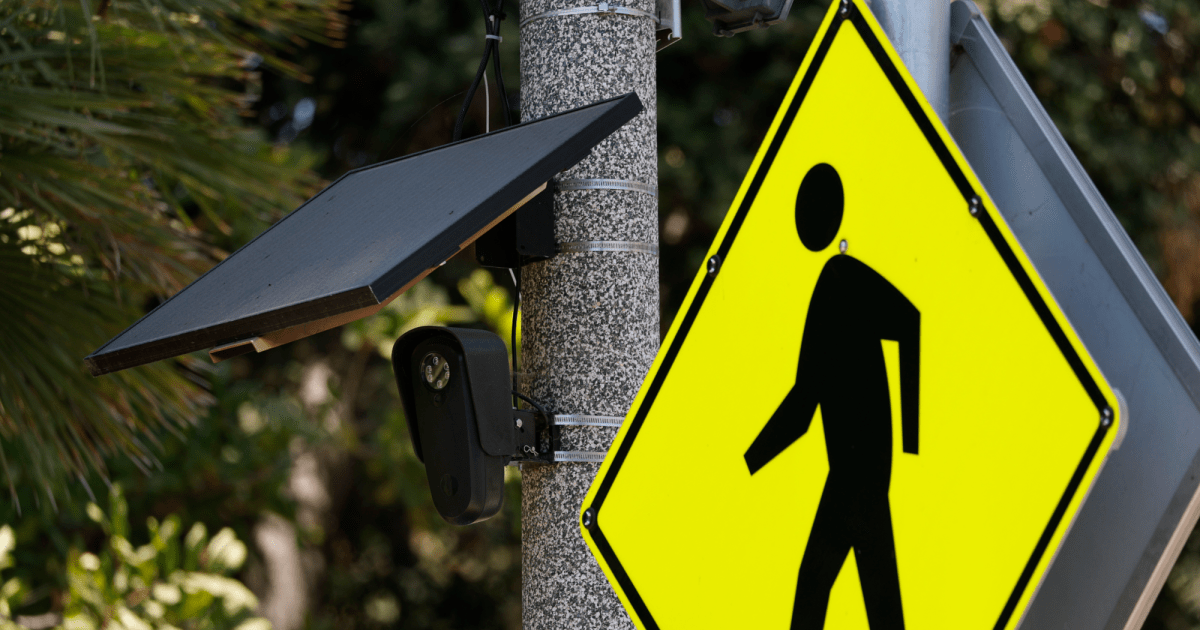
A Flock camera mounted to a light pole on August 03, 2026, in Beverly Hills, California Justin Sullivan/Getty Get your news from a source that’s not owned and controlled by oligarchs. Sign up for the free Mother Jones Daily. On Thursday, the surveillance technology company Flock announced that it will limit access to its network of over 120,000 automatic license plate readers following disturbing reports dating back to at least 2021 of police officers abusing the technology for criminal activities like stalking. In his blog announcement, Flock CEO Garrett Langley did not mention the widespread public backlash against the technology, which, in significant part, led more than 20 local governments to begin rolling back their use in July. He only stated that the policy updates work to address “three areas that are critical to the company: strengthening privacy, accountability, and security.” Among the updates: Flock is now making mandatory a previously optional feature that flags “abnormal activity” for review, shortening the default recommended data storage period for Flock surveillance products from 30 to seven days, and establishing optional limits on data sharing between police departments. I've learned a lot in nine years of building @Flock_Safety. Some of it from our customers, and some of it from the communities they serve.Today we’re announcing the changes that came from listening. A new standard for privacy, security, and accountability in public safety…— Garrett Langley (@glangley) August 13, 2026 The ACLU said in a Thursday statement that most of Flock’s policy changes are “merely retreads of previous inadequate safety measures” it highlighted last month. While Flock claims its new policies will empower local police to dictate what other users can and cannot search their data for, the nonprofit said the company is assuming that its system already prevents improper search queries. Clearly, this isn’t the case. In a statement, Tom Bowman, the policy counsel for security and surveillance at the Center for Democracy & Technology, said that the policy changes are still “asking thousands of police departments to police themselves, despite evidence from across the U.S. that this lack of guardrails is unsafe.” In other words, Flock’s answer to a crisis of trust is to ask for more of it.
Flock’s Answer to Its Surveillance Scandals: Trust Us
Full Article
Original Source
Read the full article at Motherjones →KhanList aggregates and links to publicly available news content. We do not host full articles from third-party sources. Always verify important information with original sources.