
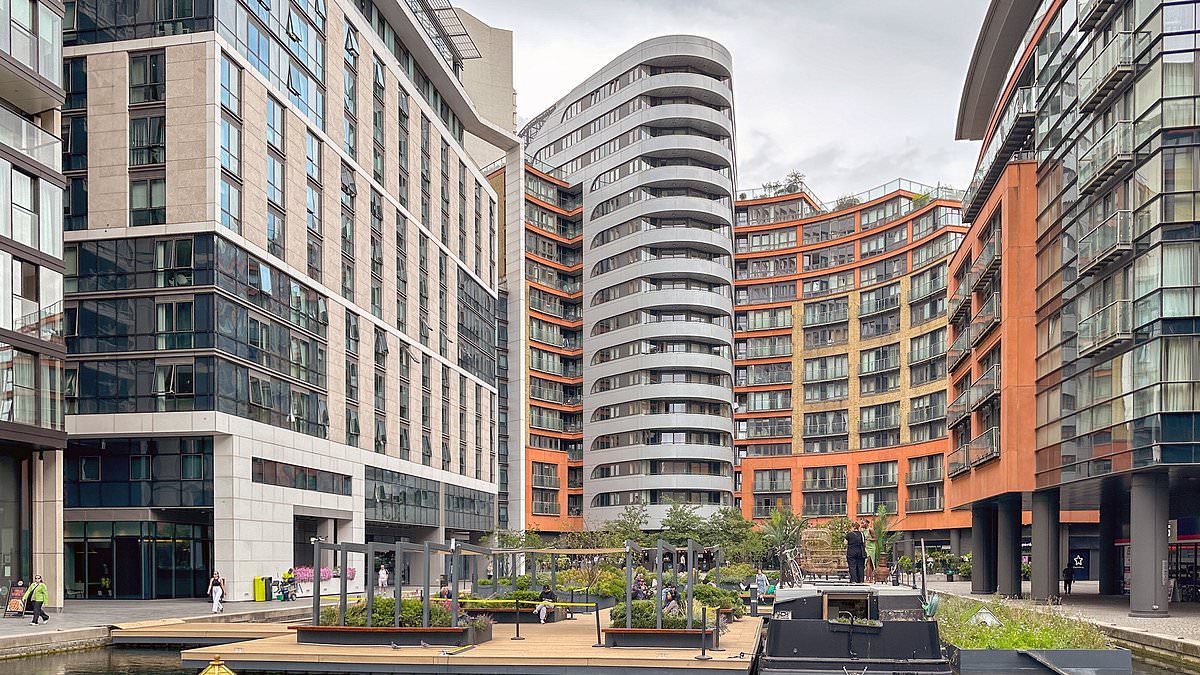
The London flat market continues to suffer with inner city apartments now £71,000 cheaper than they were four years ago, official data shows.The typical price of a flat in inner London, which comprises 14 boroughs and an estimated 3.4million people has fallen 8.4 per cent in the last year, according to the latest Land Registry figures.The typical flat is worth £522,839, as of July, having been on a steady decline since September 2022 when the average flat in inner London fetched £594,135.The collapse in flat prices means average London homes have now shredded 3.3 per cent of value annually, with prices in outer boroughs of London generally holding up better than in inner boroughs.Buying agent Jonathan Hopper, chief executive of Garrington Property Finders thinks that while this is a painful time for many London flat sellers, tactical buyers are being tempted back with a sense there are bargains to be had.'No-one rings a bell when a falling market hits the bottom, but after months of correction it appears that London prices are now bumping along the seabed rather than sinking,' says Hopper. Falling: Inner London flats are now selling for £47,736 less than they were a year agoPrices in London are also acting as a drag on the overall average for UK property values, which are up 1.4 per cent (£4,000) in the 12 months to July to £273,000.In the South and East of England prices are also barely moving. In the South West, the average home is 0.2 per cent below where it was a year ago, while in the South and East of England prices are up 0.2 per cent and 0.5 per cent respectively. However, many parts of the country have risen well above the average. In the North West, the typical home is up 4.4 per cent and in the North East prices are up 4.9 per cent.In Yorkshire and The Humber, the average home is 3 per cent more expensive than it was a year ago, while in Wales prices are 2.6 per cent higher.Northern Ireland continues to see prices boom with house prices 9.2 per cent higher than a year ago.Two factors explain the enduring north-south divide that has taken hold of the UK market, according to Hopper.The first is the glut of homes for sale in the south, which allows buyers to bargain hard and forces sellers to swallow their pride if they wish to attract viewings, let alone close a sale.The second is the uptick in mortgage interest rates. Even though house prices are flat or falling in much of southern England, the cost of borrowing is rising.He adds: 'In the south’s high-value areas, where buyers are especially reliant on mortgage borrowing, each increase in mortgage interest rates makes more homes unaffordable for buyers.'Unfortunately, for sellers in London and parts of the south, the situation could be about to get worse.This week, Britain's biggest banks announced a wave of mortgage rate hikes ahead of the Bank of England's next interest rate decision tomorrow. This is a blow to buyers and households alike who will see the cost of borrowing rise, placing a lower ceiling on what they can afford to buy.'The higher cost of living is squeezing household affordability, and impacting what those who need to move are prepared to spend,' said Mark Harris, chief executive of mortgage broker SPF Private Clients.'Inflation rising again to 3.1 per cent, considerably above the Bank of England’s 2 per cent target, is unwelcome news as far as interest rates are concerned. 'However, it’s not surprising given ongoing tensions in the Middle East fuelling inflationary pressures, and borrowers should prepare for higher mortgage costs.'Although the Bank of England held base rate again at its last meeting, volatile Swap rates, which underpin mortgage pricing, have led a number of the bigger lenders increasing their mortgage pricing in the past week. 'We expect other lenders to follow suit, even if the Bank holds interest rates again at tomorrow’s meeting.'Best mortgage rates and how to find them Mortgage rates have shot up again due to inflation triggered by the conflict with Iran reversing hopes that the Bank of England would cut rates. This means those remortgaging or buying a home face higher costs.That makes it even more important to search out the best possible rate for you and get good mortgage advice, whether you are a first-time buyer, home owner or buy-to-let landlord.This is Money's partner L&C can help you with its fee-free mortgage service.> Compare mortgage rates> Find the right mortgage for you To help our readers find the best mortgage, This is Money has partnered with the UK's leading fee-free broker L&C.This is Money and L&C's mortgage calculator can let you compare deals to see which ones suit your home's value and level of deposit.You can compare fixed rate lengths, from two-year fixes, to five-year fixes and ten-year fixes.If you’re ready to find your next mortgage, why not use This is Money and L&C’s online Mortgage Finder? It will search 1,000s of deals from more than 90 different lenders to discover the best deal for you.> Find your best mortgage deal with This is Money and L&C Mortgage service provided by London & Country Mortgages (L&C), which is authorised and regulated by the Financial Conduct Authority (registered number: 143002). The FCA does not regulate most Buy to Let mortgages. Your home or property may be repossessed if you do not keep up repayments on your mortgage.
Flat prices in London continue to fall with £71,000 shaved off the typical value in four years
Full Article
Original Source
Read the full article at Dailymail →KhanList aggregates and links to publicly available news content. We do not host full articles from third-party sources. Always verify important information with original sources.