
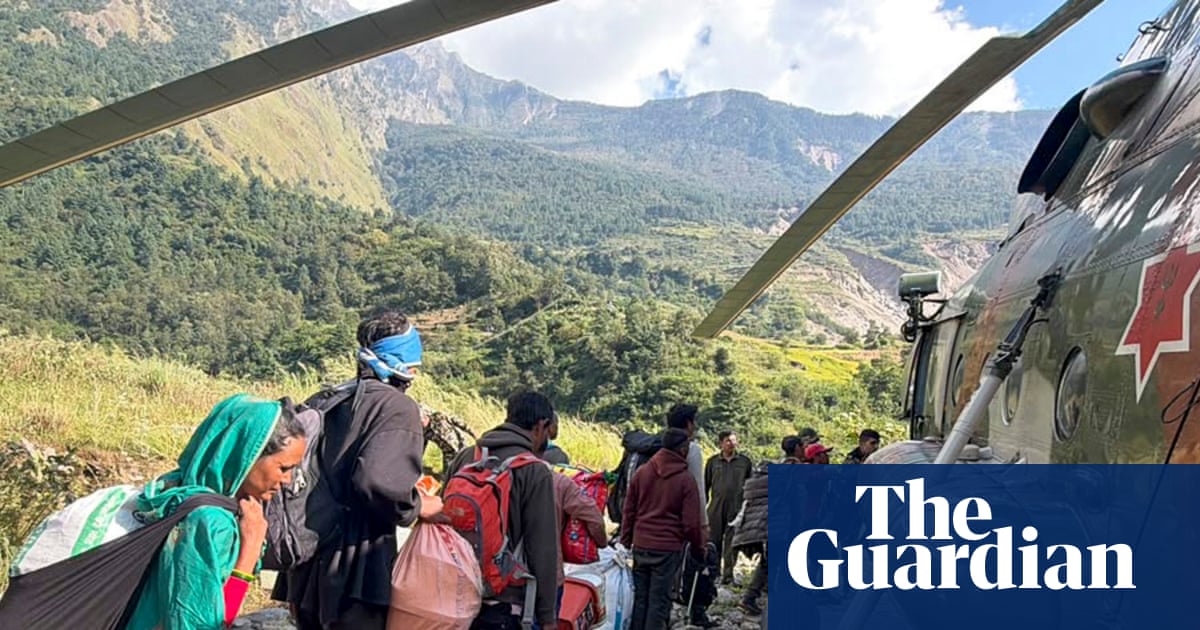
Flash floods have swept through Nepal’s central Gorkha district after a pre-dawn landslide on 11 October blocked the Budhi Gandaki River, triggering severe downstream flooding. At least five people have died, and almost 100 have been rescued. Two villages in the worst-affected Chumanubri rural municipality were reportedly destroyed, with homes, roads and bridges washed away. Part of a hydropower station was also damaged.After river levels surged from 2 metres to nearly 8.5 metres within hours, the national disaster risk reduction and management authority reported that 204 homes were damaged, and more than 650 people had been affected. More than 100 foreign trekkers were stranded in the popular hiking region. The floods come just two months after catastrophic flooding and landslides devastated parts of the country on the border with Tibet, leaving thousands dead or missing.An exceptionally deep area of low-pressure barrelled towards Iceland this week. The overall central pressure was measured at 931mb on 14 October. In the process of reaching such depths, it plummeted 49mb in 24 hours, meeting thresholds for explosive cyclogenesis, or a weather bomb. The system brought sustained wind speeds of 55mph–60mph to the southern shores of the island before moving on a north-easterly track through the North Atlantic towards Norway.However, Iceland was spared the strongest winds as the track of the low pressure meant these were out at sea. The system also affected areas beyond Iceland: a 108mph wind gust was recorded at Bealach Na Bà, in the Scottish Highlands, in association with a trailing 1,000-mile cold front that stretched from Norway to the mid-Atlantic.Summer-like conditions have extended even further into meteorological autumn in Portugal. After temperatures of 40C at the end of September, on 14 October in the southern town of Mora a maximum of 35.6C was recorded, representing a climatological anomaly of more than 10C.The heat was not localised, with numerous stations recording temperatures well into the mid-thirties Celsius. The latest forecasts show the high pressure and unseasonably warm upper air temperatures will remain in place for the next few days. Looking further ahead, however, temperatures are expected to slowly return towards the average around the middle of next week.
Flash floods kill five and destroy villages in central Nepal
Full Article
Original Source
Read the full article at Theguardian →KhanList aggregates and links to publicly available news content. We do not host full articles from third-party sources. Always verify important information with original sources.