
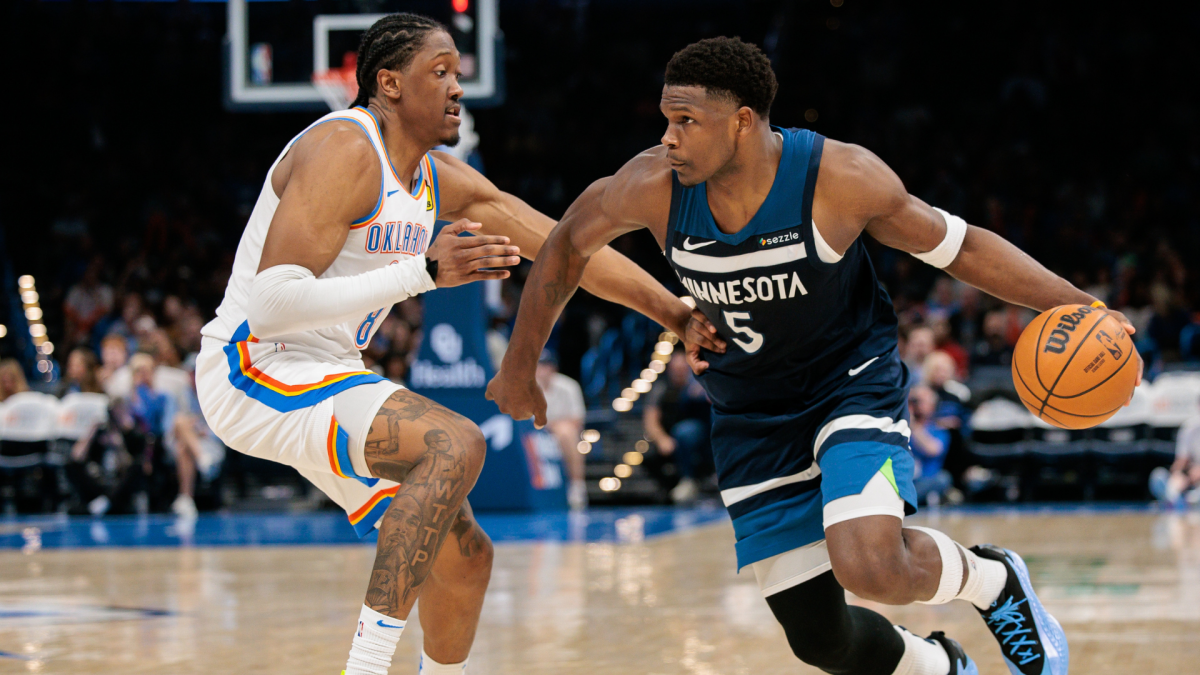
Barely a week into the new season, the list of sidelined stars keeps growing ... so what does it mean as teams consider reinforcements? Oct 29, 2026 at 9:50 am ET • 10 min read At a bare minimum we're still six weeks away from the unofficial start of NBA trade season. It's still October, and a bit less than one-third of the league is still not trade-eligible because they signed new contracts in free agency. The moves usually don't begin until Dec. 15, when the bulk of those players become trade-eligible.The strategizing for those moves, however, is a never-ending process, and even though we've only seen nine days worth of games, the entire league landscape has already been turned on its head by one of the earliest injury outbreaks in NBA history. Let's do a quick roll call: Jalen Williams, Cason Wallace, Jaren Jackson Jr., Tyrese Haliburton, Kawhi Leonard, Anthony Edwards and Paolo Banchero are all out with injuries that should sideline them for weeks or months at best and all season at worst. Their teams suddenly have to figure out how to manage without their best players... but everyone else has to figure out what those absences mean in the long run.Again... we're barely a week into the season. The market could change drastically again in eight days or eight weeks. We're more than three months away from the deadline. But so much has already happened that it's worth taking a step back and figuring out what this could mean when the deals eventually start coming. Here are five ripple effects the early rash of injuries could have on the trade market. 1. Oklahoma City enters the market in earnestThe NBA's most-savvy GM suddenly has some needs to addressThink about the trades Oklahoma City tends to make. They're almost always from a position of strength. They traded Paul George to the Clippers when they had them at their mercy during Kawhi Leonard's free agency. They didn't proactively seek out Alex Caruso. They were looking to move Josh Giddey when the perfect role player fell into their laps. They got Jared McCain with a spare first-round pick because Daryl Morey thought he was selling high. The only notable, recent occasion in which the Thunder have added a notable veteran based on an immediate need was Isaiah Hartenstein, who came in free agency. The Thunder typically don't have needs. They develop players to address them before they arise. Well, because of injuries, the Thunder suddenly do have needs. The bare minimum here is a versatile, forward-sized defender. They tried to steal Spencer Jones from the Nuggets over the summer for this exact purpose. At the time, they likely viewed Jones or Jones-esque defender as a luxury. Now, someone like that is a necessity. Oklahoma City's formerly endless rotation of All-Defense-caliber point-of-attack stoppers is now down to Caruso, who's already sporting an ankle sprain. Their playing style is enormously reliant on this archetype for turnover generation and transition offense.There are half-court offensive questions as well. We all saw what Victor Wembanyama did to Shai Gilgeous-Alexander without Williams in the Western Conference Finals. Ajay Mitchell is healthy now. He wasn't in that series. How his next few months play out will tell the Thunder whether or not they have to upgrade the offense as well. They can't expect to score on Wembanyama if their offense devolves into nothing but Gilgeous-Alexander mid-range jumpers. Eventually, Alex Caruso is going to miss a playoff 3-pointer.So for the first time since perhaps the Kevin Durant era, the Thunder, and their endless reserves of assets, go into a trade deadline with obvious needs and an imperative to address them. This roster gets more expensive by the year. The Thunder can't afford to waste a season. Their financial limitations are significant, but Sam Presti is the NBA's best general manager. If there is a way to keep the Thunder up to speed with Wembanyama and the Spurs, he's going to find it. 2. West contenders will need to do more with lessThe Lakers, Wolves and Nuggets will have to be creative to make big movesOklahoma City's vulnerability trickles down to everyone else. We entered the season assuming a Thunder-Spurs conference finals rematch was inevitable. The Thunder are weakened. The entire rest of the West is one Wembanyama ankle sprain away from 2027 becoming their best chance for the foreseeable future. The Lakers, the Nuggets and the Timberwolves suddenly have far more reason to be aggressive than they did 10 days ago. The problem is that all three of them are working with limited means of improvement:The Lakers are down to a single tradable first-round draft asset, a 2032 first-round swap. However, with $8 million in first apron hard cap room and several mid-sized contracts, they are at least fairly flexible financially.The Nuggets have the opposite problem. By trading Peyton Watson, they gained access to a pretty interesting tradable first-round pick: the better of their own or Cleveland's in 2031. However, the Nuggets are already over the second apron, and their books are enormously unfriendly to trades thanks largely to the bloated Christian Braun contract. Making the mone work on a notable addition would be tricky.The Timberwolves are a mix of both. They have only $4 million or so in second-apron room, and they have no unencumbered first-round picks to trade.Minnesota is obviously dealing with the trickiest situation of the three since Edwards is already hurt. They can't justify a win-now move until they have a better sense of how healthy he'll be in the spring. And yet, with Rudy Gobert in his age-34 season and the Thunder more beatable than ever, they might have to roll those dice. Can they really justify holding onto Donte DiVincenzo's contract considering he might not return from his torn Achilles this season, for example? He's someone they hope to keep as a long-term bench fixture. He's also the only notable salary Minnesota can use to add someone who can help now, when the West seems winnable.The Lakers are starting two minimum-salary wings, and their backup center minutes have been atrocious. The Nuggets are winless against teams besides the Pelicans. These are talented yet flawed teams staring down a future in a conference that features two younger, deeper and better juggernauts. This is an opportunity that may not repeat itself. The ones who take it will be in far better shape than the ones who don't. 3. The Rockets control the boardHouston is 5-0 to start the season and is in great shape off the floor, tooThe Rockets have the same newfound sense of urgency that the Lakers, Nuggets and Wolves do... under a completely different set of internal circumstances. They have a sizable draft pick surplus. They have salaries of every size to trade. They're also undefeated, including a win over San Antonio that underlined their meaningful advantages in that matchup Alperen Sengun is one of the few bigs in the NBA that tends to enjoy attacking Wembanyama. They have the perimeter defensive depth to handle San Antonio's guards. The Rockets, of those four non-Thunder or Spurs West contenders, probably should feel the best about their ability to win the title right now, with what they already have. NBA Power Rankings: Rockets take over No. 1 spot with sublime start, Heat take huge tumble Brad Botkin That puts the Rockets where the Thunder usually sit: a position of strength. There's an obvious need to fill when it comes to adding another shot-creator, but their ability to trade for basically anyone across the salary or asset spectrum with the leverage to tell any trade partner "no thanks, we're good enough as is" gives them control of the board. They can outbid just about any rival suitor for just about any theoretically available player if they so choose, effectively giving them right of first refusal over most of the trade landscape unless the Thunder or Spurs are prepared to take on contracts bigger than we'd presently expect.4. Several teams lose evaluation windowsWhat do the best versions of the Raptors, Pacers or Magic look like? They might not know for a whileSo much of what's happening in the West starts with Oklahoma City. Those same ripples aren't felt in the East. There, teams are much more concerned with themselves than their competitors. Take the Raptors. They have RJ Barrett on an expiring contract and a clear need for more shooting. With a healthy Kawhi Leonard, Barrett's individual creation might be a luxury. With him injured, it's a necessity. The Thunder can't really evaluate Barrett's fit on the Leonard-centric version of their team until Leonard returns, and they can't consider whether or not there's a way to flip Barrett into more shooting until they know how important he is to their actual roster.The Pacers are adapting to playing with a center that cannot shoot 3s. That's a fairly traditional basketball problem, but it's still new to a team that reached the Finals on the strength of its shooting. The Haliburton-Ivica Zubac tandem has only played 52 minutes together thus far, and with Haliburton sidelined, it'll be awhile until Indiana gets a bigger sample than that. Those two are going to be fixtures for the Pacers, but Indiana is still relatively liquid from a draft pick perspective and has serious questions to address on the bench. A clearer idea of where that duo is deficient, if anywhere, would help the Pacers figure out what sort of bench help to target.And then there's Orlando. Poor, poor Orlando. For the third straight season, Paolo Banchero has suffered a meaningful injury in October or November. In each of the last two seasons, Franz Wagner took on a bigger role while Banchero was out and eventually got hurt himself right around Banchero's return. The Magic are running out of bullets to fire. They've traded most of their picks for Desmond Bane and they've changed coaches by hiring Sean Sweeney. They're headed for a financial crisis with Anthony Black hitting restricted free agency next summer and their total payroll getting dangerously close to the second apron. The West trade market changed drastically by virtue of what happened to the Thunder. The opposite is true for the East. These teams haven't gotten new information. They're awaiting information they assumed they'd be getting in the early weeks of the season but will instead come further down the line. If the rumors start coming in earlier than expected, you should therefore assume that the West is the conference driving most of that activity.5. It is suddenly a seller's market ... when we identify the sellersOnly four teams currently stand out as obvious sellersSo we've identified why the West contenders are going to be eager to improve. The East isn't there yet, but give it time. In a conference with no clear favorite, there are usually plenty of teams looking for reinforcements. Here's the problem: we don't know where they're going to get them. The NBA has never had fewer obvious sellers than it does right now.We're in a post-lottery reform world now. Nobody wants to lose. That's not just true in a single-year setting. There are going to be fewer and fewer teams that proactively initiate multi-year teardowns now that there are slightly more plausible paths to building from the middle. Contenders get stripped for parts every offseason because of the aprons. Teams that might have rebuilt in the past are instead going to attempt to be opportunistic about adding players whose teams can no longer afford them. Now you throw in all of these injuries. Not only does that create an excess of potential buyers, but it also freezes the potential sellers market because there are inevitably going to be teams that outperform their on-paper talent because the schedule just got a bit easier and teams that should be above them in the standings instead fall short because of absences.There are only four teams we can confidently call sellers right now: the Kings, Pelicans, Nets and Bucks. If you want an idea of how confident these sellers are in their ability to extract value for their veterans, look at Shamit Dua's reporting on the Pelicans. New Orleans still reportedly wants two first-round picks worth of value for Herb Jones... who is averaging less than 18 minutes per game to start the season. New Orleans has been notoriously averse to trading its players away under Joe Dumars, but remember, the Nets functioned as buyers this offseason when they added Julius Randle. They have historically held their veterans until they've been offered a premium, most notably Kevin Durant, Mikal Bridges and Cam Johnson. That's something to keep in mind as they consider Michael Porter Jr. offers. The Bucks and Kings are so early into rebuilds that their plans, for now, are a bit of a mystery. All of this together suggests that the teams that are willing to trade veterans expect to get significant returns for them. There are simply more teams that want to add right now than there are teams that want to subtract. We'll get closer to equilibrium in January and February, but for all of the reasons we've outlined, we'll probably be further from it as a whole than we've been at any point over the last several years at least.
Five ways the NBA's injury outbreak could impact trade season: OKC has work to do, Rockets are in control
Full Article
Original Source
Read the full article at Cbssports →KhanList aggregates and links to publicly available news content. We do not host full articles from third-party sources. Always verify important information with original sources.