
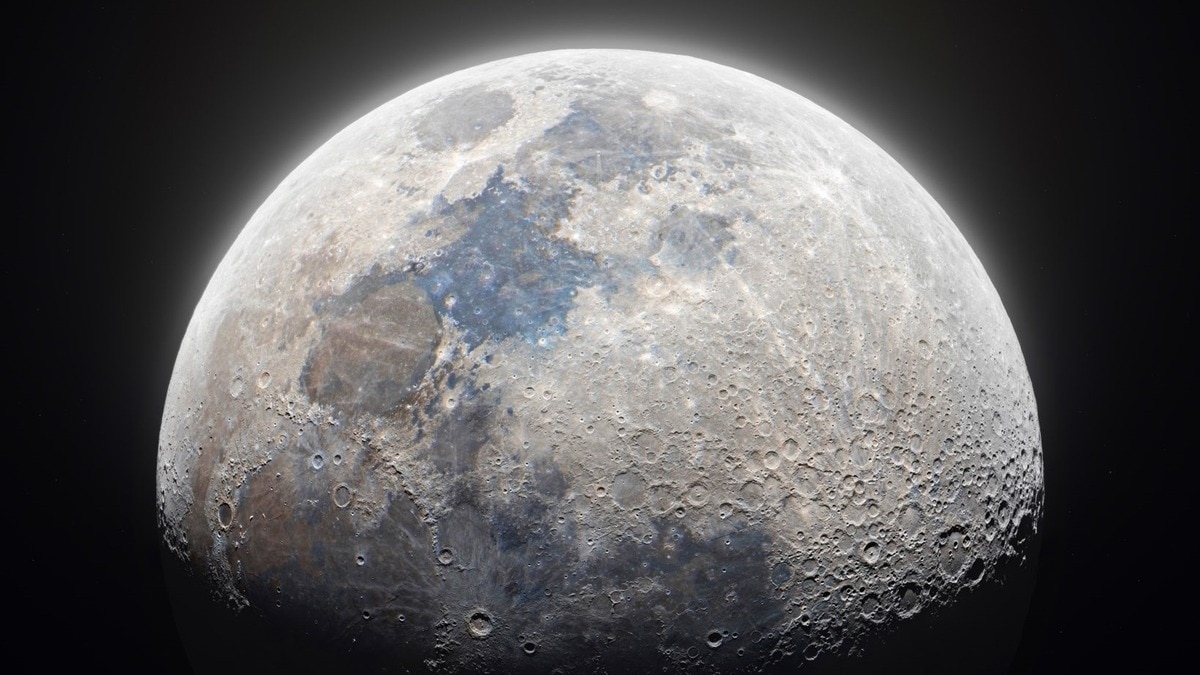
Scientists have found that the Moon may have formed within hours after the giant impact that shaped Earth's early history.The far side of the Moon proved especially valuable because it has experienced fewer geological changes than the side that permanently faces Earth. (Photo: Nasa)The Moon may have come together far faster than scientists once thought.A new computer simulation suggests Earth’s natural satellite could have formed in about five hours after a gigantic collision between a much younger Earth and a Mars-sized body called Theia.The finding does not prove that the Moon actually formed on that timescale, but it offers a new way of looking at one of the biggest events in Earth’s early history. A view of Earth and the Moon as seen from outer space. (Photo: Pexels) The study, led by Adeene Denton of the Southwest Research Institute with researchers from the University of Arizona, was published in The Astrophysical Journal Letters. HOW WAS THE MOON CREATED?The leading explanation behind the formation of the Moon is the giant-impact theory.Around 4.5 billion years ago, a Mars-sized protoplanet named Theia is thought to have slammed into Earth, and the enormous collision threw material from the two cosmic bodies into orbit. Scientists have traditionally modelled this material to form a disk around Earth, with the Moon gradually assembling from that debris. A view of Earth, partially hidden by the Moon, photographed from the Orion spacecraft. (Photo: Nasa) But the new study adds another layer that earlier models largely left out; the strength of the rocks involved.Hotter rock is weaker and deforms more easily, while colder material can resist the violence of a collision better.As temperature affects how strong planetary material is, the factor could have played a larger role than we know.A MOON WITHIN HOURS?When the researchers included these properties in their simulations, they found that the outcome could change significantly depending on how hot Earth and Theia were when they collided. The Moon is seen setting behind the Colosseum in Rome, Italy. (Photo: AP) In one scenario, using temperature conditions similar to those in the original giant-impact models, an intact Moon-sized body emerged within roughly five hours of the collision.In other scenarios, a disk of debris remained around Earth and the Moon formed more gradually.“We discovered that the pre-existing geology of the Mars-sized proto-Moon matters,” Denton said.NASA JPL discovers Earth is at least two planetary bodies.“Theia” impact planet ~4.5 billion years ago and buried under Africa and the Pacific Ocean forming the moon in an epic,pic.twitter.com/WPhLxqXX47— Brian Roemmele (@BrianRoemmele) May 7, 2024The result is something to pay attention to because it connects the Moon’s possible formation process with when the giant impact happened.A hotter Theia would have behaved differently from a cooler, stronger one.Nasa said that computer models already show the Moon could have formed within hours after a giant impact, although scientists are still working to determine which formation scenario best matches the evidence preserved in lunar rocks.In other words, the five-hour Moon is not a proven fact but a result from a computer model, an interesting prospect that could help scientists better understand how Earth’s closest neighbour came into existence.- EndsPublished On: Sep 9, 2026 12:07 IST
Five hours: That's how long it might have taken for our Moon to form
Full Article
Original Source
Read the full article at Indiatoday →KhanList aggregates and links to publicly available news content. We do not host full articles from third-party sources. Always verify important information with original sources.