
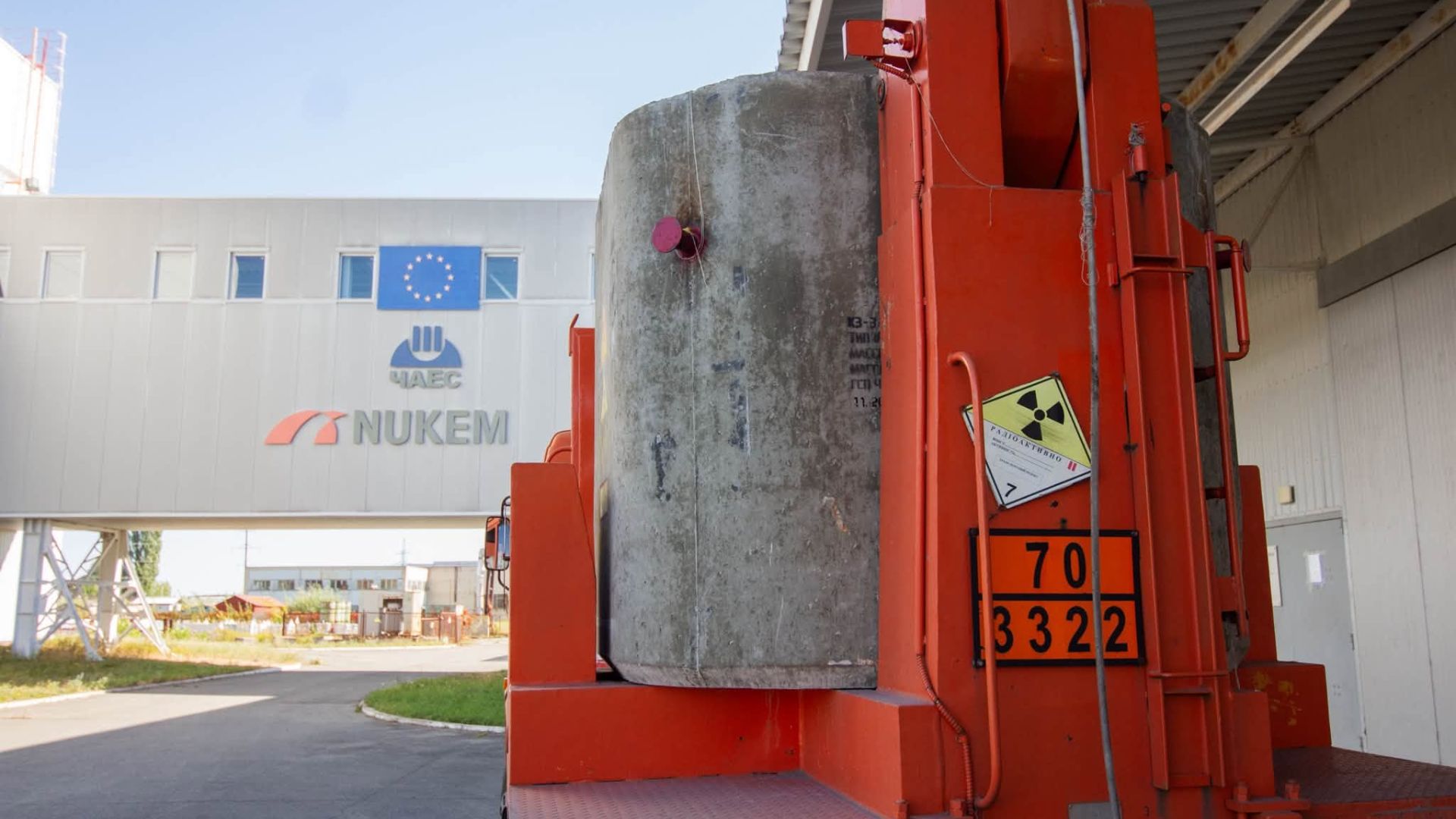
A major cleanup effort at the Chernobyl disaster site has reached a critical stage. Engineers have completed the first permanent transfer of legacy solid radioactive waste into a dedicated near-surface burial site. Seven sealed packages containing low- and intermediate-level radioactive waste were transported directly to the specialized storage facility known as ENSDF. The repository forms a core section of the Vector complex, located about 130 kilometers north of Kyiv and 20 kilometers south of the Belarusian border. This shipment represents the maiden delivery from the newly commissioned Industrial Complex for Solid Radioactive Waste Management (ICSRM). The complex received official clearance to begin operations late last May, following the approval of an operating license by the State Nuclear Regulatory Inspectorate of Ukraine. Built with significant financial backing from the European Commission, the site consolidates four distinct technical installations into a single industrial processing line. Managing legacy waste with technical processing Decades after the 1986 disaster, the plant faces a substantial environmental footprint. Large volumes of hazardous material remain stored inside an aging containment repository that has functioned on-site since 1978. Crews must now systematically empty this facility. The stored matter includes everyday industrial refuse accumulated across decades of nuclear power generation. Among the items are discarded personal protective equipment, thermal insulation, electrical cabling, structural steel, rebar, loose soil, building concrete, and exhausted ion-exchange resins taken from water filtration networks. Retrieving these hazardous items requires specialized remote machinery. Technicians extract the material using a dedicated retrieval unit designed to handle roughly 3 cubic meters of solid matter every day. Built for an estimated operational life of three decades, the unit can handle all classes of solid waste found inside the 1978 repository. Once brought to the surface, the retrieved matter is placed inside heavy-duty metal transport containers measuring 1.3 cubic meters. These containers move through an enclosed technological gallery into a fortified hot chamber. The hot chamber serves as the sorting hub. “At this stage, each batch of waste undergoes radiological characterization and control,” said Chernobyl Nuclear Power Plant in a press release. Any high-level materials unsuited for standard handling are immediately separated. Compaction and decommissioning The remaining low- and intermediate-level waste is then loaded into 165-liter steel drums. Powerful industrial presses compress the drums to dramatically reduce their volume and stabilize the contents. Once immobilized, these reinforced packages make their final journey across the exclusion zone to the engineered near-surface vaults of the Vector facility. The long-term objective of the ICSRM goes beyond clearing the 1978 storage site. The complex is engineered to handle waste generated by the ongoing decommissioning of Chernobyl’s surviving reactors, alongside operational waste produced during maintenance around the Shelter structure that encloses the ruined fourth reactor. Day-to-day oversight of this hazardous logistics network rests with the Central Enterprise for Radioactive Waste Management, operating under the state-run enterprise SSE CERWM. Get the latest in engineering, tech, space & science - delivered daily to your inbox.An active and versatile journalist and news editor. He has covered regular and breaking news for several leading publications and news media, including The Hindu, Economic Times, Tomorrow Makers, and many more. Aman holds expertise in politics, travel, and tech news, especially in AI, advanced algorithms, and blockchain, with a strong curiosity about all things that fall under science and tech.
First shipment of processed Chernobyl radioactive waste sent for permanent burial
Full Article
Original Source
Read the full article at Interestingengineering →KhanList aggregates and links to publicly available news content. We do not host full articles from third-party sources. Always verify important information with original sources.