
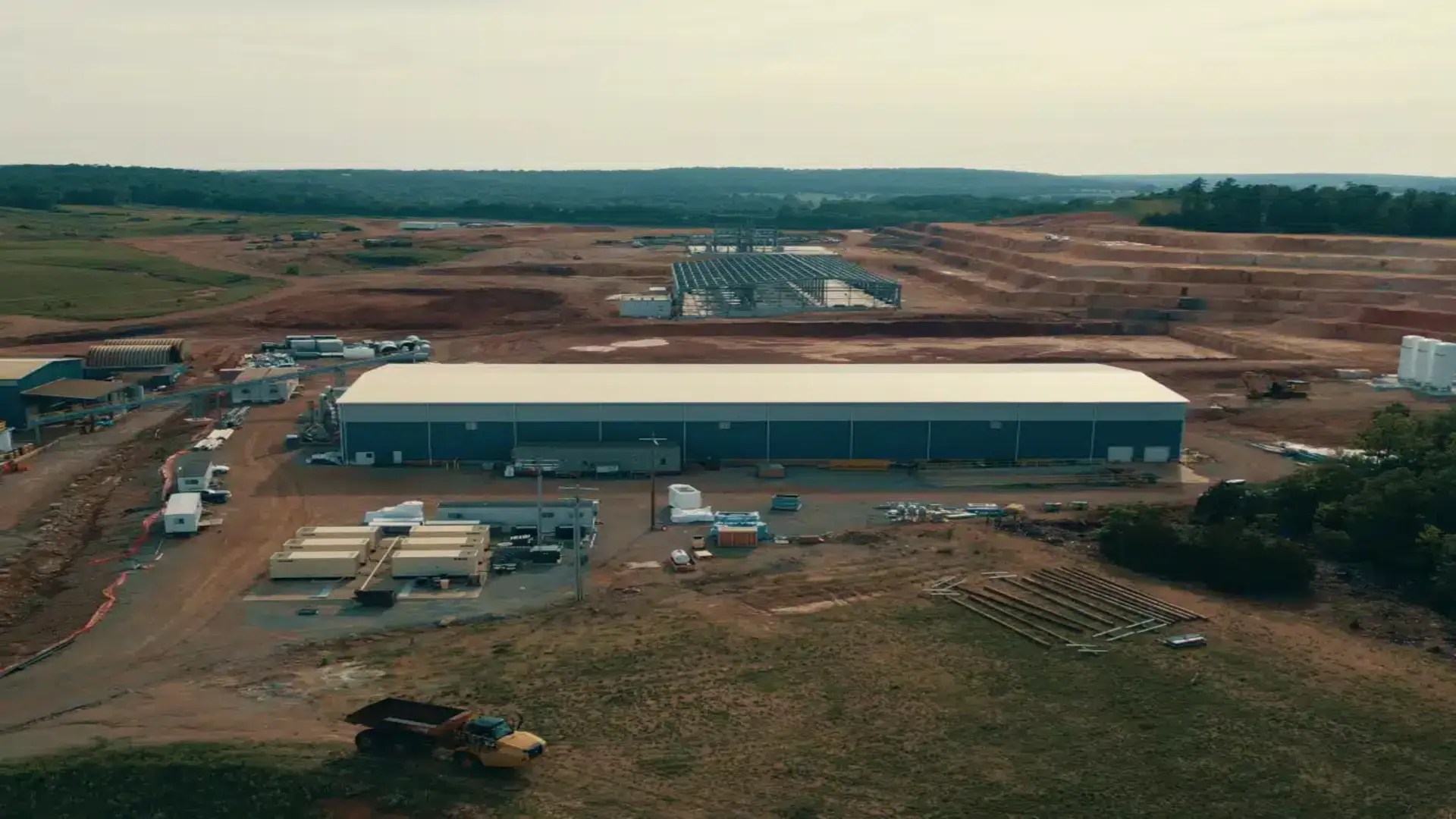
US Strategic Metals and Ionic Rare Earths are building what they call the first U.S. magnet recycling plant in Missouri, with $100 million planned for initial facilities to recover valuable rare earth elements from spent permanent magnets. On Sept. 3, the companies announced that they had signed a joint venture term sheet to develop rare-earth permanent-magnet recycling capacity at US Strategic Metals’ fully permitted 1,750-acre processing site near Fredericktown, Missouri. Under the non-binding agreement, the companies plan to establish a 50-50 joint venture and initially develop recycling facilities for neodymium-iron-boron (NdFeB) and samarium-cobalt (SmCo) magnets and magnet scrap. USSM will contribute $95 million toward construction. An additional $5 million in equity contributions will be split equally between the partners to fund Front-End Engineering Design and accelerate demonstration-scale magnet recycling. “The United States will not be left behind in the race to build the industries key to national security and our economic future,” USSM Co-Founder and CEO Stacy W. Hastie said. “We look forward to moving this JV forward as quickly as possible.” Magnet recycling technology The latest agreement advances a partnership first announced in November 2025 as the companies signed a memorandum of understanding at the Australian Embassy in Washington, D.C. According to that news release, under that plan, the Missouri facility was expected to produce neodymium and praseodymium while recovering heavy rare earths including dysprosium, terbium, samarium, gadolinium and holmium. The companies also outlined their intentions to explore additional heavy rare earth recycling opportunities at the Missouri site. At the heart of the proposed plant is Ionic Technologies’ patented magnet recycling process, a technology that the company had already demonstrated at its facility in Belfast, Northern Ireland. Ionic Technologies says its process can achieve “near-complete extraction” of rare earth oxides from lower-quality spent magnets and waste, producing separated and refined products exceeding 99.5% purity. The technology can also process oxidized magnets and handle coatings and films. The process begins by crushing and grinding magnets before digestion and separation of base metals, including iron, manganese, aluminum, nickel, copper, and boron. Neodymium, praseodymium, dysprosium and terbium then undergo a 15-stage solvent separation process before individual oxides are precipitated. Definitive agreements to be made by 2026 Ionic’s operational Belfast demonstration plant currently processes 30 tonnes of waste magnets and swarf annually. The company says the facility has produced more than 10 tonnes of separated magnet rare earth oxides since June 2023. “Magnet recycling is the fastest and lowest-cost pathway to developing an ex-China rare earth supply chain in the United States,” said IonicRE Managing Director Tim Harrison, while announcing the original partnership in November 2025. The Missouri project would bring that recycling technology to USSM’s existing critical minerals campus, where the company is building capacity to produce materials such as cobalt, antimony sulfide, nickel, lithium carbonate, copper, and rare earth elements. The companies are currently discussing making definitive agreements, which they intend to reach by the end of 2026. The proposed joint venture remains conditional on those agreements being finalized and the required capital contributions and other conditions being met. Get the latest in engineering, tech, space & science - delivered daily to your inbox.Originally from LA, Maria Mocerino has been published in Business Insider, The Irish Examiner, The Rogue Mag, Chacruna Institute for Psychedelic Plant Medicines, and now Interesting Engineering.
First-of-its-kind US magnet recycling plant soon to be built, target high-purity rare earths
Full Article
Original Source
Read the full article at Interestingengineering →KhanList aggregates and links to publicly available news content. We do not host full articles from third-party sources. Always verify important information with original sources.