
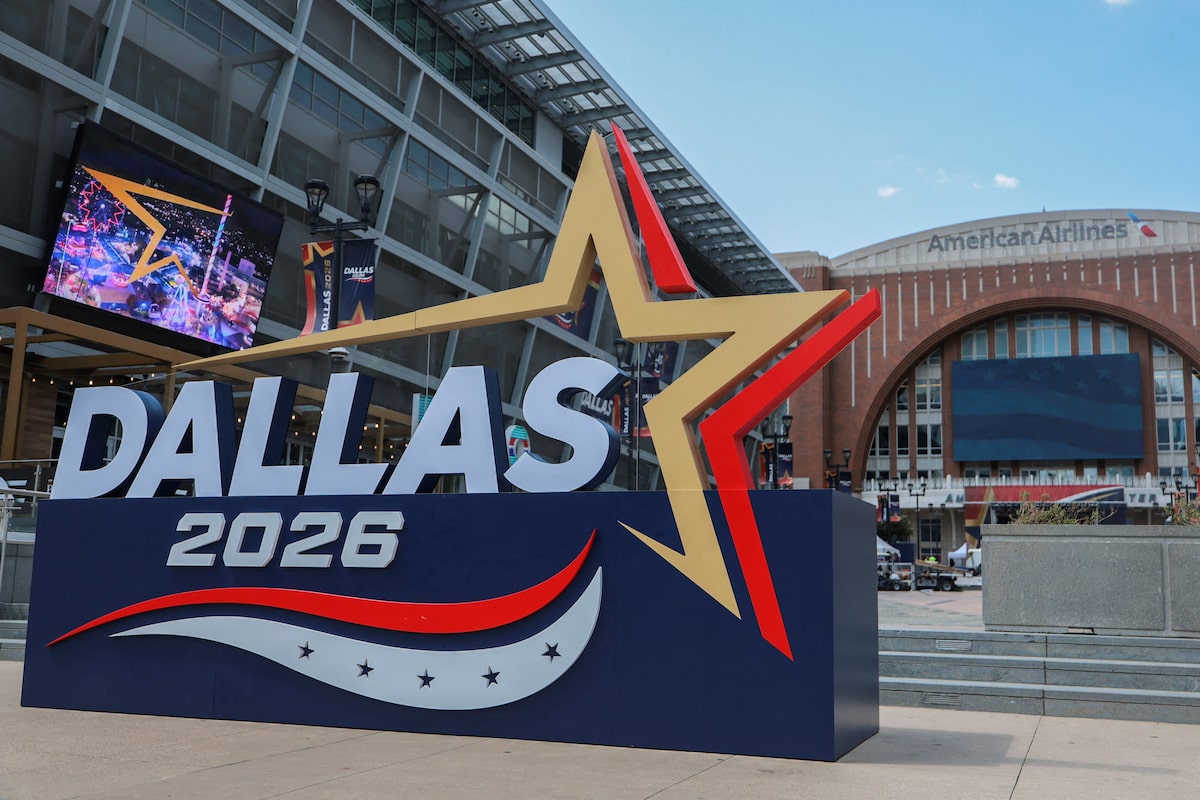
Open this photo in gallery:The American Airlines Center, as preparations are underway for the Republican National Midterm Convention in Dallas, Texas, on September 7.Jessica Koscielniak/ReutersU.S. President Donald Trump loves nothing more than a rally, and he’s holding an unusual two-day revival meeting this week as the campaign for the midterm congressional elections enters its final, decisive phase. To the list of things that the Republican Party has never done before, add this one: They are gathering Wednesday and Thursday in the American Airlines Center in Dallas for the GOP’s first-ever midterm political convention.A generation ago, the Democrats – meeting in Kansas City (1974), Memphis (1978) and Philadelphia (1982) – held the only mini-conventions in American history, efforts to rouse the troops and erase their torpor. The result was two substantial victories in midterm elections when the party was out of the White House – and the loss of seats in both the House of Representatives and the Senate in the single time, during Jimmy Carter’s presidency, when the Democrats held such a gathering while they possessed the White House.So, the Republicans are justified in their worries, and the great number of November GOP candidates who are skipping the conclave may be justified in staying away. Though the President and party leaders are hoping that images from the convention will display a festive Texas-style bash, they may not be the precursor to a postelection celebration two months from now.Trump will try to steal midterms, president of Halifax International Security Forum warnsNo matter. Mr. Trump, who is to deliver addresses both nights, thrives on the adulation of a partisan crowd, and that’s essentially what the event will provide. The program calls for a parade of speeches on the issues of the Trump years and for remarks by top administration figures, including Vice-President JD Vance, Treasury Secretary Scott Bessent, House Speaker Mike Johnson, and Health and Human Services Secretary Robert F. Kennedy Jr.The risk for the Republican candidates in tight races is clear.The close identification of candidates with Mr. Trump could backfire at a time when voters are worried about household economic matters, frustrated by high gasoline prices, and bewildered why the war in Iran is no closer to conclusion than it was months ago.Yet, what the conclave might underline are the questions that linger over a party whose headliner is 80 years old, ineligible for another term, unpopular in the polls, and arguably the most potent weapon possessed not by his own party – but by the Democrats.“This event is dangerous for Republicans because it forces them to take a stand on Trump,” said Andrew Smith, a University of New Hampshire political science professor. “If you are a Republican, you don’t want to remind voters about Trump,” he said. “Instead, while they’re trying not to lose MAGA voters, Republican candidates are trying to distance themselves from the President enough to attract the old conservative Republicans and more moderate voters unhappy with the turn to the left the Democrats are taking.”Trump’s trade war threatens Republicans in key U.S. Senate racesIn the press and in political conversations across the country, the focus often has been on the Democrats, who are wracked by factions, lacking a strong leadership figure, struggling financially, powerless on Capitol Hill, and seemingly without direction while vital questions about the economy, the role of the United States globally, and the endurance of democratic values are unresolved. But, by putting on display a divisive President and presenting what may look like false unity and forced applause to a reprise of familiar Trump themes, the Republicans risk falling into the same trap that snagged the Democrats while Mr. Carter was president.The Republicans, to be sure, are far more disciplined than the Democrats, who permitted then-senator Edward M. Kennedy to deliver a blistering criticism of the president and who allowed divisions in the party – which resulted in the Massachusetts lawmaker challenging Mr. Carter in the 1980 primaries, a factor in the Georgian’s eventual general-election defeat – to be on full, agonizing display. That’s almost certainly not going to happen this week with the Republicans, who are holding the event in a state that has voted Republican in the last dozen presidential elections; where the party holds the offices of governor, secretary of state and attorney-general; and where both chambers of the state legislature are in GOP hands, along with both Senate seats and 24 of the 38 House seats (one of which, along the Mexican border, is vacant but is considered safely Republican).Still, Texas demonstrates a measure of the peril the party faces.Ken Paxton wins GOP runoff for U.S. Senate, ousting John CornynThe GOP’s Senate candidate, state Attorney-General Ken Paxton, is in a very close race with Democratic state Rep. James Talarico heading into November. The danger is so great that in recent days the MAGA Inc. funding operation announced it would pump US$10-million into advertisements on behalf of Mr. Paxton, who won the nomination over sitting Republican Senator John Cornyn, largely on the strength of an endorsement from Mr. Trump.Mr. Trump’s support produced a Republican senatorial candidate who, in the estimation of political professionals, is far weaker an alternative to Mr. Talarico than was Mr. Cornyn.Moreover, the absence of several GOP candidates (fearful of seeming too close to Mr. Trump) at the conclave and the inevitable questions about the future of the party (when Mr. Trump departs the scene in 2029) will inevitably be noted, especially if the enthusiasm on display in Dallas seems forced or contrived. Though polls have repeatedly underestimated the popularity of Mr. Trump, current surveys consistently show that voters seem to favour the Democrats in the November balloting, at least for House seats. One great risk the Republicans are undertaking is to give prominence to Mr. Kennedy and Dr. Mehmet Oz, the administrator of the U.S. Centers for Medicare and Medicaid Services, in a year when the country has experienced 38 outbreaks of measles, a disease considered eliminated a quarter-century ago, and 3,134 confirmed cases as of early this month. Though both administration figures have urged parents to vaccinate their children against measles, the Republicans are more identified with vaccine skepticism than the Democrats.
First-ever GOP midterm convention this week could magnify the party’s perils
Full Article
Original Source
Read the full article at Theglobeandmail →KhanList aggregates and links to publicly available news content. We do not host full articles from third-party sources. Always verify important information with original sources.