
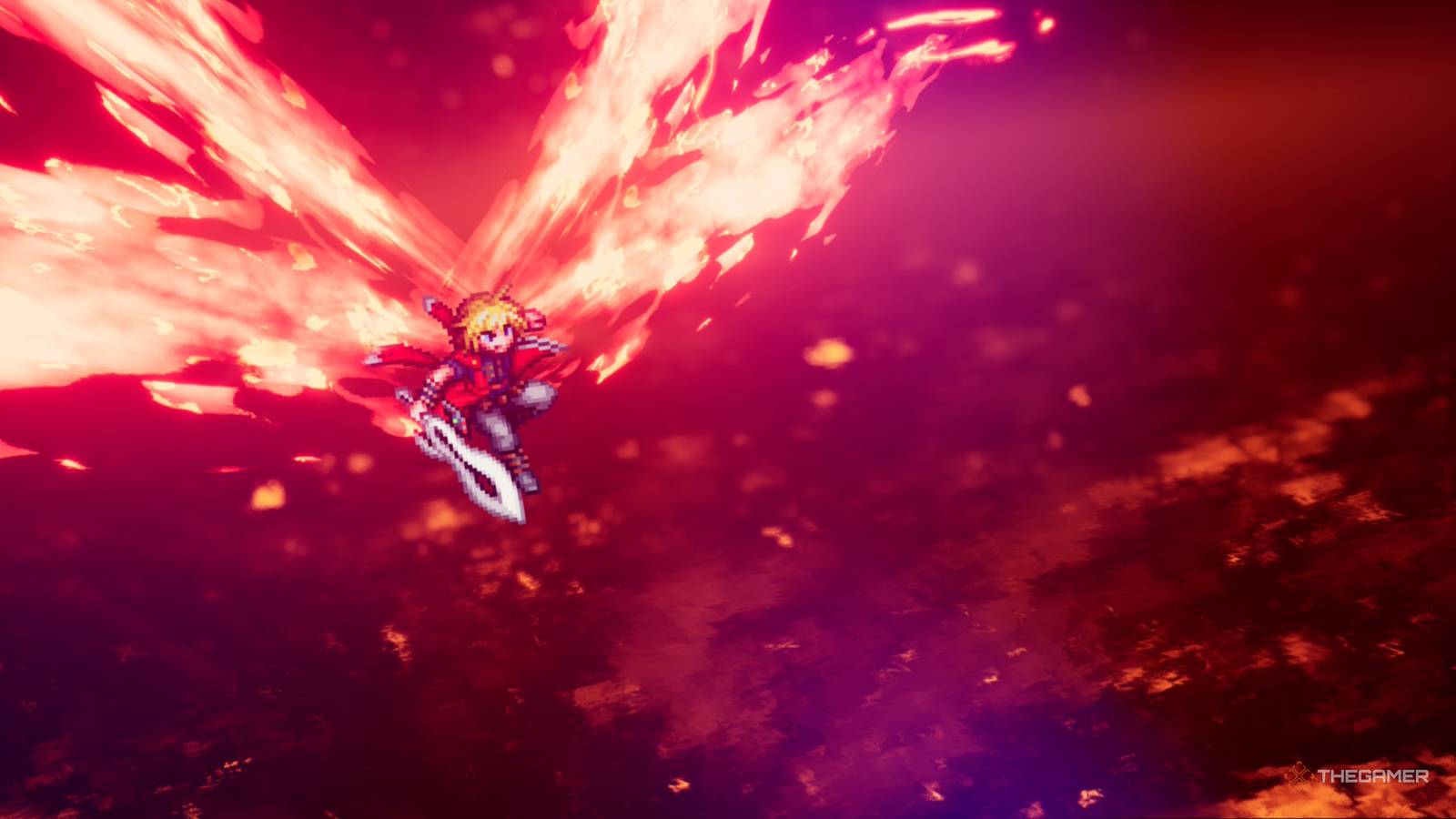
There's a particular kind of joy that comes from seeing a character you once dismissed as disposable gacha fodder suddenly given something meaningful to do. In Final Fantasy Resonance, Ilias, a minor character from Final Fantasy Brave Exvius, turns up as an apothecary and side quest character. It's an entirely unremarkable role in the grand scheme of things, but as someone who spent an obscene amount of time playing Brave Exvius, I was delighted. Someone remembered Ilias! Someone cared enough to give him a place in this world! That tiny detail rather neatly sums up everything I love about Final Fantasy Resonance. It's a game made with an extraordinary amount of affection for its predecessors, and it's rarely afraid to indulge that affection. Resonance is an unapologetically old-fashioned Final Fantasy game, and it's all the better for it. There's Life In The Old Formula Yet There's very little about Resonance's underlying RPG structure that's especially surprising. Its story follows familiar beats, its characters fit established archetypes, and its narrative progresses through the sorts of peaks and troughs that will be immediately recognisable to anybody who's spent a substantial amount of time with the earlier Final Fantasy games. I don't consider any of this a fatal criticism. If anything, it's refreshing to play something so comfortable with the conventions of its genre. Unlike, say, FF16, Resonance isn't interested in dramatically reinventing what a Final Fantasy game can be. Instead, it takes a formula that worked tremendously well for the series' first nine or so numbered entries, dresses it up with gorgeous modern presentation, and lets it work its magic all over again. Crucially, this extends beyond its storytelling. There's a willingness to embrace the sillier aspects of the franchise that I find irresistible. Ridiculous comedy scenes, grand appearances from Gilgamesh, and even a bloody jump rope minigame all feel right at home. It's the same delightful lack of embarrassment that made the older games so charming. Final Fantasy could be wonderfully absurd one minute and completely sincere the next, and Resonance understands that balance. For all its celebration of Final Fantasy's history, Resonance has a particularly strong connection to Brave Exvius. Its story, world, characters, and even its music draw heavily from the mobile RPG, and I suspect the people who will get the most out of this adventure are those who played and cared about the original. I'm certainly one of them. What makes this so satisfying, though, is how much more accomplished the storytelling feels. The broad narrative is familiar, but characters like Fina and Nichol benefit enormously from more convincing development and richer interactions. Their friendships are important without consuming every aspect of the plot, and that balance helps make their interactions feel natural. And then there are the countless smaller references. Minor characters are given meaningful roles, familiar musical themes return, and even relatively inconsequential details receive attention. There's something incredibly gratifying about seeing the developers extend that affection beyond the most recognisable characters. Resonance rewards general Final Fantasy familiarity, certainly, but its greatest pleasures are reserved for players who developed a genuine attachment to Brave Exvius's world. A Celebration Of Final Fantasy Resonance's Vision sequences are perhaps the clearest example of the game's attitude towards nostalgia. These sequences briefly revisit the stories of other Final Fantasy games, presenting iconic footage alongside familiar music while asking players how closely their decisions align with those of the original protagonists. Regardless of your answers, you then get those protagonists as equippable Visions, which turns them into skillsets that can be trained up. They're wonderfully evocative. As someone whose favourite game in the series is Final Fantasy 9, I was particularly delighted by the opportunity to revisit Zidane's story. Did I choose the answers that most closely matched his canonical decisions? Of course I did. I know that game inside out, and I wasn't about to start making incorrect choices now. My principal disappointment is that the featured characters and scenarios are rather predictable. Considering how firmly the game seems aimed at series veterans, there's room for a little more adventurous selection. The familiar faces are lovely to revisit, but some less obvious choices would have made these sequences considerably more exciting. Nevertheless, the combination of music, imagery, and interactive reminiscing is tremendously effective. Making Every Battle Count Resonance's combat initially appears as traditional as everything else. Battles are entirely turn-based, characters have familiar roles, and exploiting enemies' elemental weaknesses is the foundation of success. But underneath this conventional structure is an exceptionally satisfying system that makes even the most ordinary encounters worth paying attention to. Every enemy has a stagger gauge alongside its health, which can be depleted much more quickly by targeting its weaknesses. Staggering an opponent interrupts its actions and gives the character responsible a bonus turn. Manage to stagger every enemy on the field, and you'll trigger a Sweeping Stagger, allowing your entire party to act again and unleash a powerful Vision attack. It's a simple enough concept, but the possibilities it creates are delightful. Random encounters, so often the least interesting part of a traditional JRPG, become miniature puzzles. Rather than simply choosing whichever abilities will deal the most damage, you're considering how to dismantle an entire group of enemies as efficiently as possible. Which enemy should you stagger first? Can you exploit the resulting bonus action to break another? Do you have the right abilities available to set off a chain reaction that leaves the enemy party helpless? There's something enormously satisfying about getting everything lined up perfectly, turning what could have been a routine encounter into carefully orchestrated demolition. The Vision system makes this even better. Functioning as an unusually flexible alternative to traditional classes, Visions grant characters additional abilities and passive bonuses, with mastery allowing certain benefits to become permanent. You can develop characters into particular roles without sacrificing the freedom to experiment, combining abilities from different Visions to create increasingly specialised builds. A dedicated Breaker can focus on tearing through stagger gauges, while another party member is equipped to take full advantage of the resulting vulnerability. Equally, there's room to supplement a healer with offensive abilities or experiment with combinations that wouldn't necessarily fit into a conventional job system. It's immensely rewarding to watch a build come together, particularly when the skills you've chosen allow you to approach familiar encounters in entirely new ways. Collecting Visions is exciting because they represent additional possibilities for your party, not simply because they feature beloved Final Fantasy characters. Unfortunately, the combat isn't quite so consistently entertaining when it comes to bosses. These encounters are suitably climactic, and there's still plenty of satisfaction to be found in breaking through a formidable opponent's defences. However, many bosses feel more like prolonged battles of attrition than the tightly constructed puzzles that make ordinary encounters so enjoyable. Their substantial health and stagger gauges can turn otherwise engaging fights into lengthy affairs, particularly during the midgame, before you've acquired enough Visions and abilities to make full use of the combat system. There's an awkward period where the game expects you to engage with increasingly demanding encounters without giving you the range of options that makes its combat so entertaining elsewhere. Rather than experimenting with clever combinations, you can find yourself repeating effective but familiar strategies until an intimidating health bar finally disappears. It's a shame, because the underlying mechanics are excellent. The freedom to specialise characters, exploit weaknesses and engineer elaborate stagger chains gives Resonance's turn-based combat a fantastic sense of purpose. It's just a little frustrating that some of its grandest encounters don't make the most of those strengths. A Few Familiar Imperfections Resonance isn't flawless, despite how consistently I've enjoyed it. The English voice acting is one of its more disappointing elements. Performances can feel bland, and the comparatively uniform anime-dub delivery doesn't always help establish much of a distinctive identity for the game's fantastical setting. The writing and characterisation frequently have more personality than the performances communicating them. There's also no escaping just how conservative the game can be. Its narrative follows an established trajectory, and its celebration of Final Fantasy rarely ventures far beyond the most obvious material. For players looking for a substantial reinvention of the series, that familiarity may be less appealing than it has been for me. But I find it difficult to be particularly upset about either issue when the overall experience is so thoroughly enjoyable. Final Fantasy Resonance knows precisely what it wants to be. It's a gorgeous, affectionate celebration of a style of RPG that has lost none of its appeal, combined with a remarkably generous reimagining of a mobile game that deserved to be remembered for more than its gacha mechanics. Its reliance on familiar ideas sometimes prevents it from becoming something truly exceptional, and its combat doesn't always make the most of its strongest mechanics. But there's a tremendous amount to love here, especially for those who remember Brave Exvius fondly. Released October 22, 2026 ESRB Everyone 10+ / Alcohol Reference, Fantasy Violence, Language, Suggestive Themes Developer(s) Square Enix, Lancarse Publisher(s) Square Enix Franchise Final Fantasy Pros & Cons Terribly charming Flexible Build system that rewards experimentation Gorgeous, affectionate reimagining of Brave Exvius Boss battles can become tedious slogs Bland voice acting Predictable story beats
Final Fantasy Resonance Review: Old-School Charm, Modern Combat
Full Article
Original Source
Read the full article at Thegamer →KhanList aggregates and links to publicly available news content. We do not host full articles from third-party sources. Always verify important information with original sources.