
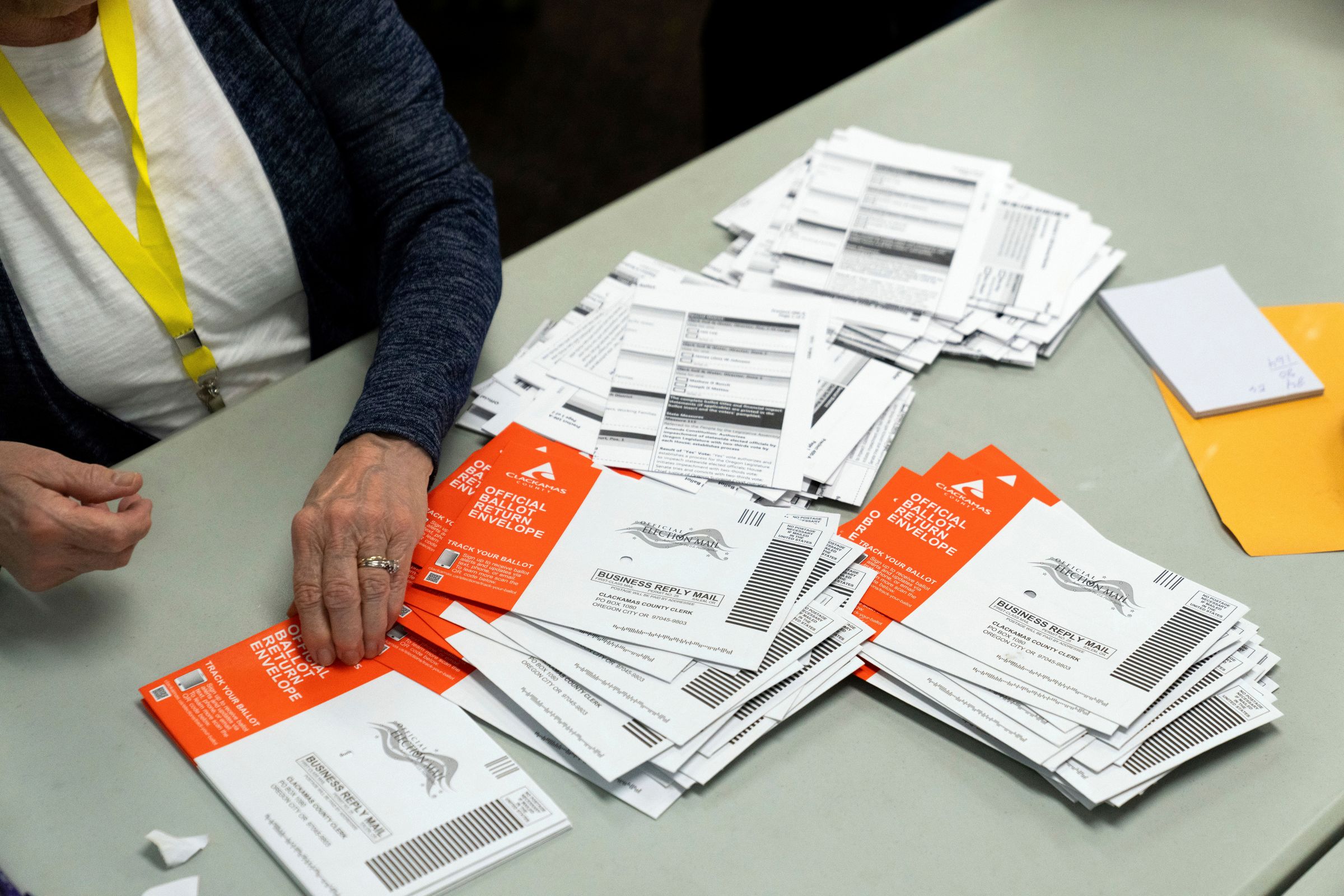
A federal judge found Justice Department prosecutors demanded, not requested, that Washington set aside roughly 400 voters’ ballots and threatened election officials who count them.(CN) — Federal prosecutors can ask Washington state to set aside voters’ ballots, but they can’t demand it, a federal judge in Seattle said Thursday.U.S. District Judge Jamal Whitehead temporarily barred the Justice Department from pressing the state over a list of about 400 voters.The Joe Biden appointee partially granted a request from OneAmerica Votes, the Latino Community Fund of Washington State and the United Food and Commercial Workers International Union, whose members include naturalized citizens.On Oct. 26, eight days before Election Day, Acting U.S. Attorney Pete Serrano of the Eastern District of Washington and First Assistant U.S. Attorney Neil Floyd of the Western District sent Secretary of State Steve Hobbs the list. Mail ballots were already coming back to county offices.They gave Hobbs 24 hours to review it and told him to have county election officials hold off on checking the signatures on those voters’ ballots, or counting them, until their “citizenship can be determined.”At a press conference that day, Floyd warned that anyone who helps someone vote illegally “would be also guilty of that crime under the aiding abetting theory.”Hobbs refused two days later. Washington’s review found the list unreliable. At least 62 people on it hadn’t been sent a ballot because their registrations were canceled, inactive or couldn’t be found.“Washington reviewed the list and found that it includes United States citizens — people who had already shown the state proof of their citizenship. Nothing in the record suggests that anyone on the list has been charged with a crime. The federal government has kept up the pressure anyway and has promised more lists and more letters,” Whitehead said.Serrano said on the radio the next day that the department would turn to county auditors and could send “39 letters to 39 auditors over the next couple days.” He described the goal as making sure these ballots weren’t counted.The government told the judge it had taken no further action since the Oct. 26 letter. Whitehead disagreed.“Their own statements say otherwise,” he said.The government argued the letter was only a request Washington was free to turn down, pointing to a recent Ninth Circuit ruling that put a nationwide order against similar demands on hold.Whitehead said the distinction was between asking and compelling. The government, he said, “may ask a state to set ballots aside, but it may not compel one to do so.”“On this record, defendants did not ask,” he said.The Ninth Circuit ruled last week in a California case that a law criminalizing noncitizens voting in federal elections doesn’t let the Justice Department “take charge of or intervene in a state’s administration of an ongoing election.” The Supreme Court declined to disturb that ruling Monday.Whitehead found union members face a real risk of being discouraged from voting or having their ballots set aside. Only one plaintiff needed a legal right to sue, he said, so he didn’t decide whether the other two groups have one.“Voters who followed the rules should not lose their votes to a list that even its authors admit may include citizens,” he said.The order applies to the Justice Department, the Department of Homeland Security and four officials: Attorney General Todd Blanche, Homeland Security Secretary Markwayne Mullin, Serrano and Floyd.They can’t demand that any Washington election official remove specific voters from voter rolls, refuse them ballots or leave their ballots uncounted. They also can’t threaten officials with criminal prosecution or investigation for refusing to comply.The government can still investigate and prosecute people who vote illegally, share information with election officials, state its view of federal law and ask for cooperation. Whitehead did not order anything against President Donald Trump, who is also a defendant, and denied the government’s request to put the order on hold during an appeal.The temporary restraining order lasts 14 days. Counties must certify results by Nov. 24. The government has until Nov. 12 to oppose a longer-lasting order, and Whitehead will hear arguments Nov. 18.Representatives for the Justice Department and plaintiffs’ attorneys didn’t immediately respond to requests for comment.Subscribe to our free newslettersOur weekly newsletter Closing Arguments offers the latest about ongoing trials, major litigation and rulings in courthouses around the U.S. and the world, while the monthly Under the Lights dishes the legal dirt from Hollywood, sports, Big Tech and the arts.Additional Reads
Feds barred from pressing Washington state to toss voters’ ballots, for now
Full Article
Original Source
Read the full article at Courthousenews →KhanList aggregates and links to publicly available news content. We do not host full articles from third-party sources. Always verify important information with original sources.