
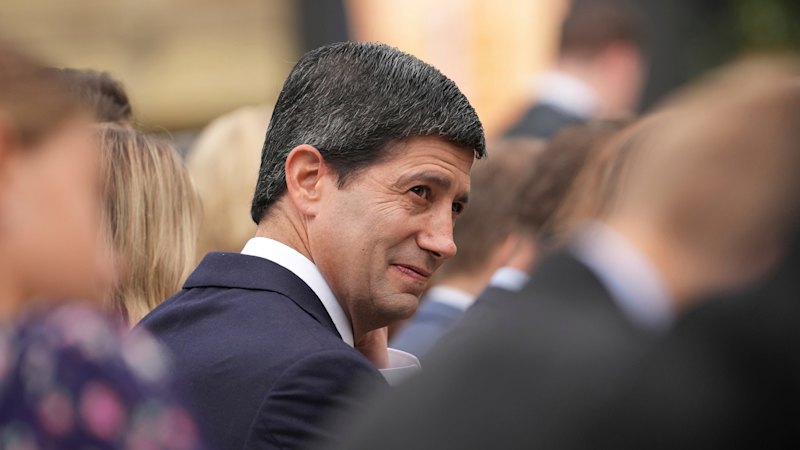
Updated September 17, 2026 — 4:20am,first published 4:09amWashington: The US Federal Reserve has lifted interest rates for the first time in three years in a bid to rein in persistently high inflation fuelled by the ongoing war with Iran and its impact on the cost of energy.While widely expected, the move risks enraging President Donald Trump, who has furiously campaigned for the central bank to cut rates – piling pressure on his new handpicked Fed chairman, Kevin Warsh.Federal Reserve chairman Kevin Warsh.AP Photo/Mark Schiefelbein“The Fed Board, with its great new leader, must get smart - BE PATRIOTS for a change,” Trump posted online recently. “High interest rates put the U.S.A. at a very unfair disadvantage, and I won’t allow that to happen!”But the bank’s governing committee voted on Wednesday (US time) to raise the target rate by 0.25 percentage points to a band of 3.75 to 4 per cent.Warsh will elaborate on the decision at a press conference at 4.30am AEST.“Inflation remains elevated,” the bank’s Federal Open Market Committee said. “Today’s policy action will support a timelier return to the committee’s 2 per cent goal. The committee will deliver price stability.”The committee said economic activity was expanding at a “solid pace”, with the unemployment rate steady, productivity growth strong and capital investment robust. Though it noted uncertainty remained elevated, “owing, in part, to geopolitical developments”.`Rising petrol prices in the US due to the war against Iran have contributed to persistently high inflation.AP Photo/GREGORY BULLEconomists widely tipped a rate rise after last week’s official data showed US inflation stuck at 3.4 per cent – above the Fed’s target of 2 per cent, driven largely by increasing energy costs.The consumer price index ticked up 0.4 per cent in August in seasonally adjusted terms, with petrol up 3.9 per cent. After falling back to nearly pre-war levels, the price of Brent crude – the international oil benchmark - is back above $US100 a barrel.That was compounded by new attacks by Iran-backed militants in Yemen and Iraq, targeting oil supplies that avoid the Strait of Hormuz by using the Bab al-Mandab Strait between Yemen and the African coast.Saudi Arabia closed the East-West Pipeline across the Arabian Peninsula last week following drone attacks. Bloomberg reported the kingdom was aiming to restore about half the pipeline’s capacity within days.President Donald Trump swore in Fed chairman Kevin Warsh with an extensive White House ceremony in May.BloombergAnalysts said the Fed’s credibility was on the line with Wednesday’s decision, with persistently high inflation leaving Warsh and his fellow governors with little choice but to hike rates or admit they were being cowed by Trump’s wishes.Warsh told Congress in July that the Fed had “no tolerance for persistently elevated inflation”. And at the bank’s August 28 summit at Jackson Hole, he said inflation was “concerning”, and that governors had opted to wait for more information before deciding to raise rates.“This is where the chairman has effectively painted himself into a corner,” said JPMorgan chief global strategist David Kelly, adding that both Warsh and the governing committee would “lose serious credibility” if they did not raise rates.More to comeGet a note directly from our foreign correspondents on what’s making headlines around the world. Sign up for our weekly What in the World newsletter.Michael Koziol is the North America correspondent for The Age and Sydney Morning Herald. He is a former Sydney editor, Sun-Herald deputy editor and a federal political reporter in Canberra.Connect via X or email.From our partners
Fed defies Trump, raises US interest rates for first time in three years
Full Article
Original Source
Read the full article at Smh →KhanList aggregates and links to publicly available news content. We do not host full articles from third-party sources. Always verify important information with original sources.