
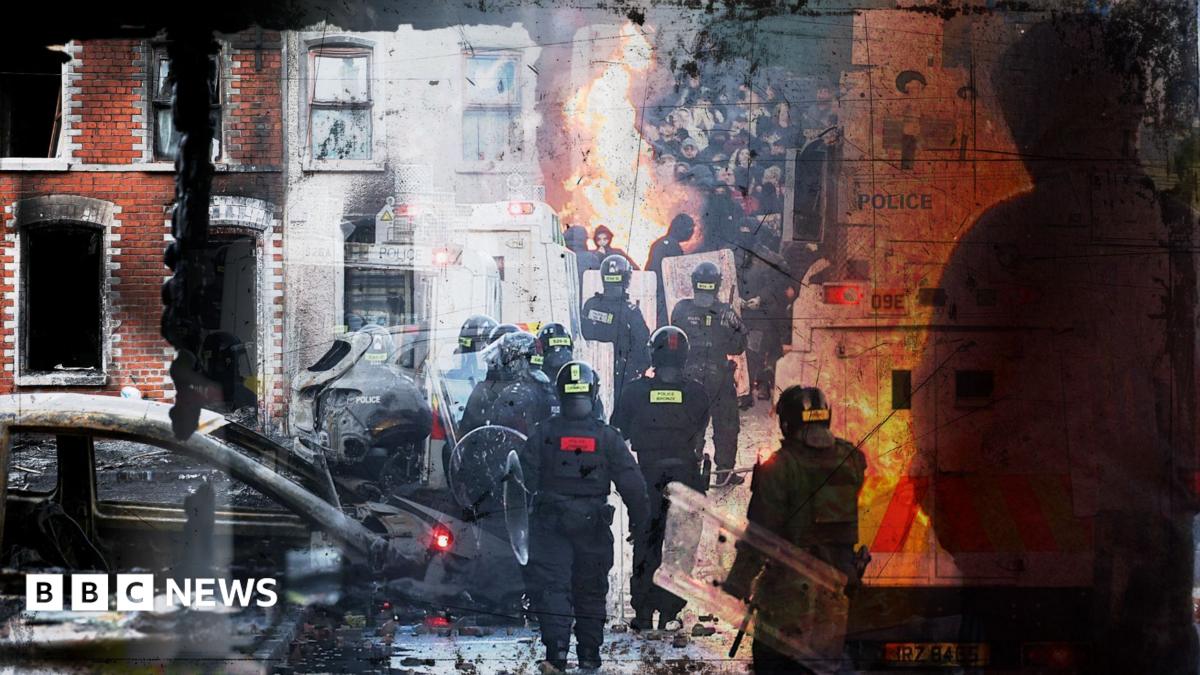
The rioting began after footage of a brutal knife attack was widely circulated on social media. The clip was shared by far-right activist Tommy Robinson, as well as by Elon Musk, racking up millions of views on his X platform.A call for peaceful anti-immigration protests that evening gave way to violent scenes, mostly in loyalist areas.Protesters were told to target the homes of refugees and asylum seekers, but any person of colour was at risk, with rioters shouting "foreigners out" as they broke down doors and windows in homes across Belfast.Revisiting those dark nights almost three months later, it's clear the reverberations are still being felt among communities, particularly as officials continue to count the cost of supporting those displaced.As the chaos spread, many were forced out of their homes with nothing more than the clothes they were wearing.Northern Ireland's social housing authority, the Housing Executive, has said 76 households presented to it as homeless following 48 hours of violence, while community workers on the ground said that number was much higher, when including those who went to stay with friends or left the country.But, at the same time as social media posts were circulating organising the riots, something else was happening online.A network of groups normally helping migrant communities with things like food banks and interpreter support got together on WhatsApp.They helped more than 200 people, often rushing into areas of violence to take those targeted to safety.Anne works for one of the groups and described messages as "coming in as fast as people could pick them up"."And even then, when we were down town collecting people, we were then also being asked to go somewhere else, you know, to pick somebody else up."There's a lift needed to take somebody to work, lift needed to take somebody into the hospital for a shift. There's somebody coeliac, no food in the house, pick up such and such at an address."Ciara, another community worker, responded to a call from four Sudanese women fearing that their home would be targeted."I was trying to reassure them. I don't speak Arabic and they were just coming along. It was blind trust. But then I was on adrenaline thinking: 'I have to keep these people safe'."Imagine you were being brought somewhere and you didn't know where you were going. I just thought: 'God, these poor people might not even understand what I'm saying'."Then there was Carolyn, a community worker of 35 years experience. Her effort was gargantuan.She has a large home 60 miles away from Belfast and, with the help of a coach driver and his vehicle, managed to take 22 people out of the city to her house in County Antrim, where they stayed for a week."It was dark, nearly midnight, when they got here, and there was a lot of crying and hysteria from the kids and the families, just not knowing where they were and stuff like that. They were traumatised."Some of them, she recalled, didn't have a change of clothes. A mum with a baby didn't have nappies or formula."It was crazy. To think of how you would just flee your home, not able to take anything with you and try and protect you and your kids."East Belfast, parts of which are loyalist, was one of the hotspots of violence.Brian Anderson, a Methodist minister with the East Belfast Mission, said the narrative that loyalist communities are losing out to those in republican areas is deeply ingrained."It's perceived within loyalist communities that the other side are getting. And we are losing," he said."We're losing our culture. Houses are not being developed. We're losing our jobs. And, so, you put it into that context of them winning and the perception that we're losing. That's the green-orange issue.""You then bring other colours of nationality into it," he added. "They, then sadly, have become the target for a small minority of people."He said there had always been a "silent majority" against violence in Northern Ireland's recent history, but a "vocal minority who have been for violence, and they seem to hold sway"."We still have a problem in loyalist communities whereby if we have something we're cross about or angry about or don't understand or feel threatened by, we seem to turn to violence," he said.
Fear and fallout three months on from Northern Ireland's race riots
Full Article
Original Source
Read the full article at Bbc →KhanList aggregates and links to publicly available news content. We do not host full articles from third-party sources. Always verify important information with original sources.