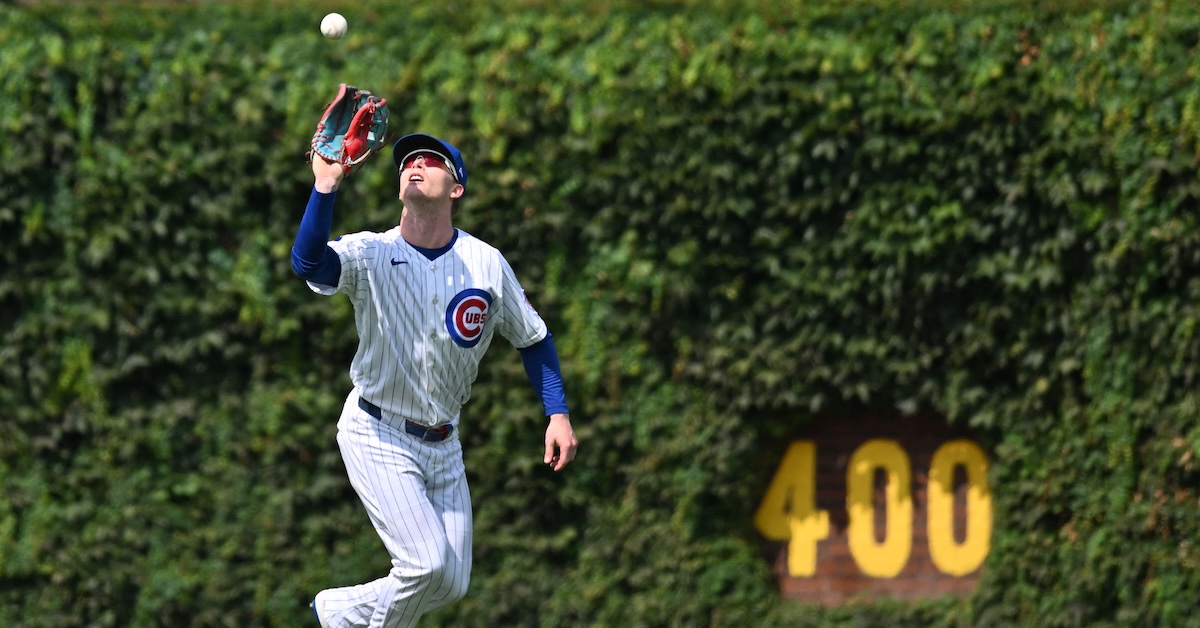
Patrick Gorski-Imagn Images On Friday, the Boston Globe ran a story by Red Sox beat writer Alex Speier on the concept of momentum. I can hear the collective groans of our Members now. Haven’t we gone over this enough? We’ve already established that there’s no such thing as momentum! Or, if there is, its effect is minimal. Our readers would be the first to point out that the month-and-a-half long surge up in Boston is mostly a matter of a talented, drastically underperforming Sox team experiencing some serious positive regression, bringing its overall record back up to about where we expected it to be all along. I get that, of course. We cannot conclusively prove the effect of momentum in baseball — and it’s not for lack of trying — and so therefore cannot definitively say that it exists. Yet when it comes to the Big Mo, a palpable feeling rather than a tangible metric, I tend to subscribe to what I call the Robert Graysmith Theory: Just because you can’t prove it, doesn’t mean it isn’t true. What’s interesting about Speier’s piece is that he, along with Globe staffers Julian Benbow and Daigo Fujiwara-Smith, looked for data to support the impact of momentum on winning and losing streaks. Speier, an analytically savvy writer, said in his Bluesky post sharing the story that he “was skeptical” that their search would lead to anything. Instead, he was astonished to learn that, as he writes in the story, “A Globe analysis of Retrosheet data that includes the outcome of every MLB game from 1901 through 2025 revealed a striking pattern: The longer a winning streak lasts, the higher a team’s winning percentage in the next game.” The inverse is true for losing streaks. Speier mentions several factors unrelated to momentum that help to explain why “baseball streaks tend to be somewhat self-sustaining,” most notably that team quality probably plays a major role in enduring stretches of winning or losing. That alone is enough of a reason to maintain any skepticism you may have toward the idea of momentum. But at the same time, we should acknowledge that many players believe in the power of momentum, and if that belief influences how they feel, and how they feel contributes to how they perform, then it stands to reason that momentum — or at least, their belief in momentum — has at least some impact on performance. That’s the last we’ll be discussing momentum here, though I’d encourage you to read the entirety of Speier’s story after you’ve finished reading this mailbag. Instead, today we’ll be answering your questions on players to be named later, the teams that most improved (or diminished) their 2027 playoff odds with their moves at this season’s trade deadline, and where Pete Crow-Armstrong would stack up on the five-star catches leaderboard if we had Statcast data going back through baseball’s history. But before we do, I’d like to remind you that this mailbag is exclusive to FanGraphs Members. If you aren’t yet a Member and would like to keep reading, you can sign up for a Membership here. It’s the best way to both experience the site and support our staff, and it comes with a bunch of other great benefits. Also, if you’d like to ask a question for an upcoming mailbag, send me an email at mailbag@fangraphs.com. This Mailbag Article Is Exclusively for Members To read this mailbag, you must be a FanGraphs Membership. Our player pages, leaderboards, and other data tools, as well as RosterResource, The Board and our glossary, are still available for your unlimited use.Membership also includes: ad-free browsing, unlimited FanGraphs and RotoGraphs articles, one-click data exports, customizable player page cards, custom leaderboard reports, enhanced Steamer projections, historical ZiPS and Steamer projections, dark and classic site modes, the option to remove photos on the homepage, and FanGraphs Walk-off, your personalized year-end site usage review. Click Here To Become a Member
FanGraphs Weekly Mailbag: August 8, 2026
Full Article
Original Source
Read the full article at Blogs →KhanList aggregates and links to publicly available news content. We do not host full articles from third-party sources. Always verify important information with original sources.