
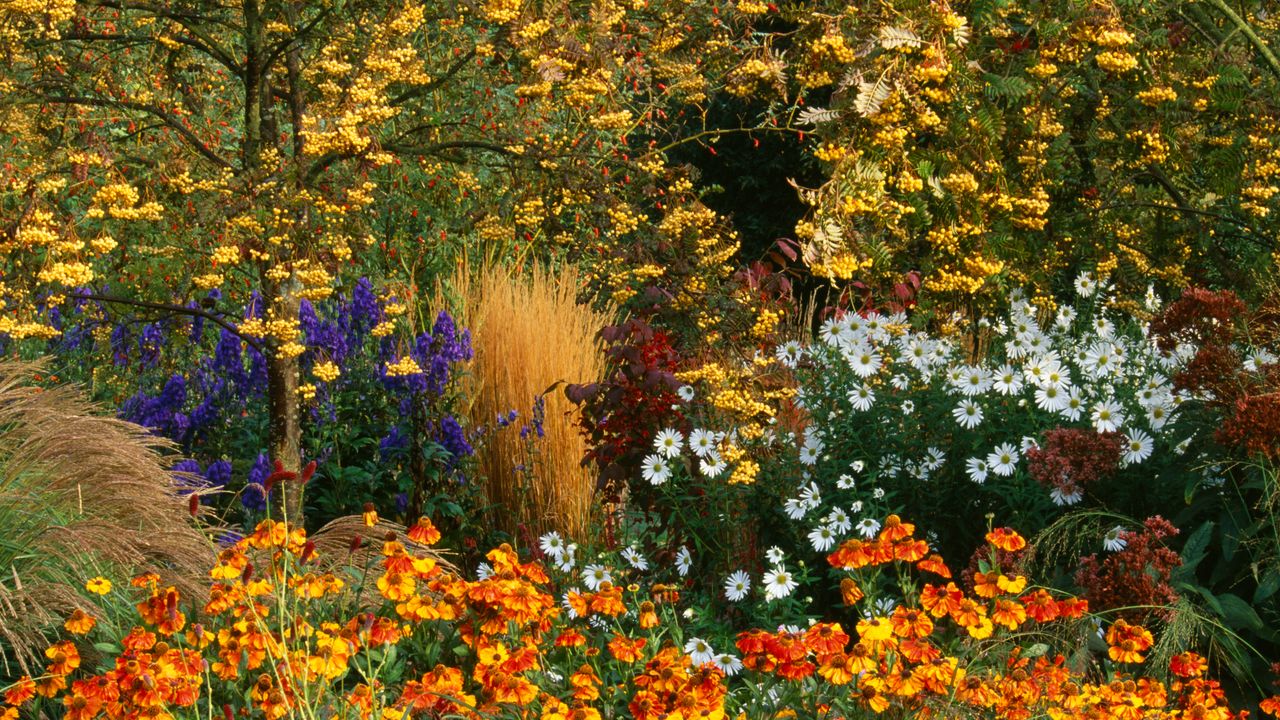
The changing season doesn’t have to mean the end of a blooming yardThese are the flowers to know for a stunning fall garden.Photo: Clive Nichols/Getty ImagesFlower gardens don’t need to vanish the moment summer’s heat turns into crisp autumn air. Planting fall flowers like asters and marigolds welcomes a rich tapestry of golds and crimsons into your yard, extends the life of your blooms into November and beyond, and supports pollinators like hummingbirds and butterflies.Choosing the right flowers will determine if your autumn garden thrives past Halloween, or if the blooms die before the end of October. Take chrysanthemums, also known as mums, which are often a go-to fall flower: Most die before November because common grocery store varieties aren’t very frost hardy. Instead, consider the below seven flowers, which tend to be easier to grow, stronger in cold weather, and less susceptible to pests and diseases. Ahead, flower experts share what fall flowers to add to your garden this season for all the autumnal color.Photo: Lacy Frechette/Getty ImagesGoldenrodThis is one of the hardiest fall flowers because it’s a native fall-blooming perennial, says Elizabeth Brown, gardener and author of The Beginner’s Cut Flower Garden. “Many people think of goldenrod as a roadside weed, but when planted in a more formal garden or next to the purple blooms of an aster plant, they appear quite regal,” she says. Not to mention, the plant brings birds to the yard, and as the days become shorter, the vibrant yellow blossoms of this plant offer a cheerful bit of color. Brown suggests planting seeds in the winter—also called winter sowing—so that the roots have time to establish before the next fall. Opt for a location in full sun and watch this flower tower over the rest.Photo: Helaine Weide/Getty ImagesAsterThese blooms come in a variety of shapes and colors, enabling you to add them to just about any garden for a cohesive color palette. And the way the setting September sun catches the interesting, wild shapes of these autumn flowers like the New England aster is enchanting, says Brown. Plus, these hardy native plants require very little effort once established. For the best results, plant in fall or early winter in the ground, says Brown Plant, who also recommends choosing a spot in full sun to partial shade.Photo: Grace Cary/Getty ImagesBlack-Eyed SusanAnother native perennial that can survive the frost and return year after year, rudbeckia, or black-eyed Susans, are a low-maintenance flower that brings color to gardens from summer into early fall. These golden-yellow blooms thrive in full sun to partial shade and well-draining soil and can tolerate dry conditions once established, says Rebecca Sears, CMO and gardening authority at Ferry-Morse. She especially likes black-eyed Susans for adding a relaxed, natural look to garden beds while providing a late-season food source for birds, bees, and butterflies.Photo: Wuling Yun/Getty ImagesMarigoldThese puffs of brilliant color are excellent for keeping the garden colorful as summer transitions into fall. Their warm shades of yellow, orange, and red feel especially fitting for the season, and the plants thrive in full sun and well-draining soil, says Sears. “They’re also versatile enough for garden beds, borders, vegetable gardens, and containers.” Regular deadheading—the practice of removing dead flowers—can encourage continued flowering, helping extend their bright display until frost.Photo: Anastasia Rukynets/Getty ImagesBlanketflowersThese are a dependable native flower choice for gardeners who want vibrant color that doesn’t disappear as soon as summer winds down. Its red, orange, and yellow daisy-like blooms perform best in full sun and well-draining soil, and established plants can handle both heat and periods of drought, says Sears. “What I love about the blanketflower is how naturally its warm, fiery colors complement the changing tones of the fall garden.”Photo: Flowerphotos/Getty ImagesNorthern Sea OatsThis is an ornamental grass that flowers in a unique display: Its arrow-shaped seed heads appear in late summer and slowly change in color from green to a warm brown orange in autumn. “They make a lovely dried flower and never fail to surprise people when they stumble upon them in the garden,” Brown adds. This grass isn’t fussy; it can tolerate poor soil and sun or shade, and like with aster and goldenrod, you can sow it in the winter. Make sure to give this plant plenty of space as it will spread rapidly, Brown says.Photo: Jacky Parker PhotographyJapanese AnemoneWhile this is not a native plant, Japanese anemones are also surprisingly hardy. Over time, some varieties can grow up to five feet tall, and they put on the most delicate, eye-catching petals, says Brown. “The Honorie Jobert variety with white flowers is the type I have in my own garden,” she adds. Japanese anemone grow well in full sun to partial shade and are considered perennials in agriculture zones 4 through 8. Purchase as a plant and establish this in your garden when the weather is mild.Frequently asked questionsWhen should you plant fall flowers?Planning ahead is key if your goal is to have flowers blooming in fall, says Sears. Always follow the planting instructions on your seed packet, as timing will vary based on your local climate, growing zone, and seasonal conditions. For example, black-eyed Susans, petunias, and sunflowers generally need to be planted earlier in the growing season if you’re hoping for late-season blooms that same year, while others like heliopsis need cooler months to root.Do fall flowers last until the spring?With the exception of pansies, which can survive snowy conditions, most fall-blooming flowers won’t continue flowering from fall into the following spring, says Sears. Marigolds are frost-tender, so their displays typically end when freezing temperatures arrive, for example. Blanketflower and black-eyed Susan are fall perennials that can go dormant over winter and return with new growth the following season in climates where they are hardy. “While their flowers won’t last through winter, leaving some spent flower heads in place can also provide a food source for birds and add texture to the garden during the colder months,” Sears says.Which flowers bloom in the fall?All the flowers included in the list, and many more like stonecrop, dahlias, sweet alyssum, and cosmos, will bloom in the fall under the right growing conditions, although their exact bloom periods will depend on climate, planting time, and care. Altogether, they create a garden able to transition naturally from the height of summer into the cooler months.Not a subscriber? Join AD for print and digital access now.Sign up for our daily newsletter to get the best of design in your inbox.Michelle Mastro is an Indianapolis–based independent writer and journalist, specializing in design and architecture but also how these topics overlap with travel, culture, and history. In addition to AD, her bylines have appeared in Atomic Ranch, Midwest Living, Dwell, Better Homes and Gardens, and many others. Michelle has degrees from ... Read More
Fall Flowers: The 7 Best to Plant for an Autumnal Garden
Full Article
Original Source
Read the full article at Architecturaldigest →KhanList aggregates and links to publicly available news content. We do not host full articles from third-party sources. Always verify important information with original sources.