
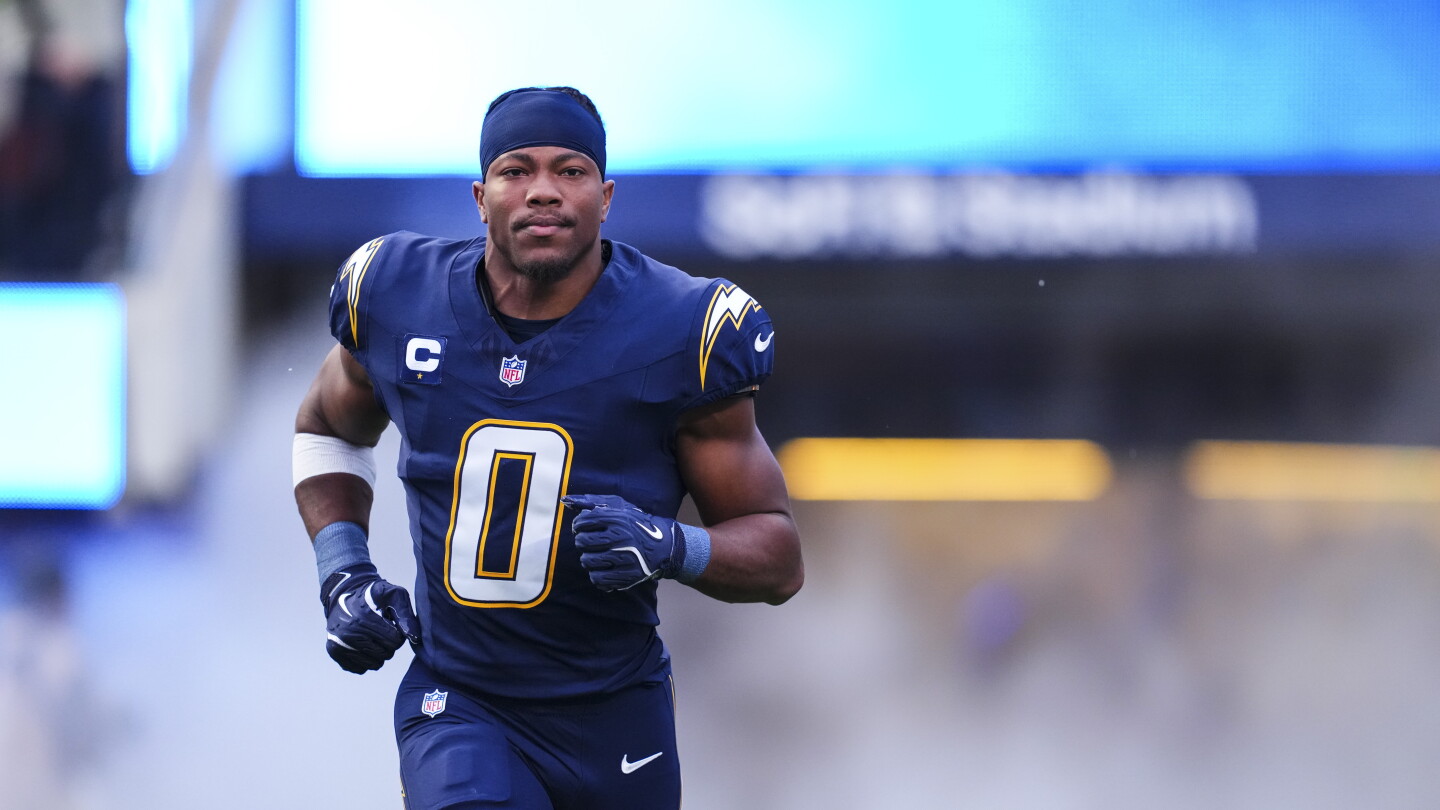
The trade deadline is the trade deadline. Except when it’s not the trade deadline.The strange situation involving the failed trade of Chargers linebacker Daiyan Henley to the Broncos reveals a major flaw in the NFL’s deadline-day machinery.Adam Schefter of ESPN has provided the details (which we have confirmed to be accurate) in the most nonchalant, innocuous terms possible: “It is not uncommon for one team to have some medical concerns about a player while another does not. In this case, Denver had concerns about Henley following his physical. Even then, the Broncos still wanted Henley with Denver and LA discussing revised trade alternatives throughout the day, taking into account those concerns. In the end, no agreement was reached. The deal was off.”Here’s what it means. The Chargers and Broncos struck a deal for Henley and independently communicated the terms to the NFL before the trade deadline of 4:00 p.m. ET on Tuesday, November 10. Like all trades, the Henley deal was subject to the player passing a physical.The Broncos discovered an issue with Henley’s knee. It has, we’re told, arthritis. (As one source with neither the Chargers nor the Broncos told PFT, most if not all starting linebackers in the NFL have some degree of arthritis in their knees.) The NFL allows trade terms to be revised after the deadline, to an extent. Per a league spokesperson: “We would permit them to change the pick compensation. They would not be able to add a player or trade a different player.”Instead of concluding that the physical had been failed and canceling the deal (like the Ravens did with the trade for Raiders defensive end Maxx Crosby in March), the Broncos were willing to proceed with revised terms. In other words, for something less than a fourth-round pick in 2027 and a fifth-round pick in 2028, they’d still do the deal.That’s not how it should work after the deadline. The window has closed. The deals are done, or they’re not. After 4:00 p.m. ET on November 10, the only question left to answer is whether the player passes or fails the physical.As one source explained it, deadline-day deals have gone through in the past with terms that were revised after the deadline.Based on Schefter’s reporting, that’s what happened here. The Broncos had “medical concerns,” but not enough to reject the player. The Broncos and Chargers discussed “revised trade alternatives” on Wednesday — the day after the window for doing trades ended.The Chargers could have taken less in order to get the deal done. They chose not to do so. The fact that the rules allow trade terms to be renegotiated after the deadline opened the door for the Broncos to squeeze the Chargers.The situation creates an opportunity for shenanigans. If, for example, Team A is preparing to trade a player to Team B at the deadline for a fourth-round pick and a sixth-round pick, Team C can swoop in and offer a fourth-round pick and a fifth-round pick. Then, when the physical is performed after the deadline, Team C can say, “Well, we have medical concerns. If we don’t agree to reduce the package to a fourth-round pick and a sixth-round pick, we’re going to fail the player on his physical.”That’s not to say the Broncos did it deliberately. Obviously, however, they remained interested in Henley (who has started all eight games this year and has participated in 89 percent of the snaps) at something less than the agreed terms.The point is that this little-known ability to extend the trading period by giving the acquiring team the ability to use the physical to leverage better terms shouldn’t exist. When a deal is done at the deadline, the trade should either go through for the agreed terms or it shouldn’t.It opens the door to gamesmanship. The team that has traded the player has no alternatives. It can’t trade the player to someone else. It either has to accept reduced terms or try to put the toothpaste back in the tube.The Vikings, for example, could have tried to do that to the Raiders regarding quarterback Kirk Cousins. “Well, we found something in Kirk’s leg that we don’t like. We’re not comfortable giving up a third-round pick. How about a fifth-round pick instead?”What would the Raiders have done at that point? They’d already turned the page to Fernando Mendoza, and they spent Tuesday and Wednesday getting him ready to play.The rule needs to change. The ability to revisit trade terms after the deadline has passed should be eliminated. Either the deal gets done as negotiated, or it doesn’t.Hovering over all of this is the subjectivity that can result in a team failing a player on a physical if it wants that outcome. It’s an easy way out for a team that has buyer’s remorse. (The Bengals, for example, could have determined that Eagles defensive end Arnold Ebiketie failed his physical, if the Bengals hadn’t realized until after the trade terms were finalized that the Bengals would lose a 2027 third-round compensatory pick if the trade became official.)At some point, it makes sense for the physicals not to be conducted by team doctors but by an independent, unaffiliated physician. But that’s for another day. For now, the immediate problem that needs to be solved is the ability of teams to renegotiate trade terms after the trade deadline. No one benefits from that, and unscrupulous teams could use it to their advantage.
Failed Daiyan Henley trade exposes a flaw in the NFL's trade deadline
Full Article
Original Source
Read the full article at Nbcsports →KhanList aggregates and links to publicly available news content. We do not host full articles from third-party sources. Always verify important information with original sources.