
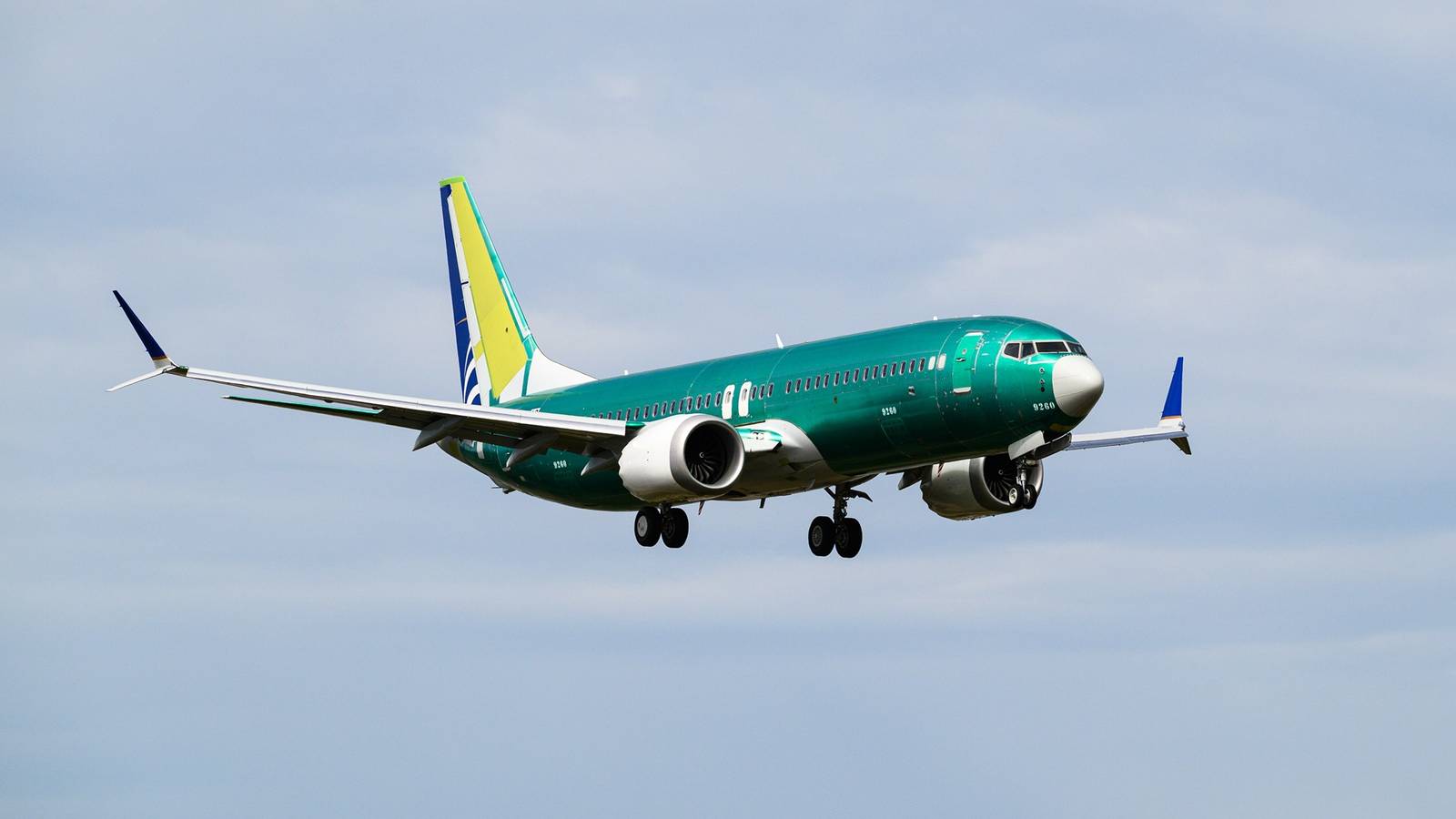
Published Oct 1, 2026, 4:47 PM EDT Paul has had a career of 25+ years focused on the international technology sector, which has taken him to over 100 countries. Along the way, he developed a deep love for aviation, with a travel bucket list measured by aircraft types flown rather than destinations reached. Now he brings that avgeek passion, along with the journalism experience he accumulated early in his career, to write insightful pieces for Simple Flying. The Federal Aviation Administration (FAA) is set to convene a Corrective Action Review Board (CARB) on Friday, October 2, to examine a newly disclosed software problem affecting certain Boeing 737 MAX aircraft. The glitch can prevent pilots from accessing automated flight guidance during a specific missed-approach scenario, and the board will review whether the condition presents a safety concern requiring further action. Airline officials told Reuters they do not expect the panel to determine that the issue represents a significant safety risk. The review has nevertheless already had consequences for Boeing. The FAA has put certification of the long-delayed Boeing 737 MAX 10 on hold until it completes its analysis, disrupting a program that appeared to be approaching approval after completing certification flight testing in July. Boeing and software supplier GE Aerospace are now working to accelerate a permanent solution. What The FAA's Review Board Will Decide Credit: Ian Dewar Photography | Shutterstock A CARB is part of the FAA's standard continued-airworthiness process rather than, by itself, an indication that an aircraft has been deemed unsafe. The FAA says these boards are designed to bring technical experts together to assess risk and proposed mitigations. If a CARB determines that an unsafe condition exists and must be corrected, the process can ultimately lead to an Airworthiness Directive. FAA guidance says the board is intended to precede that process rather than replace it. That leaves several possibilities after Friday's review, ranging from accepting existing pilot procedures while the software is corrected to requiring additional interim measures or mandatory changes. Boeing has already told current MAX operators that existing procedures allow crews to handle the condition safely, saying: “Last month, we informed all 737 operators about a software issue where pilots may not have access to automated flight guidance during a specific landing scenario. We shared information with operators that reinforced existing pilot procedures for safely handling such rare cases. Our engineers are working on a software update to permanently address the issue.” For now, the federal government's position remains that there is no reason to ground the MAX fleet. Transportation Secretary Sean Duffy said Wednesday that the software update had not been flagged as a serious safety issue, while the FAA has characterized the concern as one that can increase pilot workload in rare cases. However, Duffy said authorities would respond very differently if a safety issue were identified by the CARB: "If there was like, 'Hey we've got a safety issue,' well then we have a very different response. We've learned when you don't respond quickly to things, bad things can happen." What The Boeing 737 MAX Software Glitch Actually Does Credit: Thiago B Trevisan | Shutterstock The problem concerns versions 14 and 14.1 of the 737 MAX flight management software developed by GE Aerospace. The glitch itself only appears in a very specific situation. If a 737 MAX is flying an automated precision approach, the pilots abandon the landing and go around, then make a change to the route programmed into the flight management computer, the aircraft can unexpectedly stop following its programmed vertical flight path. This means that instead of automatically managing the climb, descent and altitude constraints through the vertical navigation function, or VNAV, the aircraft reverts to a simpler automation mode. That isn't inherently dangerous, but it does mean that the pilots must then recognize that change, select the appropriate mode, and more actively manage the aircraft’s vertical path. That can significantly increase cockpit workload, which is a concern because a missed approach usually occurs relatively close to the ground, when pilots are already managing configuration changes, navigation in tight airspace, and dealing with ATC instructions. Item Detail Affected software FMC versions 14 and 14.1 Software supplier GE Aerospace Scenario Precision approach followed by a missed approach/go-around Additional trigger Crew modifies the programmed flight path Result VNAV may disengage Aircraft control Pilots retain control; autopilot remains available Permanent solution Revised software under development The issue also has a longer history than its public disclosure suggests. Boeing was first notified by an airline in November 2024, reviewed the matter, and concluded in February 2025 that it was not a safety issue. Additional operator information received this year prompted Boeing to conduct a more formal safety review and send its findings to the FAA. Boeing initially indicated that a permanent software correction could arrive in 2028, although it is now working to accelerate the fix. The MAX 10 Delay And Airline Response Credit: Boeing The immediate certification implications extend across Boeing's two newest MAX variants. The FAA certified the 737 MAX 7 on August 3, and CBS News reported that it was certified using version 14 of the software; the MAX 10, meanwhile, used version 14.1 during its certification testing. FAA Administrator Bryan Bedford has said the agency will not certify the MAX 10 until it is satisfied that the software problem has been addressed, saying: “We haven’t concluded whether this is a safety of flight issue or not, but we will be delaying the 10 until we’re satisfied we don’t have an issue here.” Several US airlines have emphasized that the issue does not affect their existing MAX fleets. Alaska Airlines, American Airlines, Southwest Airlines, and United Airlines told CBS that their in-service aircraft do not use the affected software. Southwest and United have gone even further by telling Boeing they will not accept newly delivered aircraft equipped with it, preferring an earlier software version while the problem is resolved. WestJet presents a contrasting case: the Canadian airline uses the software but says it has experienced no related in-service events. Meanwhile, the MAX 10 delay is particularly important for customers, including Alaska and United. Alaska has committed to 105 MAX 10s plus 35 options and, before the latest issue emerged, expected its first aircraft next spring; United also has a large MAX 10 commitment of more than 160 aircraft and has spent years waiting for the type. Friday's FAA review should therefore offer the clearest indication yet of whether Boeing is facing a relatively straightforward accelerated software correction, or a more substantial certification and delivery disruption.
FAA Set To Convene Review Board To Address Boeing 737 MAX Software Glitch
Full Article
Original Source
Read the full article at Simpleflying →KhanList aggregates and links to publicly available news content. We do not host full articles from third-party sources. Always verify important information with original sources.