
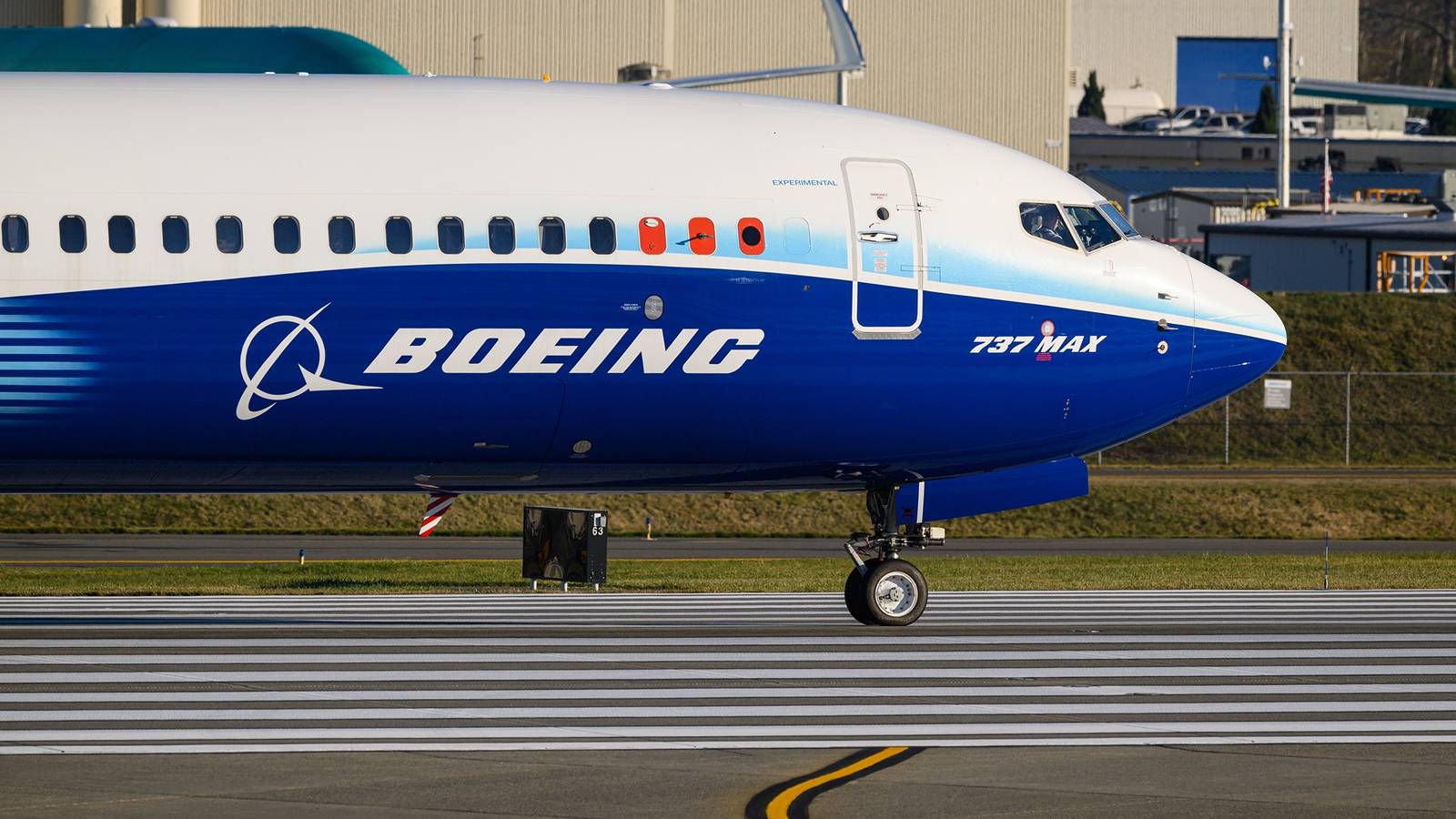
Published Oct 3, 2026, 12:34 AM EDT Journalist – Aaron is an aviation and travel journalist with 14 years of experience in the travel and tourism industry. His background spans airport operations, aviation infrastructure, and travel consulting, having worked with global organizations across New Zealand, Europe, and North America. Combining industry expertise with firsthand travel experience across more than 52 countries and five continents, Aaron covers airlines, airports, aviation policy, and the wider travel sector. He is based in Canterbury, New Zealand. His work has been published in Simple Flying and featured by MSN, SAM CHUI Aviation & Travel, EIN News, Pakistan Defence, and Climate Depot. This Friday, the Federal Aviation Administration has confirmed that the U.14 software glitch that threatened the Boeing 737 MAX 10 certification was determined not to be a safety issue. The last of the MAX family of planes to be certified, the MAX 10 is expected to be certified in the coming weeks, marking an end to years of safety concerns and manufacturing delays. Boeing notified the FAA of the software issue last month, with concern that it may affect certain landing procedures when aircraft are forced into a go-around. While there were no US operators with the affected software, Boeing worked closely with other MAX operators. The FAA earlier this week began reviewing the software, and it has been confirmed that it did not pose a safety flight issue. FAA To Issue Special Bulletin On Software Mitigation Credit: James Arup | Shutterstock The FAA undertook a thorough review of the issue, and on Friday, the software issue, which could affect aircraft after a missed approach, go-around, and other alterations to preprogrammed flight paths, was confirmed not to pose a threat. This is because pilots are fully trained on how to operate the aircraft in these circumstances without automation. A special bulletin will be issued by the Administration for airlines on how to recognize and respond to these issues if they arise. Other variants of the MAX U.14 version of the software can revert to older versions should that be required until the issue is fully fixed. As already mentioned, while no US operators were affected, the concern was raised by airlines of other types, and the future of the MAX 10 certification. The FAA released the following statement, as reported by CNBC: “Following a thorough review, a panel of FAA safety experts on Friday determined a software issue in certain Boeing 737 MAX flight computers is not a safety concern. The FAA’s Corrective Action Review Board made that determination because pilots retain full control of the aircraft and the indications to the flight crew are clear and unambiguous.” The End Is In Sight For The Boeing 737 MAX 10 Credit: Coby Wayne | Shutterstock The largest and final edition of the Boeing MAX family of planes is the longest single-aisle narrowbody jet for Boeing. It can comfortably seat between 185 and 210 passengers, or, with an all-economy-class, high-density layout, up to 230 passengers. It is more than 143 feet, eight inches long (43.8 meters), and is approximately 88 inches (2.5 meters) longer than the MAX 9. Different characteristics between the MAX family of planes below, as per Boeing: Model Seating Capacity (maximum) Length Range Boeing 737 MAX 7 172 116 ft 8 in (35.6 m) 3,800 nmi (7,040 km) Boeing 737 MAX 8 210 129 ft 6 in (39.5 m) 3,500 nmi (6,480 km) Boeing 737 MAX 8-200 210 129 ft 6 in (39.5 m) 3,500 nmi (6,480 km) Boeing 737 MAX 9 220 138 ft 4 in (42.1 m) 3,300 nmi (6,110 km) Boeing 737 MAX 10 230 143 ft 8 in (43.8 m) 3,100 nmi (5,740 km) With a range of up to 3,100 nautical miles (5,740 km), this is ultimately smaller than the other versions of the MAX, due to its heavier weight and stretched fuselage. The plane has a unique semi-levered main landing gear that has the ability to extend during takeoff to prevent the risk of tail strikes. Now that the safety concern has been cleared, this clears the path for the MAX 10 to achieve its final type certification from the FAA, and it is expected to receive this later in the month, confirming final approval from the Administration before the end of the year. It is expected that the first deliveries of the type will begin in 2027. Boeing Was Aware Of The Max Landing Glitch For Two Years Credit: Ian Dewar Photography | Shutterstock As reported previously by Simple Flying, the software glitch was known to Boeing for two years. WestJet, an early adopter of the MAX family of planes, flagged the issue two years ago, during a test flight in November 2024. Boeing evaluated the issue and tracked the plane, but under initial judgment, it was deemed not to be an active safety risk. This was due to pilots being trained to manually handle the aircraft during a missed approach or go-around. Boeing finally alerted the FAA in August, after there was additional operational feedback that forced a final review. The MAX 10, which was first expected to enter commercial service in 2020, has faced more than six years of delays, but now the end is in sight. Some of the largest orders for the type belong to United Airlines, Ryanair, Alaska Airlines, American Airlines, and Delta Air Lines.
FAA Rules Boeing 737 MAX Landing Glitch Isn't A Safety Risk, Paving Way For MAX 10 Certification
Full Article
Original Source
Read the full article at Simpleflying →KhanList aggregates and links to publicly available news content. We do not host full articles from third-party sources. Always verify important information with original sources.