
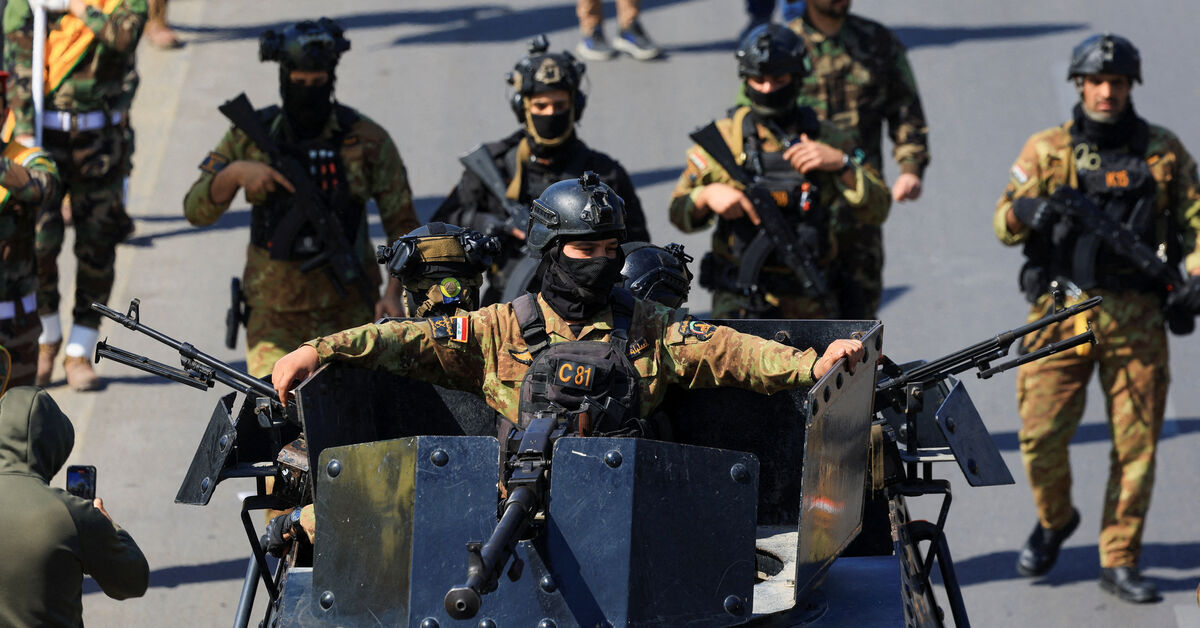
By Michael Georgy and Ahmed RasheedDUBAI/BAGHDAD, Sept 9 - Iraqi Prime Minister Ali al-Zaidi could face a credibility crisis if Iran-backed Shi'ite militias fail to heed his call to hand over their weapons to the state.After a July meeting with U.S. President Donald Trump at the White House, Zaidi pledged to disarm the powerful groups by September 30, the same date scheduled for the withdrawal of the remaining U.S.-led international coalition forces from Iraq.But he faces strong resistance from Iran's proxies in Iraq, who have supported Tehran by attacking U.S. targets in the Middle East war.WHY IS ZAIDI FACING OBSTACLES?In 2025, several powerful Iranian-backed militia groups in Iraq indicated they were prepared to disarm for the first time to avert the threat of an escalating conflict with theU.S. Trump administration.But their pledges never materialized, leaving Zaidi with the delicate task of trying to rein in these groups, who report to Iran's elite Revolutionary Guards, after he took office in May.Zaidi, a multimillionaire, has received far more support from a U.S. president than many of his predecessors. But, like all Iraqi leaders, he also needs the backing of Iran, which has steadily gained vast influence in the country through its ties to Shi'ite militias and politicians. So he has to tread cautiously.On August 17, special forces reporting directly to the prime minister arrested the intelligence chief of Harakat al-Nujaba, an Iran-aligned faction that the U.S. has designated a terrorist organisation, on accusations of involvement in drone attacks against U.S. interests, according to a security document reviewed by Reuters and three government sources.The detention, which lasted 48 hours, triggered threats of retaliation from the group and prompted intervention by senior Shi'ite politicians who helped defuse tensions.A week later, Iraqi special forces arrested four militia members, including a local commander,over allegations they facilitated attacks on U.S. interests, underscoring the political and security obstacles facing the prime minister's disarmament campaign.Senior Shi'ite politicianshave warned that tough measures against the militias will make disarmament impossible and could lead to instability. They argue that armed groups cannot hand in their weapons at a time when they are supporting Tehran in the war against the United States.Militias were also reluctant in the past,saying they could not surrender weapons as long as U.S.-led coalition forces remain in Iraq.WHAT DO THE MILITIAS WANT?Five Iran-aligned armed groups have categorically rejected the government's September 30 deadline to surrender their weapons, dissolve their organizations, and integrate into state security forces, according to four Shi'ite political sources and three security sources familiar with the disarmament effort.In August, the most powerful militia,Kataib Hezbollah, issued a statement criticizing Zaidi and set conditions for dialogue, including guarantees that American forces would never return and measures that would rid Iraq of any U.S. influence on political or economic decision-making. HOW POWERFUL ARE THE ARMED GROUPS?The militias are part of the Islamic Resistance in Iraq, an umbrella group of about 10 hardline Shi'ite armed factions that collectively command about 50,000 fighters and arsenals that include long-range missiles and anti-aircraft weapons, according to two security officials who monitor militias' activities.The Resistance group, a key pillar of Iran's network of regional proxy forces, has claimed responsibility for dozens of missile and drone attacks on Israel and U.S. forces in Iraq and Syria in recent years.The militias have become increasingly sophisticated in carrying out precise drone attacks.These groups also have business interests in construction,real estate and currency exchange houses. (Additional reporting by Muayad Hameed; Editing by Alex Richardson) AL-MONITOR All-Access gives you unlimited access to all our journalism, the full Daily Briefing, exclusive interviews, premium newsletters, and live events — for less than $2/week.
Explainer-Why is US ally Iraq unable to disarm Iran's militia allies?
Full Article
Original Source
Read the full article at Al-monitor →KhanList aggregates and links to publicly available news content. We do not host full articles from third-party sources. Always verify important information with original sources.